What We Built
Physical infrastructure, project milestones and field development.
Projects →REPORTS — ANNUAL
The Sustainable Oasis Annual Report is designed to bring together research, projects, resource performance, knowledge, environmental impact and economic development.
It should document not only what was completed, but what was tested, what failed, what remains uncertain and what the next year should improve.
The 2026 reporting year is still in progress. Final annual results will only be published after the reporting period is complete and the underlying evidence has been reviewed.
2026 REPORTING STATUS
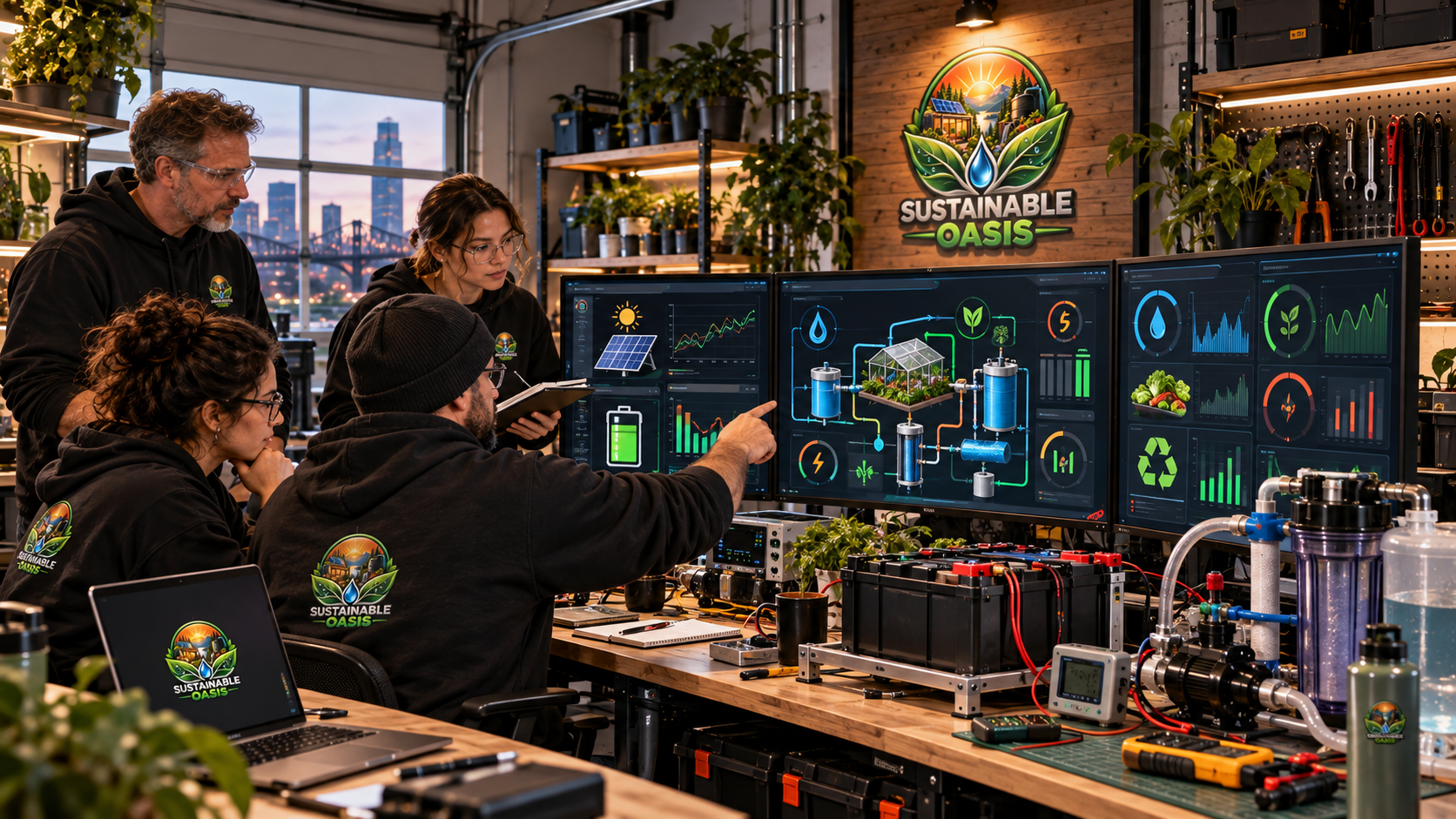
The Sustainable Oasis 2026 Annual Report is not yet a completed year-end publication.
This page defines the annual reporting structure that can progressively collect verified information throughout the year.
Final numbers should be labeled and published only when their source data is available.
ANNUAL REPORT FRAMEWORK
REPORTING DOMAINS
Physical infrastructure, project milestones and field development.
Projects →Experiments, hypotheses, results and unresolved questions.
Research →Energy, water, food and infrastructure performance.
Control Room →Changes in demand, recovery, waste and resilience.
Impact →Revenue, direct costs, capital deployment and reinvestment.
Revenue →Guides, datasets, reports, field notes and reusable blueprints.
Knowledge →YEAR IN REVIEW
Sustainable Oasis can eventually summarize each year through a small number of traceable indicators.
The objective is not to manufacture impressive numbers.
The objective is to make progress understandable, comparable and useful for the next year.
ANNUAL PROJECT REVIEW
Review experiments, prototypes, instrumentation and lessons produced.
Garage Lab →Review modular infrastructure, physical improvements and systems under development.
Container Workshop →Review field observations, water, growing systems and site infrastructure.
Vietnam Oasis →Review modeling, subsystem research and concept development.
Mobile Oasis →Review how individual systems moved toward an integrated architecture.
Complete Oasis →PROJECT MILESTONES
Requirements or architecture documented.
Physical prototype or infrastructure completed.
Measurement points established.
Defined test completed and documented.
Design changed using evidence from testing.
ANNUAL RESEARCH REVIEW
The annual research review can summarize experiments started, completed, replicated and documented.
Supported hypotheses matter, but so do negative and inconclusive results.
The annual report should preserve what changed our understanding.
RESEARCH OUTCOMES
Evidence was consistent with the tested hypothesis inside the defined boundary.
Available evidence did not support the tested hypothesis.
Available evidence was insufficient for a reliable conclusion.
Additional testing is needed before stronger conclusions are made.
ANNUAL ENERGY REVIEW
Annual energy reporting can compare generation, consumption, recovery, storage changes and documented losses.
The reporting boundary must remain clear.
ENERGY IN = USEFUL OUTPUT + STORAGE CHANGE + LOSSES
Recovered energy reduces waste within the system. It is not a new external energy source.
ANNUAL WATER REVIEW
Annual water reporting can summarize collection, external supply, storage, consumption, recovery and reuse.
Recovered water should remain distinguishable from new water entering the system boundary.
This makes annual water autonomy and demand-reduction claims easier to verify.
ANNUAL FOOD REVIEW
Annual food reporting should go beyond total kilograms produced.
Growing area, water use, energy use, crop cycles and failed crops all help explain productivity.
The purpose is to learn which growing systems deserve to expand.
ANNUAL INFRASTRUCTURE REVIEW
Infrastructure added during the reporting year.
Significant failures and corrective work.
Preventive service completed during the year.
Current asset state and expected service needs.
ANNUAL IMPACT REVIEW
Sustainability claims become stronger when they compare a documented baseline with current performance.
Annual impact reporting can look at changes in energy demand, freshwater demand, resource recovery, waste and resilience.
When a baseline does not exist, the annual report should say so rather than invent a comparison.
BASELINES MATTER
Annual reports should preserve the reference period, measurement method, system boundary and assumptions behind any claimed change.
A future statement such as “water demand decreased” should be connected to comparable periods and documented data.
ANNUAL ECONOMIC REVIEW
Sustainable Oasis infrastructure cannot continue without financial resources.
Annual reporting should therefore distinguish actual revenue received, direct costs, capital expenditure and reinvestment.
Projections and expected income should remain separate from realized transactions.
CAPITAL DISCIPLINE
Sustainable Oasis should avoid allowing major infrastructure purchases to consume the resources needed to establish dependable revenue.
Annual reporting can help show whether the project is becoming more capable of financing its own next stage.
ANNUAL KNOWLEDGE REVIEW
Physical assets are only one form of value created by Sustainable Oasis.
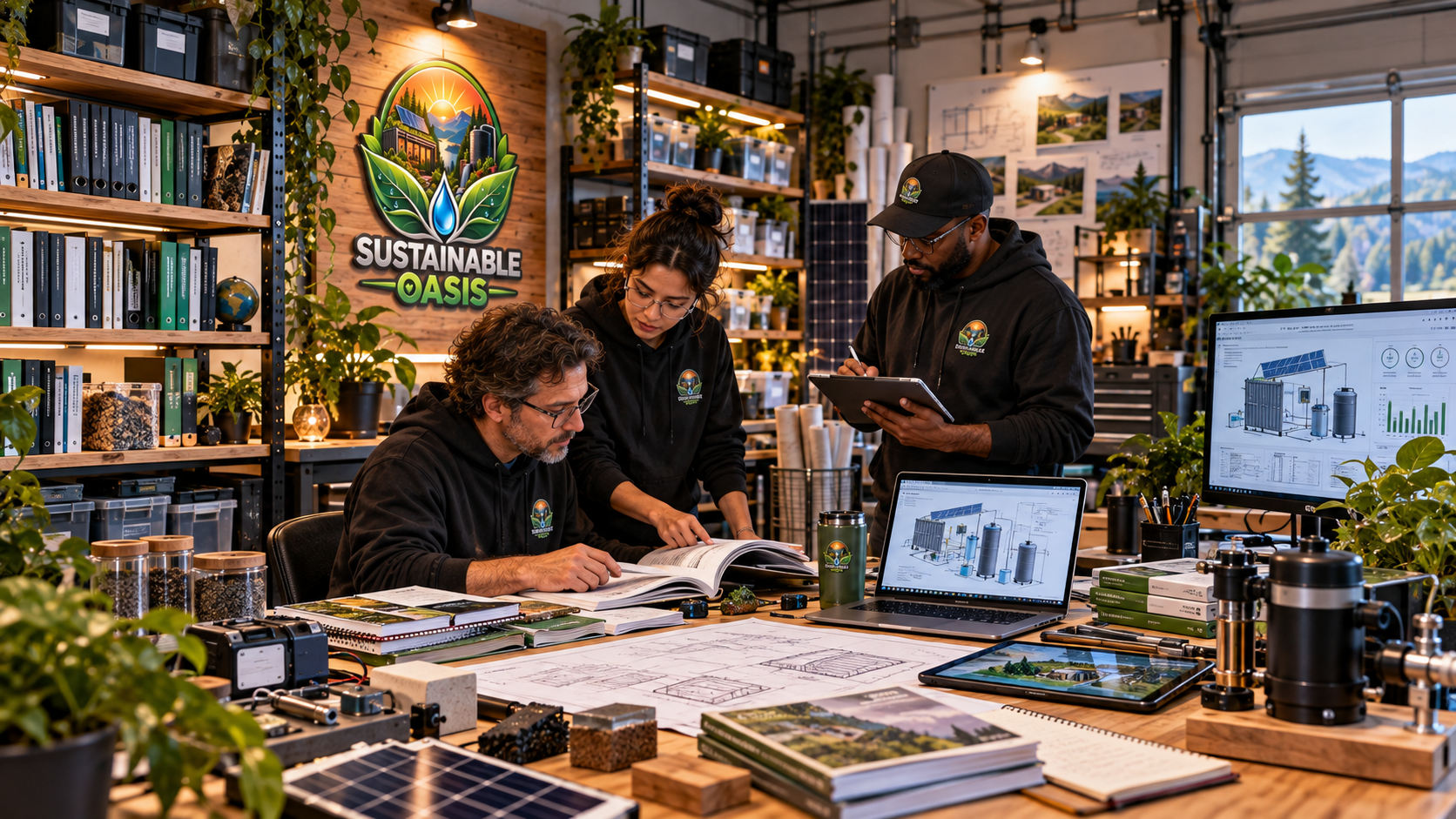
Experiments, field observations, reports, datasets, guides, blueprints and educational material can compound across years.
Annual reporting should preserve that growing body of knowledge.
KNOWLEDGE OUTPUT
Structured experimental and field measurements.
Results, performance and sustainability documentation.
Practical explanations created from experience.
Reusable system architecture from mature work.
Context and observations from physical sites.
Courses, worksheets and learning resources.
DIGITAL INFRASTRUCTURE
Sustainable Oasis Online connects physical projects with research, calculations, measurements, reports and knowledge.
Annual reporting can therefore include major improvements to the digital architecture when those improvements make the physical mission easier to operate or replicate.
ECOSYSTEM REVIEW
Mission, vision, manifesto, projects, books and community.
Visit Life →Infrastructure, products, systems, kits, services and digital resources.
Visit Store →Control Room, research, tools, knowledge, reporting and project intelligence.
Visit Online →ANNUAL DATA QUALITY
Example information used for interface or educational purposes.
DEMOValues based on assumptions, planning models or incomplete measurement.
ESTIMATEDValues recorded from physical systems or documented observations.
MEASUREDCalculations produced from documented source information.
DERIVEDANNUAL REPORT STANDARD
Define exactly which dates the report covers.
Identify the records supporting key metrics.
Define which projects and systems are included.
Preserve reference conditions used for comparisons.
State important gaps, uncertainty and incomplete records.
WHAT DID NOT WORK
Failed experiments, abandoned designs, underestimated costs and maintenance problems should not disappear from the historical record.
If a failure changes the next design, it created knowledge.
Documenting that lesson helps Sustainable Oasis avoid paying for the same mistake twice.
WHAT CHANGED THIS YEAR?
What can Sustainable Oasis physically build or operate now that it could not before?
Which systems can now be measured more accurately?
What experience has become reusable knowledge?
What can the mission increasingly finance from its own activity?
Which essential functions became less vulnerable?
NEXT YEAR
A useful annual report does not simply close the previous year.
It should identify the experiments, infrastructure, measurements and economic priorities that deserve attention next.
Those priorities should come from evidence gathered during the reporting period.
ANNUAL REPORTING PIPELINE
CONTROL ROOM → ANNUAL REPORT
The Sustainable Oasis Control Room is designed to organize energy, water, food, infrastructure, impact and economic information.
As real measurements and records accumulate, selected information can eventually feed annual reporting.
This reduces dependence on memory and retrospective estimates.
FUTURE DOWNLOADABLE REPORT
Once the reporting year is complete and supporting information has been reviewed, Sustainable Oasis can publish a versioned annual report.
Future formats may include an online edition, PDF report and supporting datasets where appropriate.
No finished 2026 annual report is being claimed at this stage.
PUBLICATION STANDARD
Clearly identify the period represented.
Identify publication and revision state.
Record when the report was released.
Preserve links to supporting evidence.
Document incomplete data, exclusions and uncertainty.
ANNUAL REPORT PRINCIPLES
Important claims should connect to evidence.
Include uncertainty, failures and incomplete work.
Preserve consistent units, boundaries and definitions.
Let reporting improve future decisions.
Keep annual reports as permanent records of the project’s evolution.
OUR NORTH STAR
More infrastructure is not automatically progress.
More revenue is not automatically impact.
More technology is not automatically resilience.
Sustainable Oasis should use annual reporting to understand whether our systems protect resources, strengthen capability and create knowledge worth carrying forward.
IN THE FUTURE, SUCCESS WILL NOT BE MEASURED BY WHAT WE HAVE, BUT BY WHAT WE PROTECT.
SUSTAINABLE OASIS REPORTS
Questions, methods, evidence and conclusions.
Experiment Reports →Inputs, outputs, efficiency and system behavior.
Performance Reports →Resource protection, recovery, waste reduction and resilience.
Sustainability Reports →A complete yearly view across the Sustainable Oasis mission.
Annual Report →THE ANNUAL LEARNING LOOP
SUSTAINABLE OASIS ANNUAL REPORT