Energy
Generation, storage, consumption, recovery and energy balance.
Energy Control →CONTROL ROOM — FOOD
The Food Control Room organizes harvest, growing area, water use, energy inputs, productivity and growing-cycle information.
The goal is not simply to record how much food was produced.
We want to understand the relationship between production and the resources required to produce it.
CONTROL ROOM DOMAINS
Generation, storage, consumption, recovery and energy balance.
Energy Control →Collection, storage, treatment, consumption and reuse.
Water Control →Harvest, growing area, resource use and productivity.
Food Control →Shelter, equipment and operational system condition.
Infrastructure Control →Resource efficiency, recovery and sustainability indicators.
Impact Control →Future connection between productive systems and economic performance.
Revenue Control →FOOD SYSTEM FLOW
FOOD DASHBOARD
The values below are demonstration data only. They show how the Control Room can organize future food-system measurements.
Demonstration values only. These are not presented as measured results from a physical Sustainable Oasis growing system.
DATA CLASSIFICATION
Example values used to explain dashboards and workflows.
DEMOExpected production based on planning assumptions.
ESTIMATEDActual harvest or resource data recorded from a real growing trial.
MEASUREDProductivity or efficiency calculated from documented source measurements.
DERIVEDHARVEST
Harvest should be recorded using defined units and clear growing periods.
When possible, crop type and growing conditions should also be preserved so different trials can be compared responsibly.
AREA PRODUCTIVITY
Growing area gives production a physical context.
PRODUCTIVITY = HARVEST (kg) ÷ GROWING AREA (m²)
The result should be interpreted alongside crop type, growing duration and operating conditions.
FOOD + WATER
Irrigation and system water should be recorded whenever water efficiency is being evaluated.
The Control Room can compare food output with the amount of water required to produce it.
WATER INTENSITY
A useful comparison is:
WATER INTENSITY = WATER USED (L) ÷ HARVEST (kg)
Lower water use is not automatically better if plant health, harvest or crop quality deteriorates.
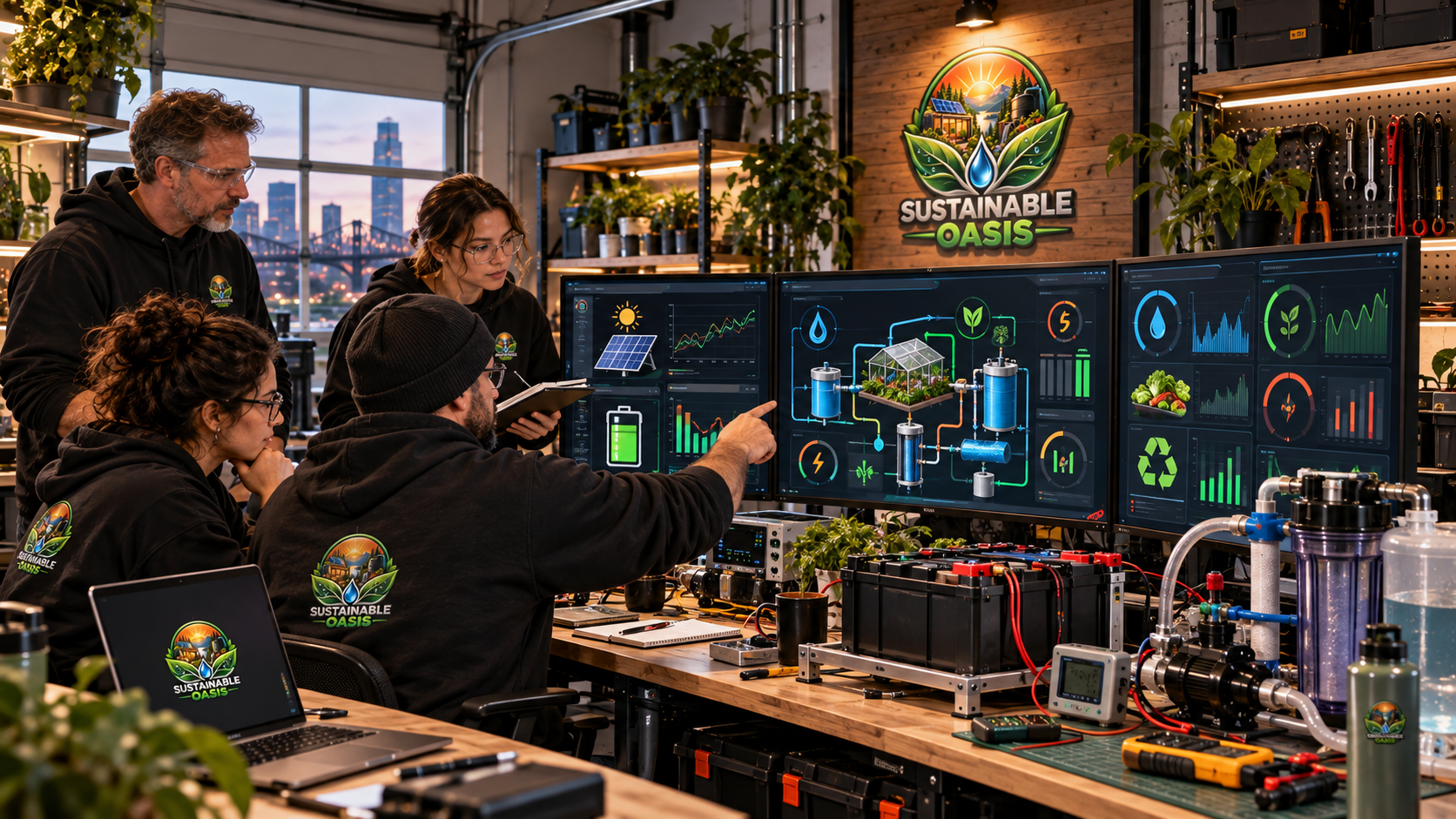
FOOD + ENERGY
Pumps, aeration, lighting, heating, cooling and automation should be included when they are required by the growing system.
This makes it possible to compare food production against electrical resource use.
ENERGY INTENSITY
When electrical energy is part of production, one possible indicator is:
ENERGY INTENSITY = ENERGY USED (Wh) ÷ HARVEST (kg)
This indicator is meaningful only when the measurement boundary is clearly defined.
GROWING CYCLE
Two systems producing the same harvest may perform very differently if one requires substantially more time.
AQUAPONICS
Aquaponics links fish, plants, water, microorganisms, pumps and oxygen into one operating system.
Fish stocking and feeding influence the biological system.
Plants remove nutrients and become part of the system balance.
Water movement connects tanks, filtration and growing areas.
Oxygen availability affects biological system health.
FOOD + AUTOMATION
Automation can eventually support irrigation, tank management, environmental monitoring and equipment alerts.
Essential growing systems should retain practical manual control and fail-safe behavior where appropriate.
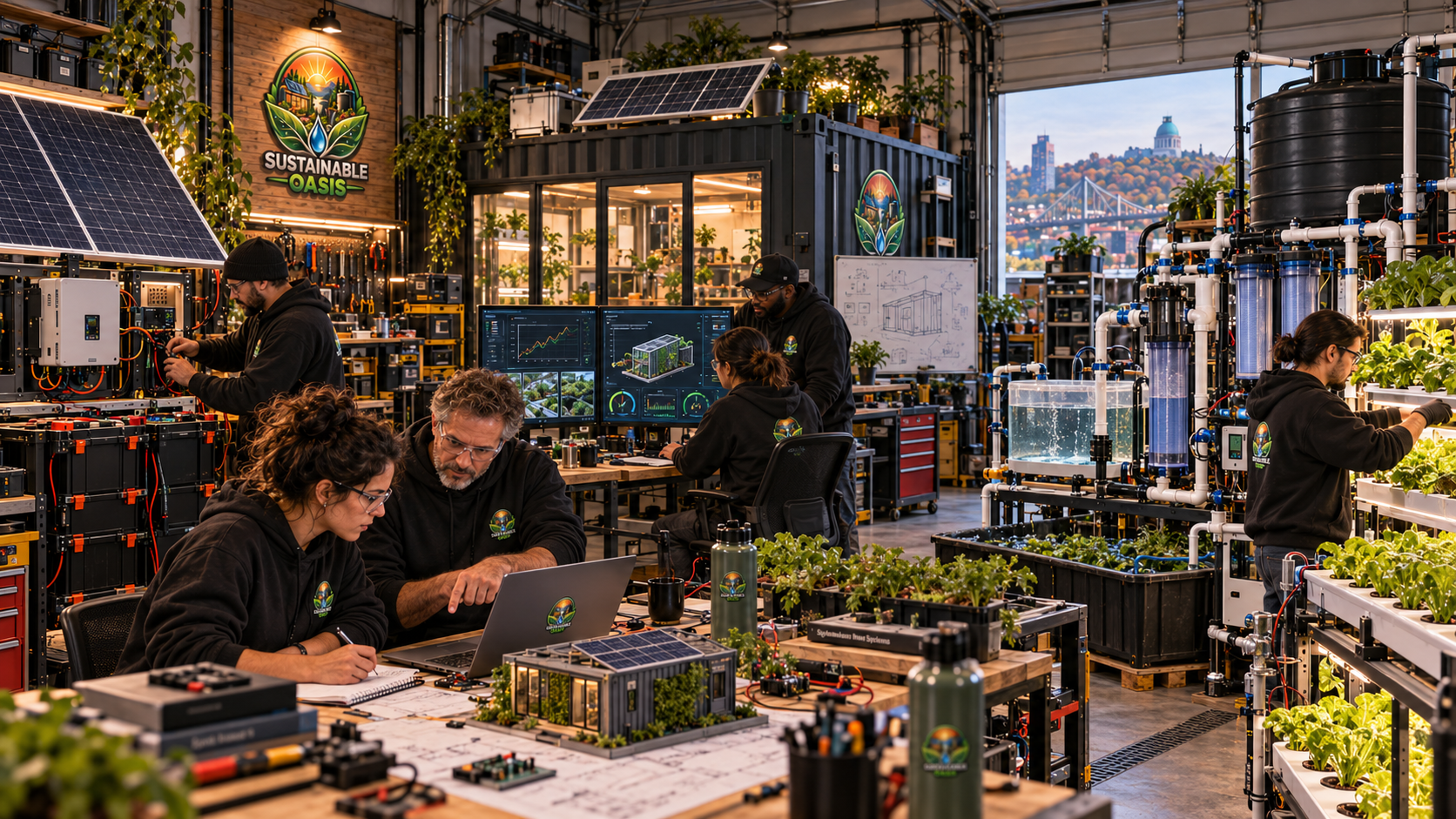
FOOD LAB
The Sustainable Oasis Food Lab provides the practical environment for small growing trials.
Production, water use, area and operating conditions can be recorded before larger field systems are developed.
FOOD + RESEARCH
Sustainable Oasis food research should define the crop, growing method, area, resource inputs, environmental conditions and measurement period.
Repeated trials are more useful than drawing broad conclusions from one harvest.
FOOD PLANNING TOOL
The Food Production Calculator provides a simple planning environment for comparing harvest, area and water use.
Later, actual measured values can replace assumptions and improve future planning.
Food Production CalculatorFOOD INSIDE THE COMPLETE OASIS
Water supports crops. Energy may move water. Shelter can influence growing conditions. Automation can monitor the process.
FIELD ENVIRONMENTS
Small-scale controlled growing trials.
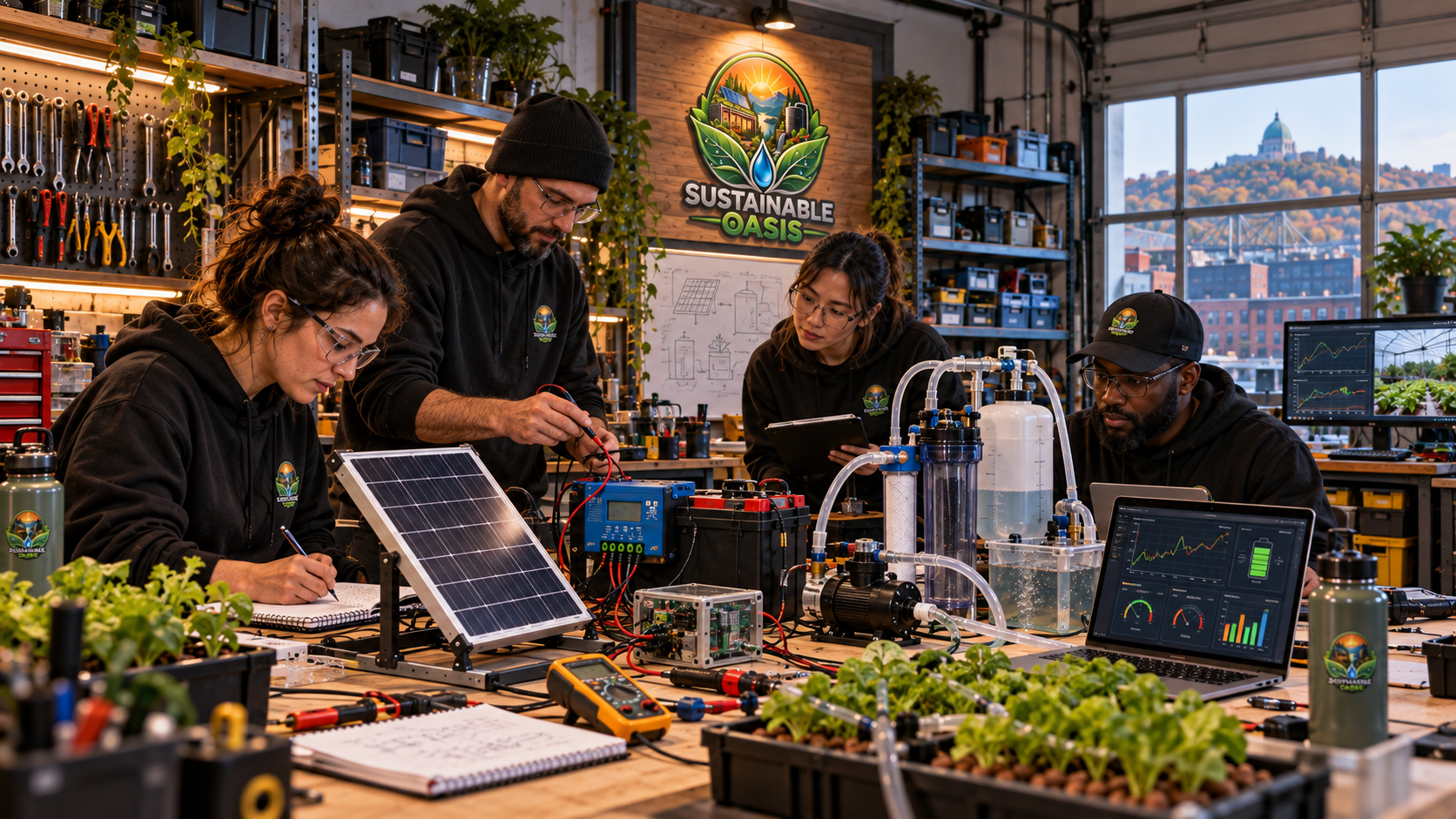
Food Lab →Prototype systems, sensors and compact growing experiments.
Garage Lab →Terrain, water and productive growing under field conditions.
Vietnam Oasis →Future integration of validated food systems with other resources.
Complete Oasis →FOOD + WATER SAFETY
Growing systems should use water and materials appropriate to the intended food-production method.
Water that appears clear is not automatically safe for food-production or human-consumption purposes.
Appropriate sanitation, water-quality practices and local requirements remain important.
FOOD + KNOWLEDGE
Harvest records, water data, crop observations and productivity results can become reusable knowledge.
Sustainable Oasis can transform these lessons into guides, field notes, case studies and blueprints.
FOOD INTELLIGENCE PIPELINE
FOOD CONTROL ROOM