
Energy
Generation, storage, consumption and recovery.
Energy Control →CONTROL ROOM — WATER
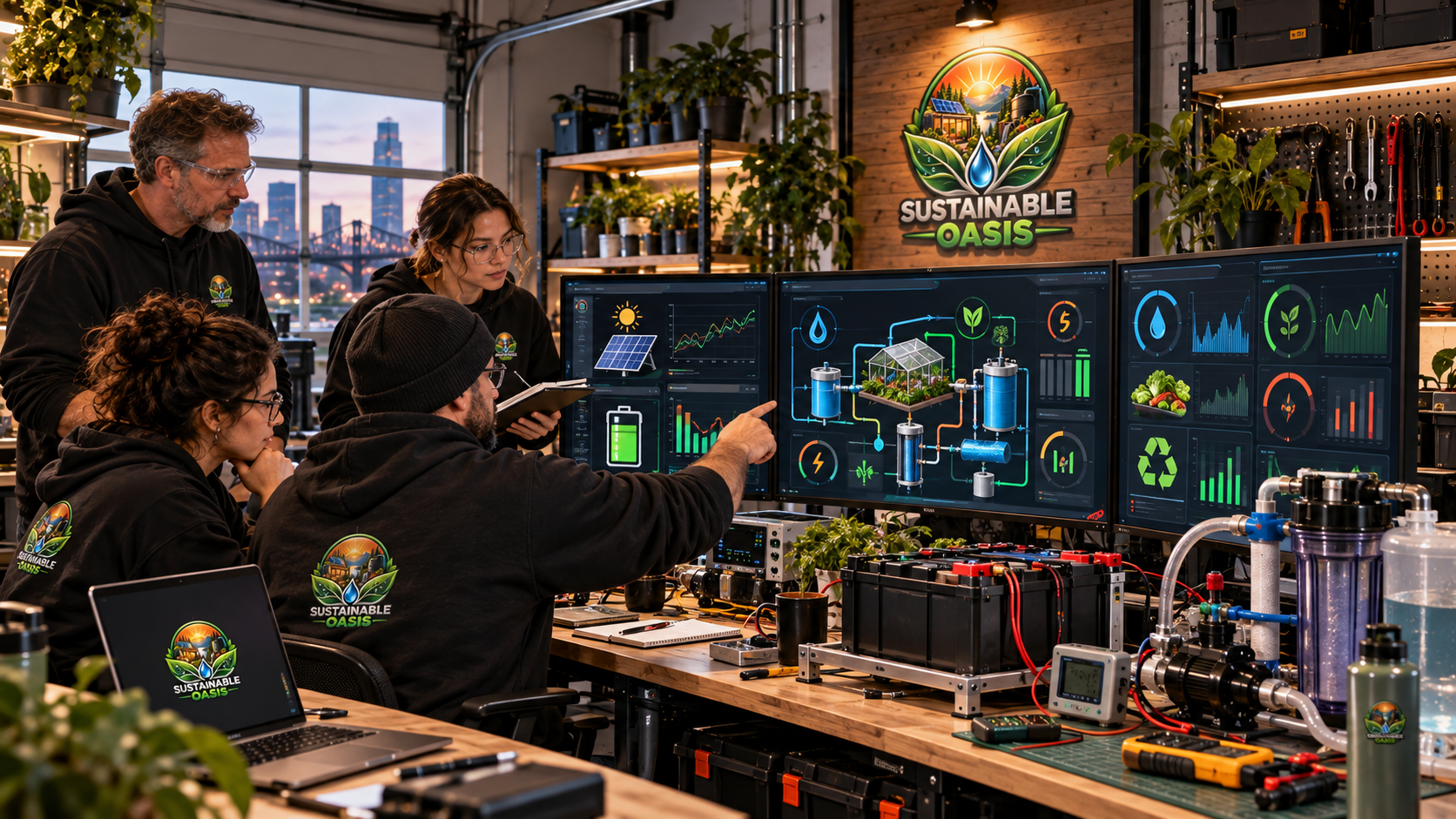
The Water Control Room organizes collection, storage, filtration, consumption, recovery and reuse into one understandable view.
The objective is to know how much water entered the system, where it was stored, how it was used and how much could be recovered for another appropriate purpose.
Estimates remain clearly separated from physical measurements.
CONTROL ROOM DOMAINS
Generation, storage, consumption and recovery.
Energy Control →Collection, storage, treatment, use and reuse.
Water Control →Production, growing area, water use and productivity.
Food Control →Tanks, pumps, filtration, plumbing and equipment condition.
Infrastructure Control →Conservation, recovery, efficiency and resilience.
Impact Control →Economic performance supporting Sustainable Oasis development.
Revenue Control →WATER FLOW
WATER DASHBOARD
The values below are demonstration data used to illustrate the Control Room architecture.
Demonstration values only. They are not presented as measurements from a physical Sustainable Oasis installation.
DATA CLASSIFICATION
Example information used to explain the interface.
DEMOWater availability or consumption calculated from assumptions.
ESTIMATEDWater volume or flow recorded from a physical system.
MEASUREDAutonomy, efficiency or other indicators calculated from source data.
DERIVEDWATER ACCOUNTING
A simplified water balance can help organize major system flows.
WATER IN = USE + STORAGE CHANGE + DISCHARGE + LOSSES
Recovered water should remain inside the same accounting boundary so it is not accidentally counted twice.
WATER SOURCES
Roof collection can provide a distributed supply where climate and regulations allow.
Wells can provide site water where geology and water quality permit.
Municipal or community systems can remain an important supply or backup pathway.
Surface or local sources require appropriate evaluation before use.
RAINWATER COLLECTION
Collection potential depends primarily on roof area, rainfall and system efficiency.
A useful planning relationship is:
COLLECTION ≈ AREA × RAINFALL × COLLECTION EFFICIENCY
With square metres and millimetres, one millimetre of rainfall on one square metre corresponds approximately to one litre before collection losses.
STORAGE
Storage capacity becomes meaningful only when it is compared with demand.
Useful monitoring can include tank level, inflow, outflow and overflow.
WATER AUTONOMY
A basic planning relationship is:
AUTONOMY = USABLE STORAGE ÷ DAILY DEMAND
Real autonomy varies with household behavior, irrigation, leaks, weather and other connected loads.
WATER DEMAND
Lower demand can improve resilience without increasing storage.
Cleaning, sanitation, cooking and other household uses.
Irrigation, aquaponics and food-system makeup water.
Cleaning, maintenance and workshop activities.
Leakage, overflow and avoidable system losses.
GRAVITY + PRESSURE
When a storage tank is above the point of use, elevation produces hydrostatic pressure.
For water, each metre of vertical head produces approximately 9.81 kPa of static pressure before flow losses are considered.
Pipe diameter, distance, fittings and flow rate all influence actual delivered pressure.
PUMPING
Pumps consume electrical energy to move water against elevation and hydraulic resistance.
Monitoring both energy input and water delivered can reveal pumping efficiency and operating changes.
FILTRATION + TREATMENT
Filtration and treatment should be selected according to source conditions and the intended application.
Keep leaves and larger material out of downstream equipment.
Reduce suspended solids according to system requirements.
Measure relevant water-quality parameters where health or system safety depends on them.
Apply a suitable treatment train for the intended use.
WATER SAFETY
Water intended for drinking or food preparation requires appropriate treatment and testing.
Rainwater, groundwater and other site sources should not automatically be assumed potable.
Local health requirements and qualified water-quality guidance remain important.
RECOVERY + REUSE
Appropriate water recovery can reduce demand on primary freshwater sources.
Reuse must remain compatible with sanitation, treatment requirements, local rules and the intended application.
NO DOUBLE COUNTING
If one litre enters the Oasis, is used and later recovered, that same litre should not be counted again as an independent new water source.
Recovery improves resource efficiency. It does not create additional water.
LOSS DETECTION
Unexpected differences between measured inflow, storage change and measured use can indicate leakage, overflow, evaporation or measurement error.
WATER + AUTOMATION
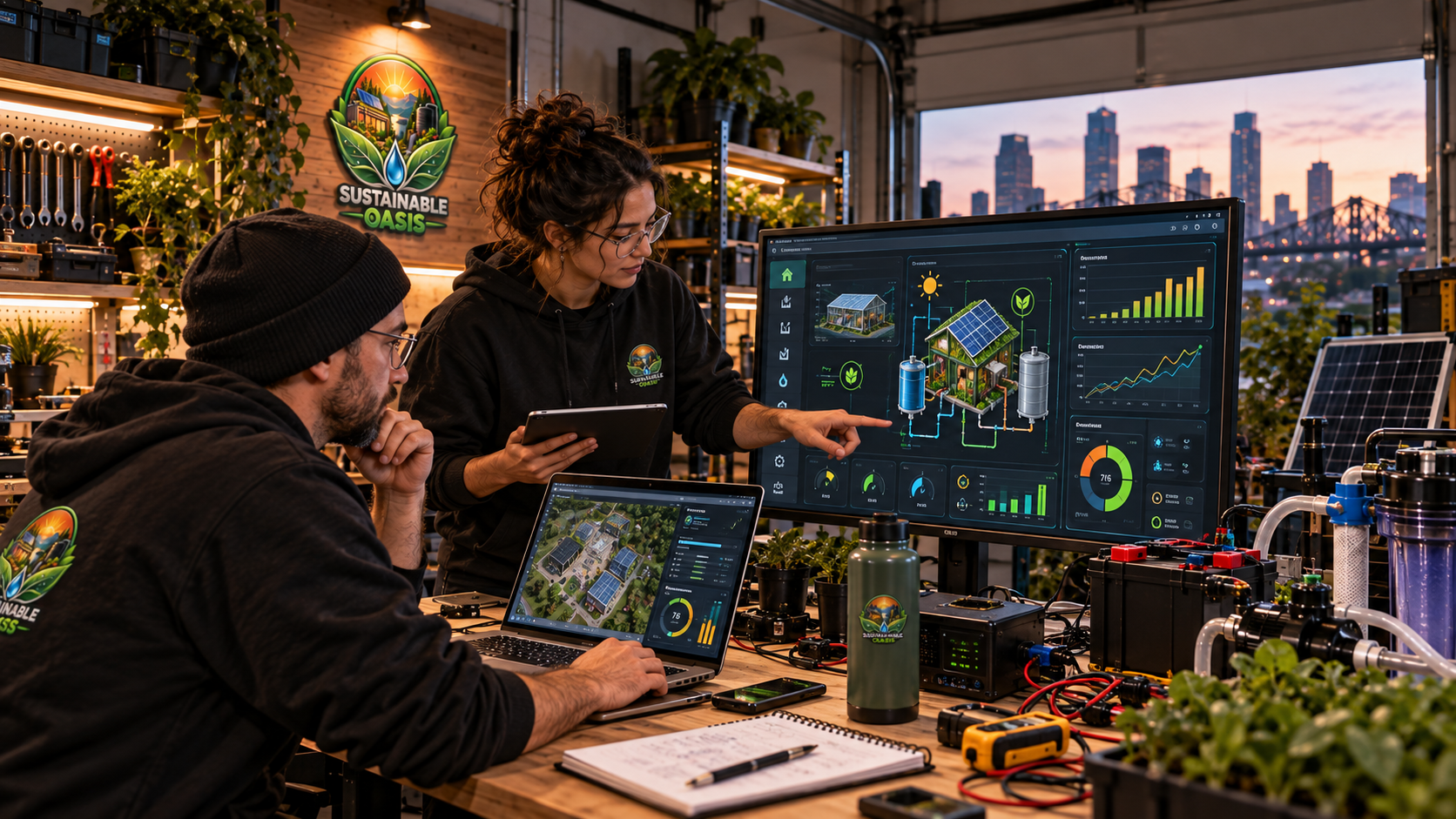
Automation can eventually monitor tank level, flow, pumps and abnormal conditions.
Essential systems should include suitable fail-safe behavior and practical manual operation where needed.
CONTROL LOOP
WATER + FOOD
Irrigation and recirculating growing systems connect water use directly to harvest performance.
Water intensity can be expressed as:
WATER INTENSITY = WATER USED (L) ÷ HARVEST (kg)
This indicator should always retain crop, growing-cycle and environmental context.
WATER + ENERGY RECOVERY
Where water already moves through a useful elevation drop, a turbine may recover part of the available hydraulic energy.
If electrical energy was first used to pump the same water upward, that pumping energy remains part of the full system balance.
Recovery can reduce waste. It cannot create net energy beyond the complete energy entering the defined system.
WATER LAB
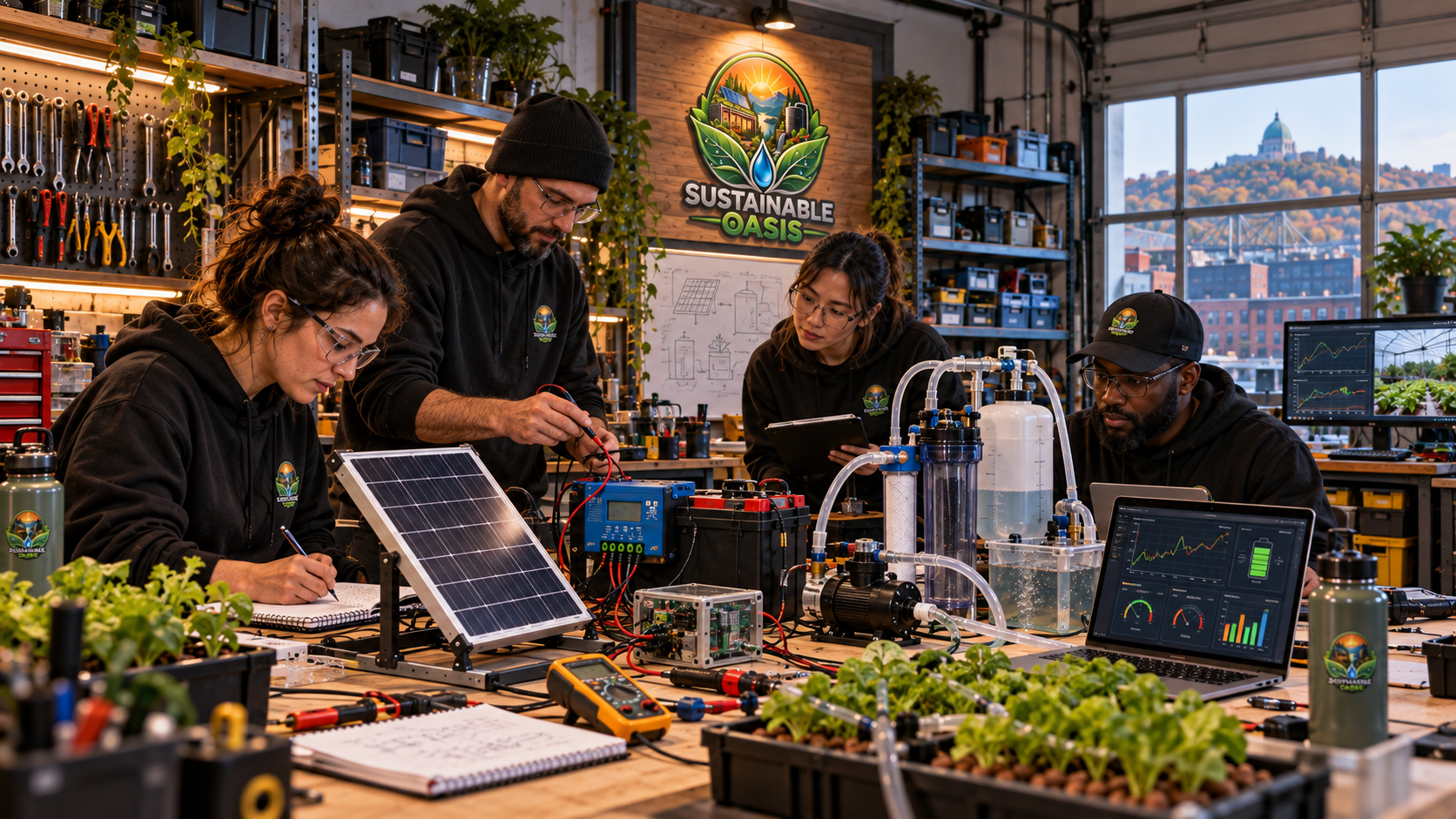
The Sustainable Oasis Water Lab provides a practical environment for testing storage, gravity, pumping, flow and recovery.
Small experiments allow variables to be changed and measured before larger systems are built.
WATER MEASUREMENT
Record water stored, delivered or recovered.
Measure how quickly water moves through the system.
Record static or operating pressure where relevant.
Preserve elevation difference in gravity and pumping tests.
Record energy consumed when water must be mechanically moved.
Preserve the time period behind each measurement.
FIELD ENVIRONMENTS
Small-scale measurement of storage, pumps, gravity and flow.
Water Lab →Prototype plumbing, tanks, sensors and automation.
Garage Lab →Terrain, elevation, storage and gravity infrastructure.
Vietnam Oasis →Water integrated with energy, food, shelter and automation.
Complete Oasis →TERRAIN + GRAVITY
Field sites with elevation differences can use strategically positioned storage to distribute water through gravity.
Sustainable Oasis can compare terrain, tank elevation, pipe size, flow and pumping energy to understand when gravity reduces operating demand.
Vietnam OasisWATER + INFRASTRUCTURE
The Water Control Room tracks water movement.
The Infrastructure Control Room tracks the condition of tanks, pumps, pipes, valves and treatment equipment.
Infrastructure ControlWATER + IMPACT
Water impact can include rainwater captured, primary-water demand avoided, leakage reduced and water appropriately reused.
These indicators should be derived from documented water measurements whenever possible.
WATER + RESEARCH
Sustainable Oasis water experiments can compare gravity, pumping, flow, storage, recovery and system efficiency.
Good experimental records preserve system boundaries, instruments, conditions, raw data and conclusions.
WATER TOOLS
Planning tools establish an expected baseline before physical measurements exist.
Estimate collection from catchment area and rainfall.
Rainwater Calculator →Explore storage, demand and autonomy.
Water Calculator →Compare harvest with water consumption.
Food Calculator →Connect water assumptions with the complete resource model.
Oasis Planner →ESTIMATE FIRST. MEASURE NEXT.
Calculators provide planning expectations.
Meters, tank measurements and field observations provide physical data.
Comparing the two helps improve future storage and supply decisions.
WATER INSIDE THE COMPLETE OASIS
WATER RESILIENCE
Avoid unnecessary dependence on one supply pathway.
Preserve useful reserve capacity between supply events.
Conservation can extend autonomy without additional storage.
Use passive distribution where terrain permits.
Make changing storage and demand visible before shortages become critical.
WATER + KNOWLEDGE
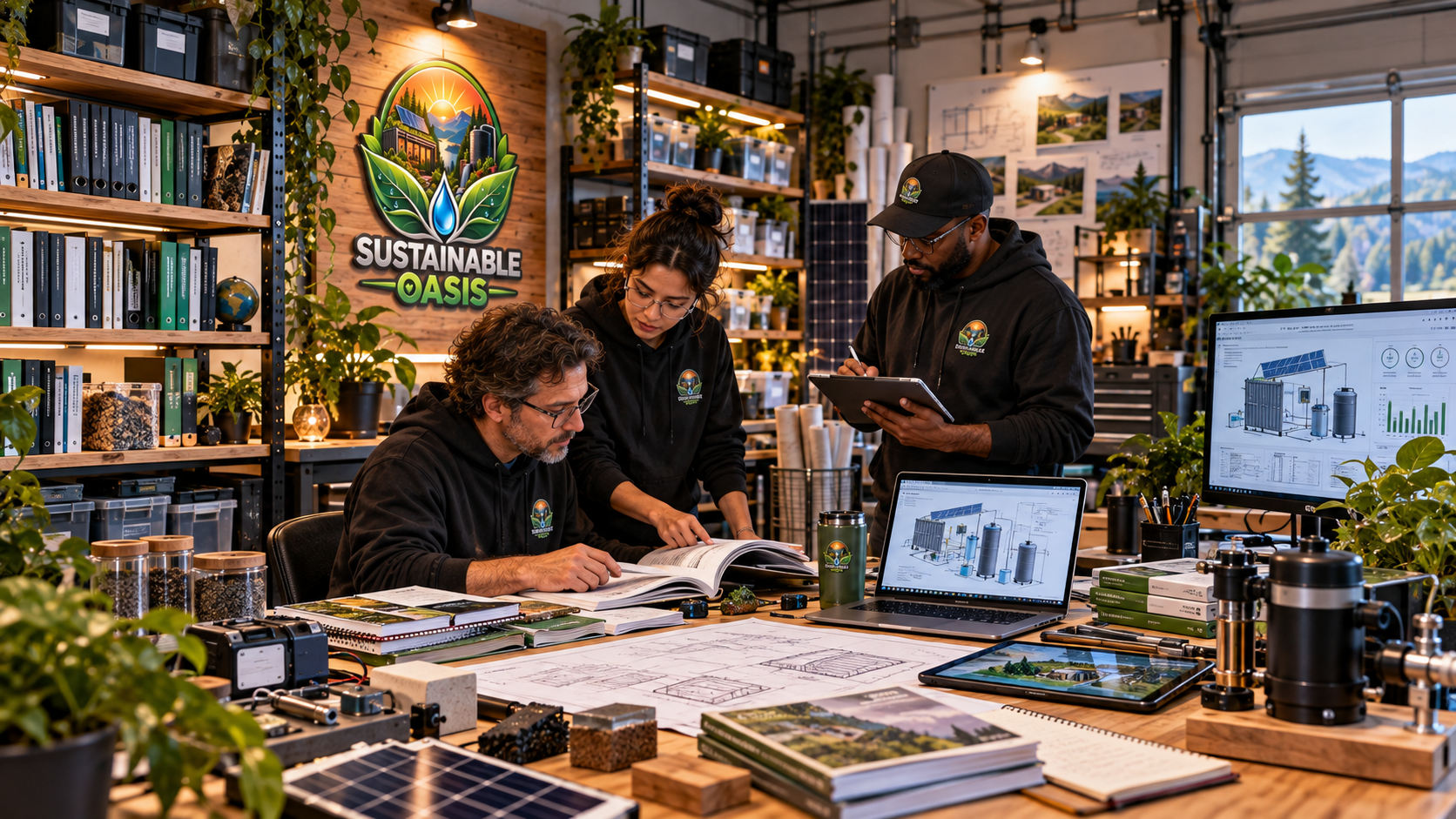
Flow measurements, storage behavior, pump energy, filtration observations and field results can become reusable knowledge.
Sustainable Oasis can convert those lessons into field notes, guides, case studies and blueprints.
WATER INTELLIGENCE PIPELINE
WATER CONTROL PRINCIPLES
Know how much water actually enters the system.
Understand where water is being consumed.
Match treatment and handling to intended use.
Reuse appropriate water streams without confusing them with fresh supply.
Use every measured cycle to improve the next design.
NEXT CONTROL ROOM
The Food Control Room connects harvest, growing area, water consumption, energy use and productivity.
WATER CONTROL ROOM