Food System Fundamentals
Define the resources, outputs and boundaries of a productive growing system.
COURSE 03 — FOOD SYSTEMS
Sustainable food production is more than counting kilograms at harvest.
This Sustainable Oasis Academy course connects production with growing area, water, energy, time and system design.
The objective is to understand how productive growing systems can become more efficient, measurable and resilient.
THE FOOD SYSTEM
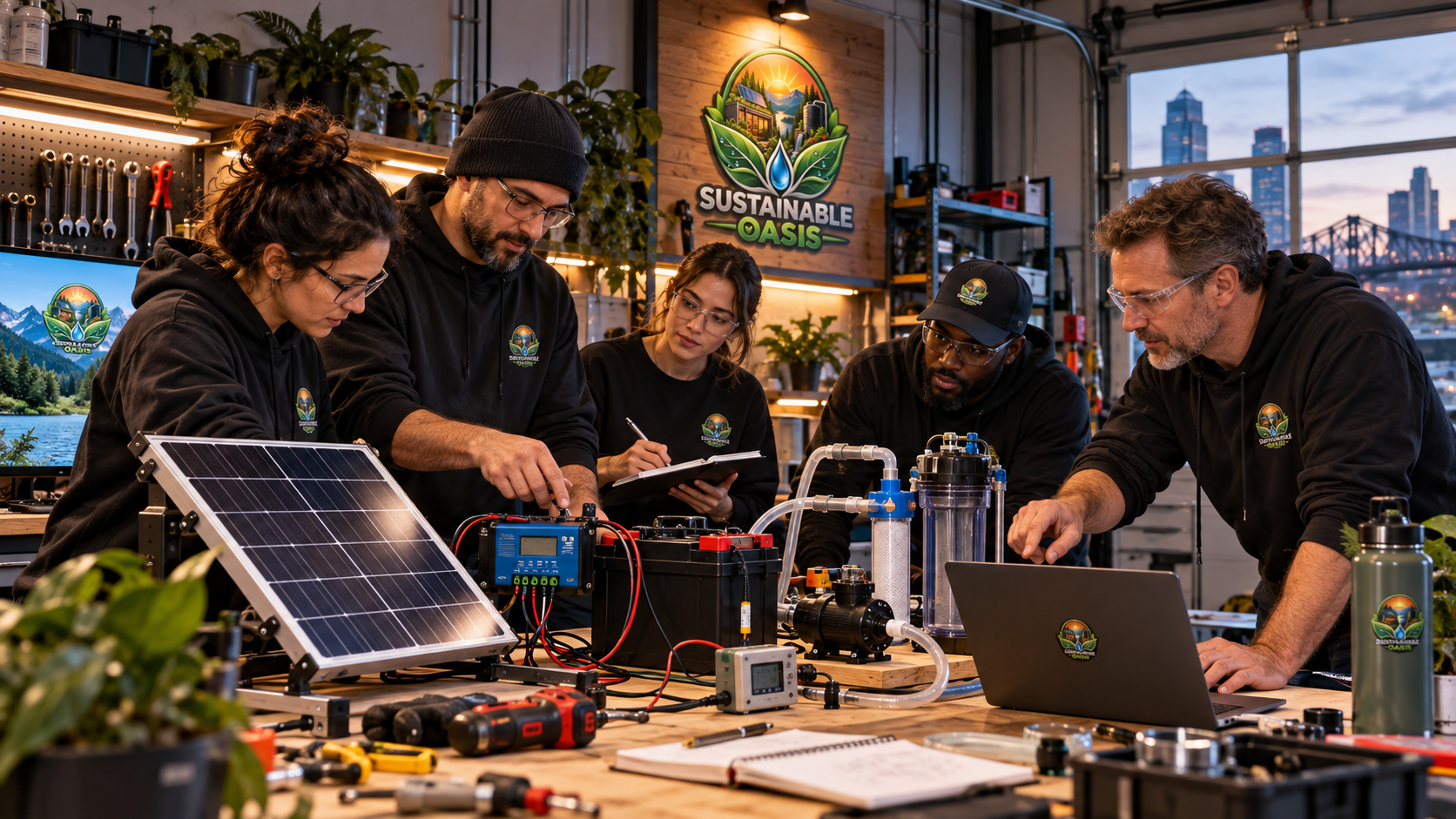
A useful food system connects every harvest to the inputs that made it possible.
COURSE MAP
Each module adds another layer to the complete food-production system.
Define the resources, outputs and boundaries of a productive growing system.
Understand why productive area matters when comparing different growing systems.
Track irrigation and water consumption against actual production.
Account for pumps, aeration, lighting and other energy-dependent growing equipment.
Explore the relationship between fish, plants, water circulation and system balance.
Record usable production consistently over defined growing periods.
Compare harvest with growing area, water use and time.
Connect growing knowledge, resource efficiency and redundancy into resilient food systems.
MODULE 01 — FUNDAMENTALS
A food system has inputs, outputs and environmental conditions that influence performance.
Without defining those boundaries, one harvest cannot be compared fairly with another.
MODULE 02 — GROWING AREA
Growing area helps us compare production between systems of different sizes.
Record only the area actually used by the measured growing system.
Measure usable harvested food using consistent units.
Compare production against productive growing area.
Include crop-cycle duration when comparing results over time.
PRODUCTIVITY
A simple area-productivity indicator can be calculated as:
PRODUCTIVITY = HARVEST (kg) ÷ GROWING AREA (m²)
This number becomes more meaningful when the crop, growing period and operating conditions are also documented.
MODULE 03 — WATER
Productive systems should record how much water enters the growing process.
This helps compare conventional irrigation, recirculating systems and future Sustainable Oasis growing experiments.
WATER INTENSITY
One useful comparison is:
WATER INTENSITY = WATER USED (L) ÷ HARVEST (kg)
Lower water use is not automatically better if plant health, yield or crop quality declines. Performance must be interpreted as a complete system.
MODULE 04 — ENERGY
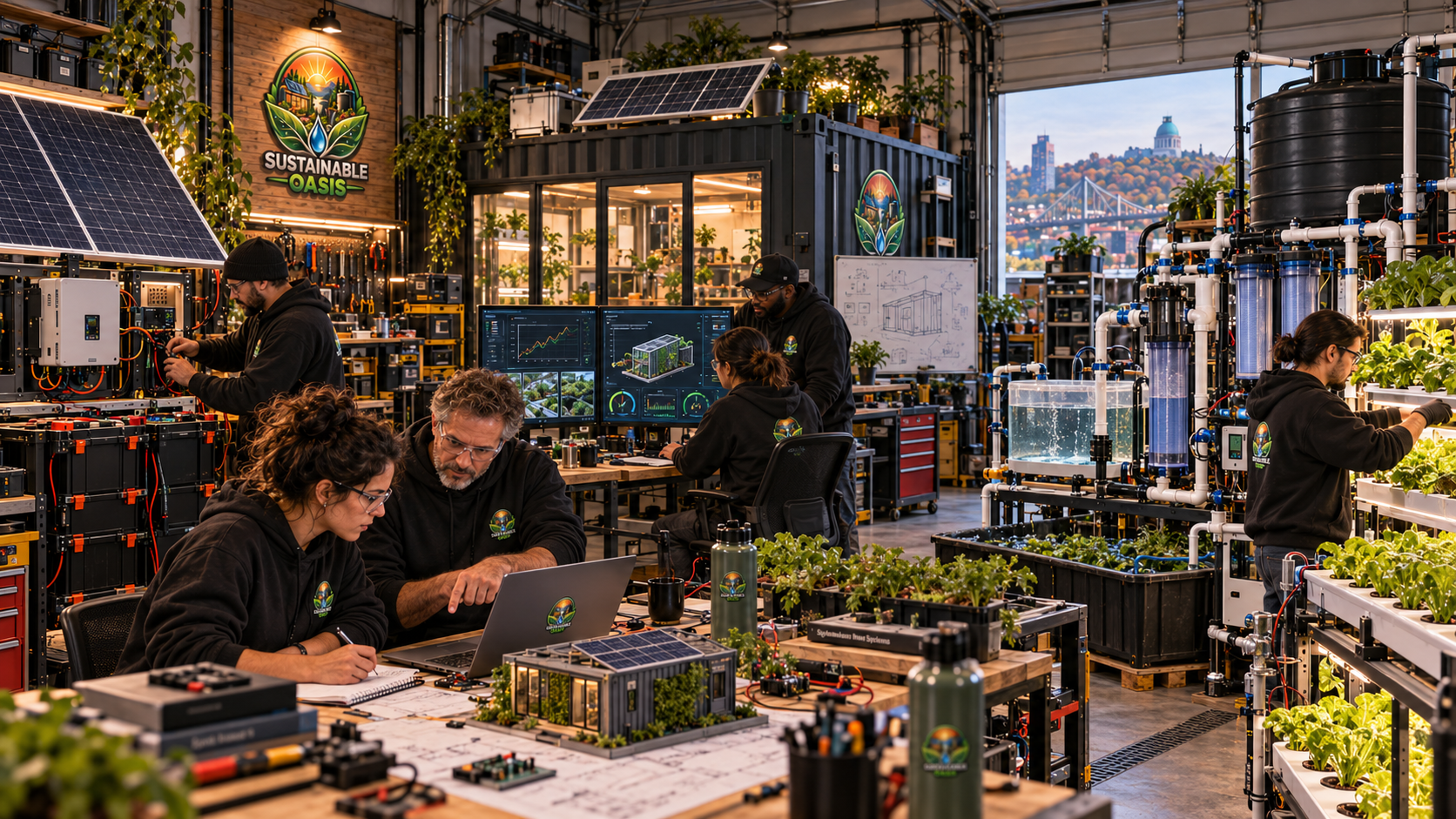
Pumps, aeration, lighting, heating, cooling and automation can all influence the true resource cost of production.
If energy is required to produce the harvest, it belongs inside the system boundary.
MODULE 05 — AQUAPONICS
Aquaponic systems connect fish, plants, microorganisms, water circulation and oxygen.
Each biological and mechanical component affects the stability of the complete system.
Water conditions influence fish, microorganisms and plant health.
Dissolved oxygen is important to aquatic system health.
Flow connects tanks, filtration and growing areas.
Stocking, feeding and plant demand must remain compatible.
MODULE 06 — HARVEST
Harvest data becomes useful only when measurements are taken in a consistent way.
MODULE 07 — PRODUCTIVITY
A strong food-system assessment can examine several indicators simultaneously.
How much usable food was harvested?
How much food was produced per unit of growing area?
How much water was required for each kilogram produced?
How much electrical energy was required when the system depends on powered equipment?
How long did the measured crop require to reach harvest?
Does similar performance appear across multiple growing cycles?
Demonstration values only. These values illustrate the type of information a future growing trial can record.
COURSE TOOL
The calculator helps compare harvest, growing area and water consumption.
It creates a planning or learning baseline that can later be compared with physical growing trials.
Food Production CalculatorFOOD LAB
The Sustainable Oasis Food Lab provides a practical environment for testing food-production ideas.
Small-scale trials allow crop performance, water use and productivity to be measured before larger systems are developed.
MODULE 08 — FOOD RESILIENCE
A resilient growing system should remain understandable, maintainable and adaptable.
Avoid relying entirely on one crop, one method or one source.
Protect water supplies by measuring and reducing unnecessary losses.
Pumps, plumbing and growing systems should remain understandable and serviceable.
Growing skills are themselves part of the resilience system.
Systems should respond to climate, season and resource availability.
FOOD INSIDE THE COMPLETE OASIS
Integrated design allows one system to support another.
FOOD + CONTROL ROOM
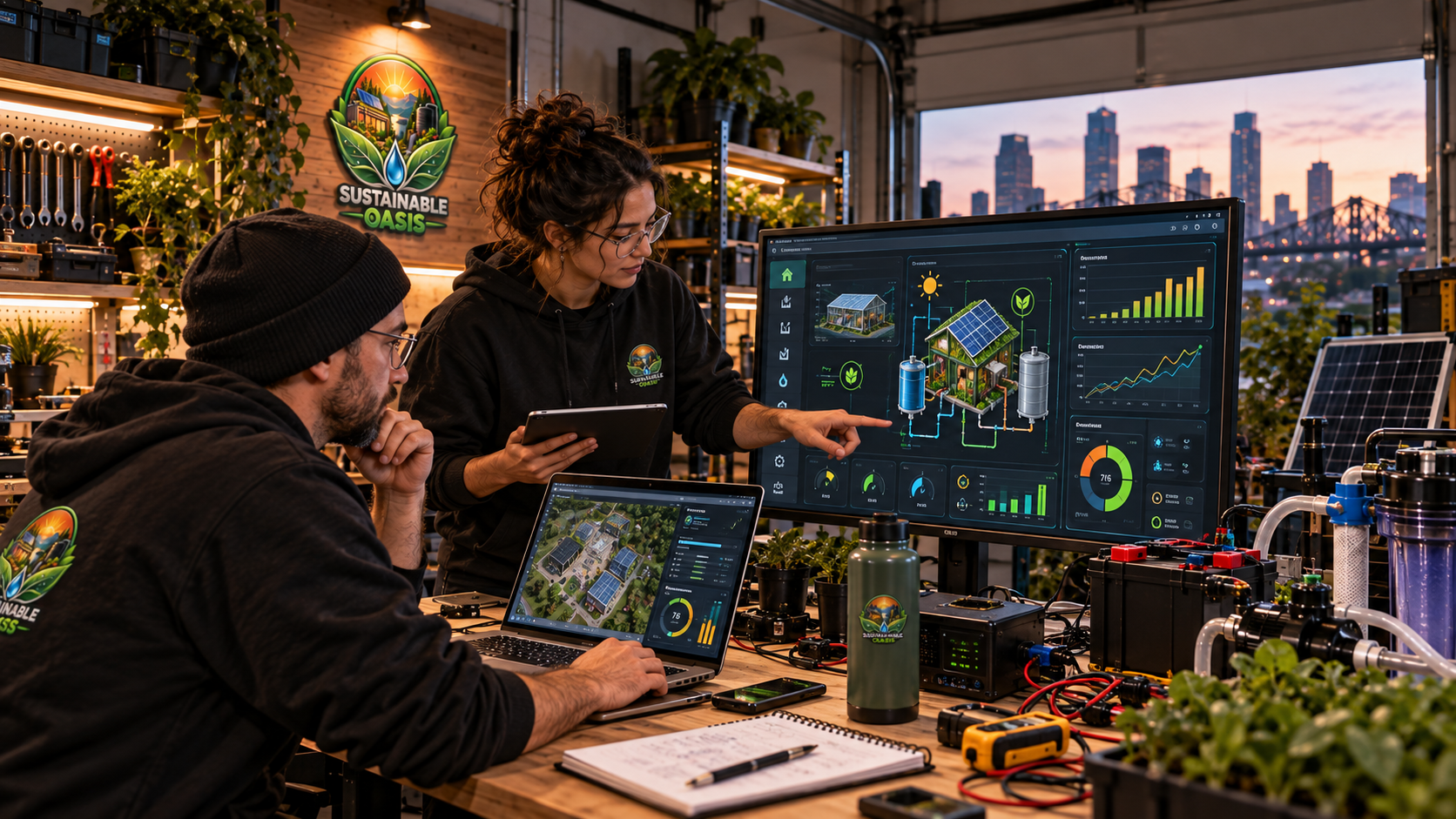
The Sustainable Oasis Control Room can organize food production alongside energy and water data.
This makes it possible to study relationships between harvest and the resources required to produce it.
Enter Control RoomDATA LITERACY
Example values used for learning or interface demonstration.
DEMOExpected production based on assumptions or planning information.
ESTIMATEDHarvest or resource values recorded from an actual growing trial.
MEASUREDProductivity or efficiency calculated from documented measurements.
DERIVEDFROM LAB TO LAND
Temperature, sunlight, rainfall, soil, pests, seasonal changes and local resources influence food-system performance.
Small controlled growing trials and resource measurement.
Food Lab →Controlled experiments and future compact growing systems.
Garage Lab →Real land conditions connecting terrain, water and productive growing.
Vietnam Oasis →Food operating as one part of an integrated resource system.
Complete Oasis →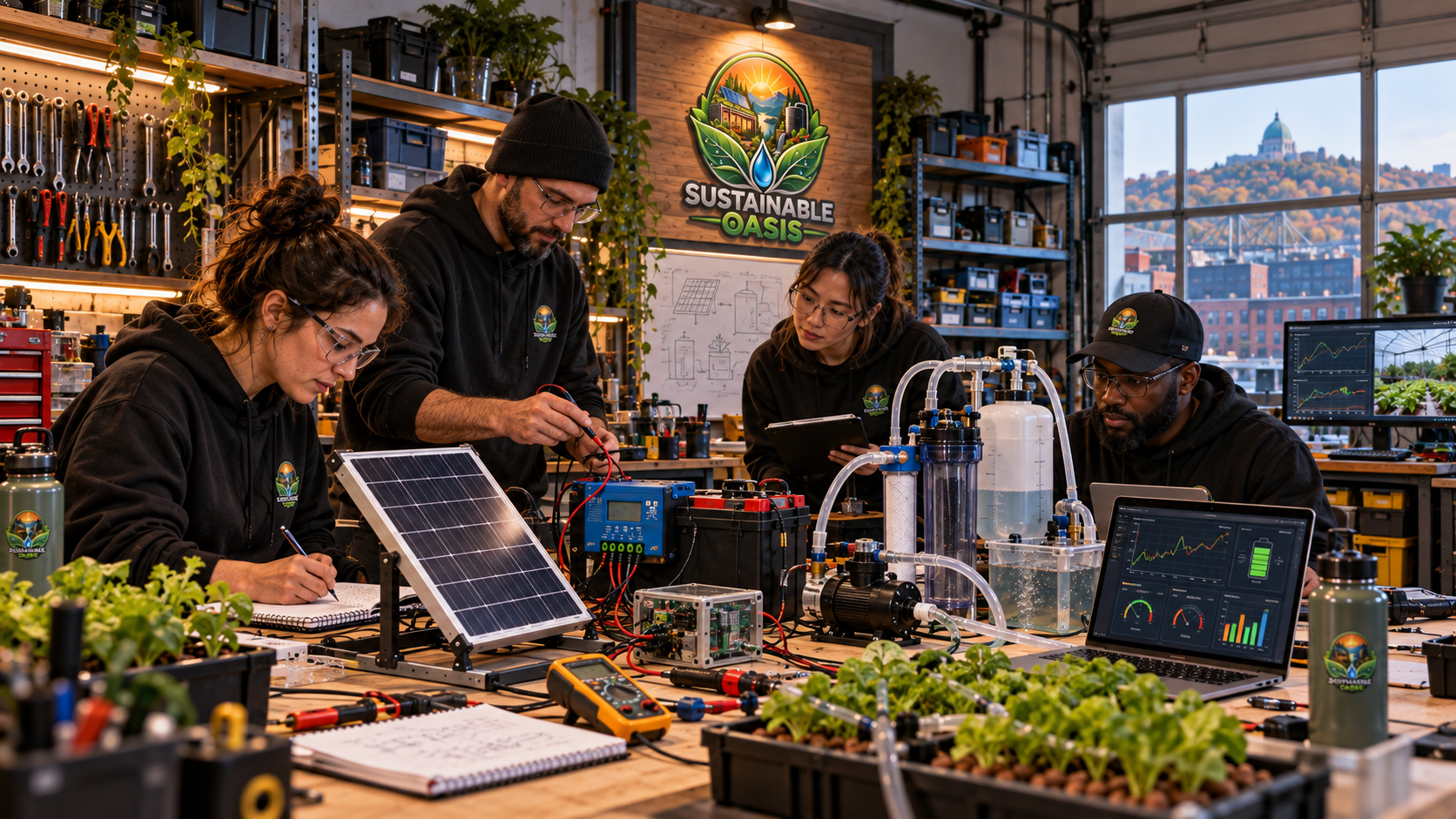
FOOD + RESEARCH
Sustainable Oasis research can compare growing methods, water consumption, productivity and system configurations.
Controlled experiments help separate observations from assumptions.
LEARNING OUTCOMES
Identify inputs, outputs and system boundaries.
Record harvest using consistent units and periods.
Track water, area and energy when applicable.
Compare harvest with growing area and water use.
Recognize the biological and mechanical relationships in a recirculating growing system.
Use evidence to strengthen future growing systems.
FOOD KNOWLEDGE PIPELINE
CONTINUE LEARNING
The next Academy learning path brings energy, water, food and infrastructure together into a broader resilience framework.
SUSTAINABLE OASIS FOOD