
Energy Fundamentals
Learn the relationship between voltage, current, power, energy and time.
COURSE 01 — ENERGY SYSTEMS
Energy becomes easier to understand when we stop treating generation, batteries and loads as isolated components.
This Sustainable Oasis Academy course introduces the complete energy pathway: generation, storage, distribution, consumption, recovery, losses and measurement.
The objective is to learn how to describe an energy system with evidence instead of assumptions.
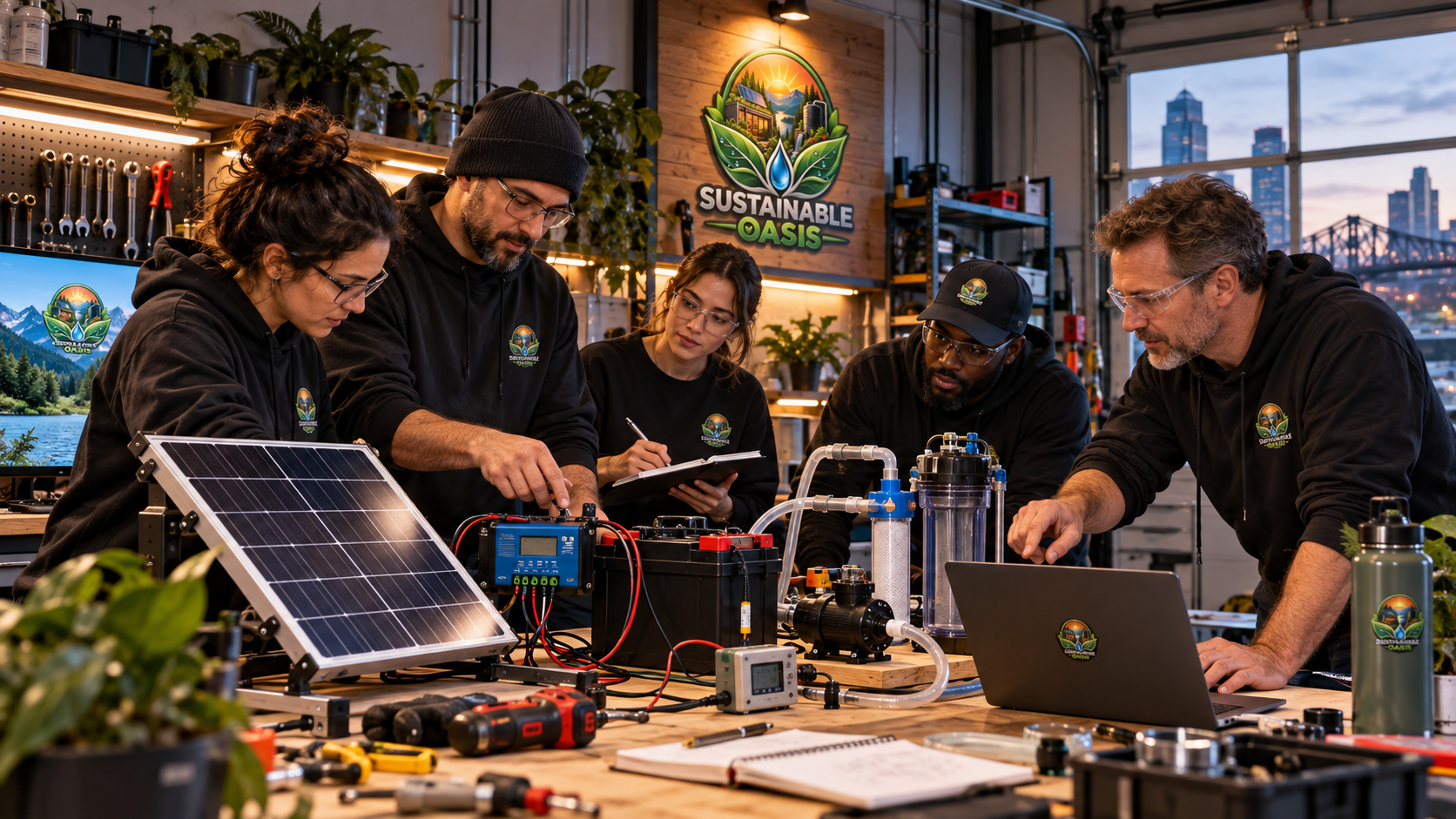
THE ENERGY FLOW
Understanding that movement is the foundation of energy management.
COURSE MAP
Each module builds toward a complete understanding of energy flow and measurement.
Learn the relationship between voltage, current, power, energy and time.
Understand how solar and other sources provide electrical energy to a system.
Understand batteries, usable capacity, charge, discharge and state of energy.
Measure what equipment consumes and understand how load profiles affect autonomy.
Learn why converters, chargers, wiring and other components cannot be treated as lossless.
Explore how otherwise-lost energy may be recovered without confusing recovery with energy creation.
Learn how meters and logging turn electrical behavior into usable evidence.
Combine measurement, storage, loads and recovery into one energy accounting system.
MODULE 01
Understanding this distinction is one of the most important foundations of practical energy systems.
Electrical power describes how quickly energy is being transferred at a moment in time.
Electrical energy describes how much energy has been transferred over a period of time.
BASIC ENERGY MATH
Power in watts equals voltage multiplied by current.
Energy equals power multiplied by time.
Efficiency compares useful output energy with measured input energy.
Complete accounting includes useful output, storage changes and losses.
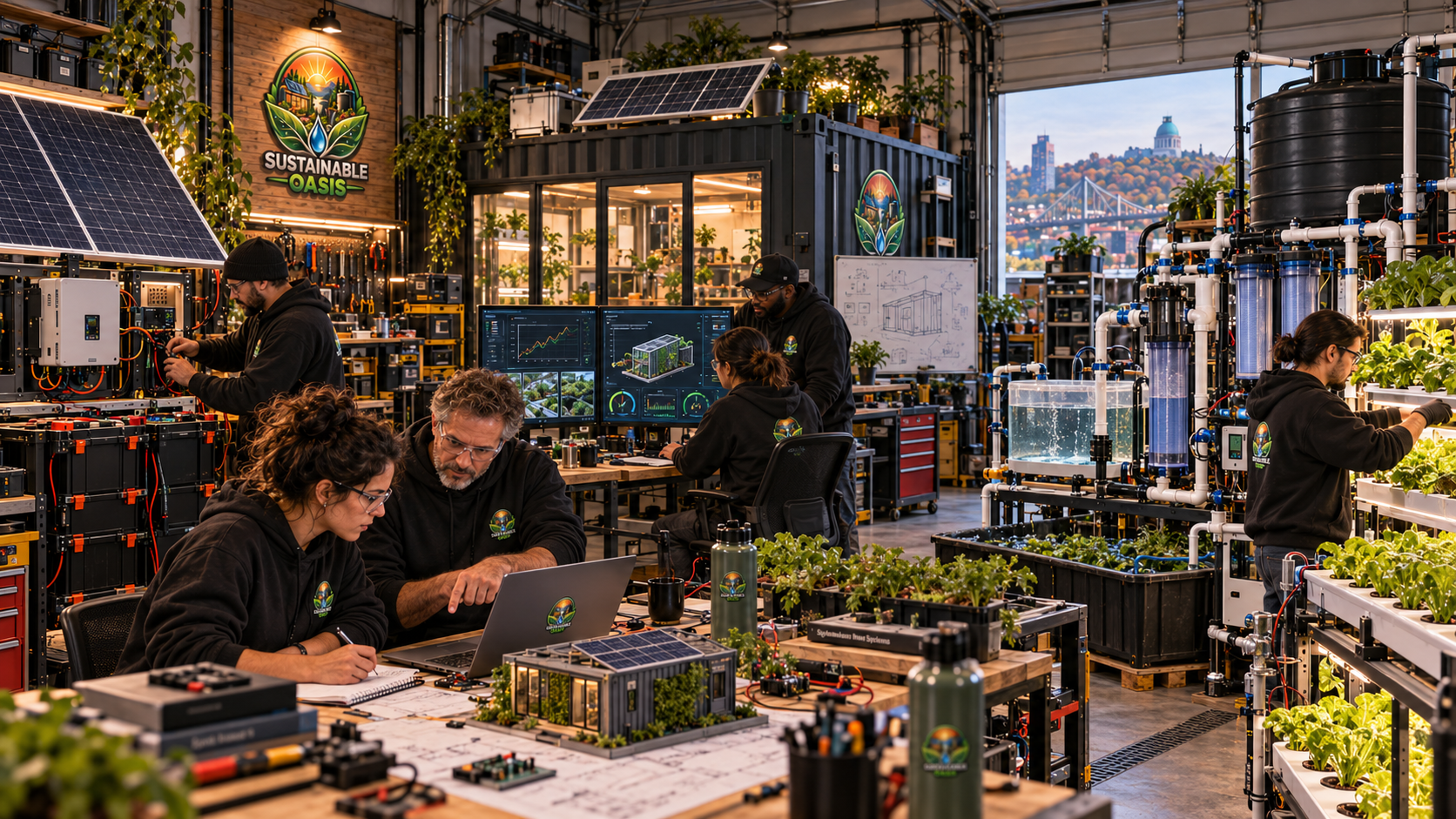
MODULE 02 — GENERATION
Solar generation changes with available sunlight, orientation, shading, temperature and system losses.
Planning calculations provide a useful baseline, but physical measurement is needed to determine actual production.
Planning example only. Actual production must be measured under real operating conditions.
MODULE 03 — STORAGE
Storage planning must consider usable depth, conversion efficiency, operating limits and load demand.
The rated energy capacity of the battery system.
The portion of storage intended to be used during normal operation.
Charging, discharging and conversion introduce energy losses.
Runtime depends on usable stored energy and actual load demand.
Demonstration planning example only.
STORAGE THINKING
A system can appear to produce useful output while quietly depleting stored energy.
Accurate energy accounting therefore includes changes in storage state.
MODULE 04 — LOADS
Before adding more generation or storage, first understand where energy is being used.
Equipment that operates for long periods can dominate daily energy consumption.
Short-duration high-power equipment can affect inverter and battery sizing.
Some loads can operate when renewable energy is abundant.
Essential loads should be identified separately from optional consumption.
MODULE 05 — CONVERSION
Energy can pass through several devices before reaching the final load.
Each conversion introduces some combination of electrical, thermal or mechanical loss.
MODULE 06 — ENERGY RECOVERY
Many systems discard energy through heat, motion, pressure or braking.
Some of that otherwise-lost energy may be recoverable, but the complete system must still obey energy conservation.
Every motor, pump, compressor, charger, controller and storage change must remain inside the accounting boundary when it contributes to the test.
ENERGY CONSERVATION
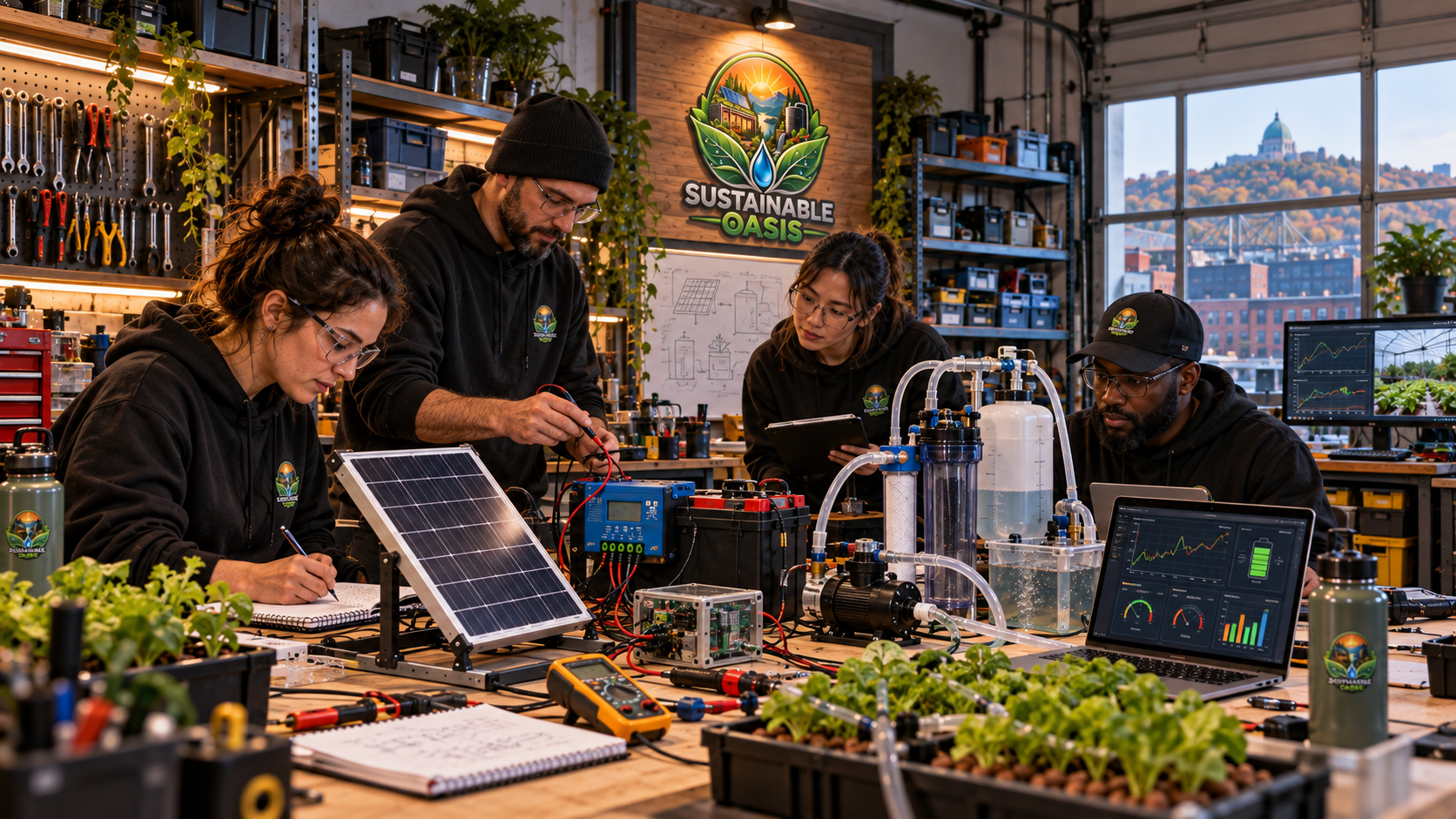
MODULE 07 — MEASUREMENT
Measurement turns electrical behavior into evidence.
A useful measurement system should preserve the units, direction, timing and context of each energy flow.
DATA LITERACY
Example information used to explain a system or interface.
DEMOValues created from assumptions or planning models.
ESTIMATEDValues recorded from a physical system using documented instrumentation.
MEASUREDValues calculated from documented source data.
DERIVEDMODULE 08 — SO-EMS
The Sustainable Oasis Energy Management System is our master R&D framework for energy measurement.
SO-EMS is designed to track energy entering, leaving, being stored and being recovered across experimental systems.
SO-EMS M01
SO-EMS M01 is a low-voltage DC measurement bench designed to establish trustworthy energy accounting before larger routing or storage experiments are attempted.
It provides the foundation for comparing input, output, storage change and recovery using consistent watt-hour measurements.
PRACTICAL EXERCISE
A useful first experiment is intentionally simple.
Choose a low-voltage DC load with understandable operating behavior.
Record the operating voltage across the defined system boundary.
Record the current flowing through the load.
Track how long the system operates.
Convert the measurements into watt-hours and compare with expectations.
ENERGY SAFETY
Low voltage reduces some hazards but does not eliminate electrical risk.
Batteries can deliver very high fault current and can create fire, short-circuit and equipment hazards.
Use suitable wiring, protection, fusing, connectors and procedures.
Mains-voltage and high-energy systems require appropriate qualifications and safety practices.
COURSE TOOLS
Sustainable Oasis calculators provide a planning baseline before physical tests begin.
The learning opportunity comes from comparing those estimates with measured results.
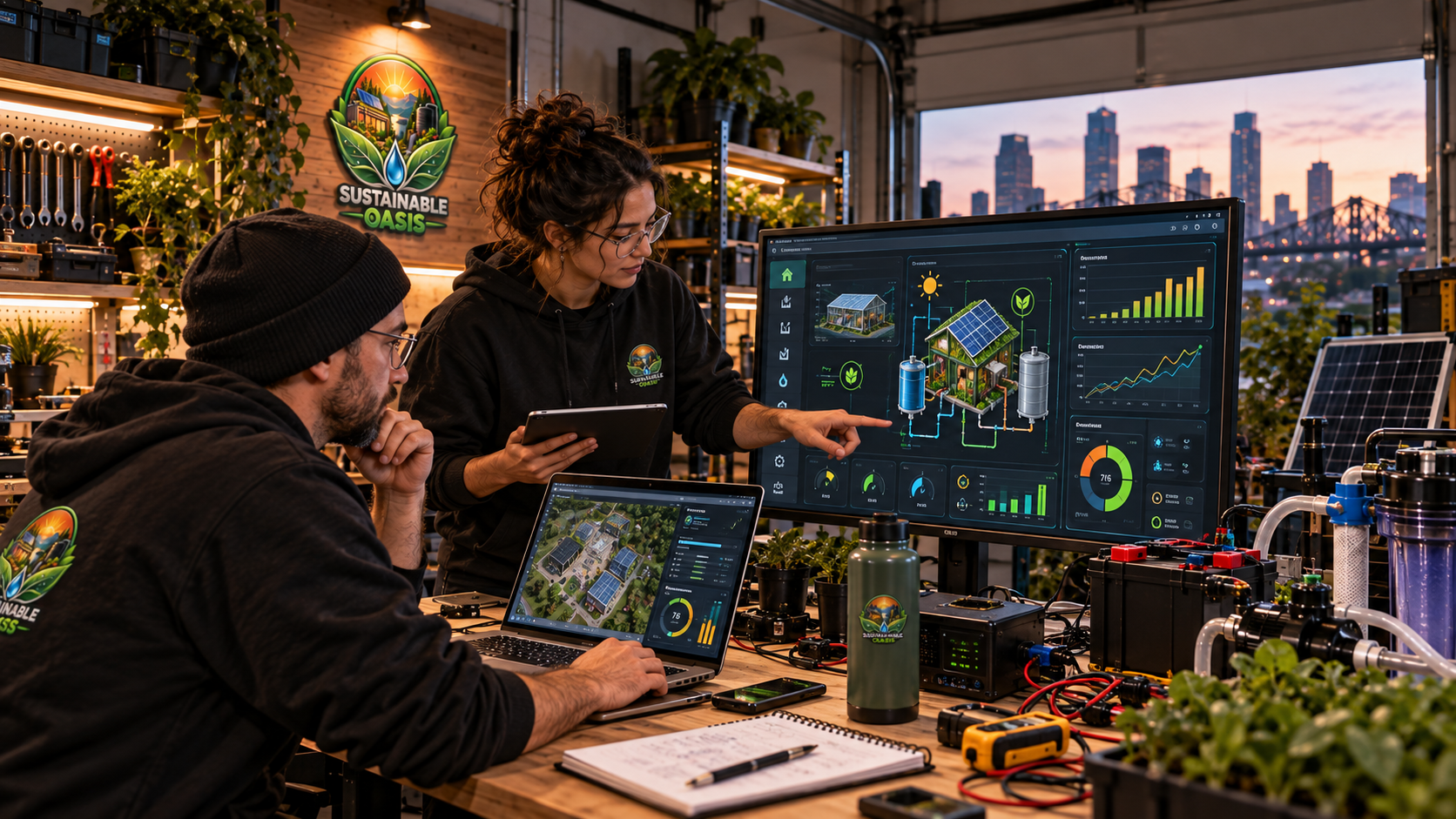
ENERGY + CONTROL ROOM
The Sustainable Oasis Control Room provides a digital location for organizing generation, consumption, storage and recovery values.
Estimates remain visibly separate from measured physical data.
Enter Control RoomFROM LAB TO FIELD
Real installations introduce weather, temperature, wiring distance, equipment variation, aging, maintenance and changing load behavior.
Controlled testing and measurement before larger deployment.
Energy Lab →Practical prototype development, instrumentation and integration.
Garage Lab →Future field comparison of renewable systems under real site conditions.
Vietnam Oasis →Energy operating as one part of an integrated water, food, shelter and automation system.
Complete Oasis →LEARNING OUTCOMES
Understand the relationship between generation, storage, loads and losses.
Build useful planning baselines for loads, solar and batteries.
Use watt-hours and defined system boundaries to evaluate real performance.
Recognize conversion losses and hidden auxiliary consumption.
Understand recovery without double-counting energy or ignoring system inputs.
Improve planning models using real measurements.
ENERGY KNOWLEDGE PIPELINE
CONTINUE LEARNING
The next Academy learning path explores water: capture, storage, gravity, pumping, filtration, consumption and reuse.
SUSTAINABLE OASIS ENERGY