Water Fundamentals
Define supply, demand, storage, flow and the water-system boundary.
COURSE 02 — WATER SYSTEMS
Water resilience is more than installing a tank.
A complete water system connects source, capture, storage, treatment, distribution, consumption, recovery and measurement.
This Sustainable Oasis Academy course teaches water as a complete resource cycle so that systems can be planned, tested and improved with evidence.
THE WATER CYCLE
Water becomes easier to manage when the complete path through the system is visible.
COURSE MAP
Each module builds toward a complete understanding of water availability, movement and resilience.
Define supply, demand, storage, flow and the water-system boundary.
Understand wells, municipal supply, rainfall and other potential sources.
Connect tank capacity with daily demand and reserve duration.
Explore elevation, pressure, pipe flow and gravity distribution.
Understand how moving water creates an energy demand.
Learn why water quality requirements depend on intended use.
Explore opportunities to reduce unnecessary freshwater demand.
Combine source diversity, storage, treatment, distribution and measurement.
MODULE 01 — FUNDAMENTALS
A water system cannot be evaluated from tank size alone.
We need to understand how water enters the system, how quickly it is consumed and how much reserve remains available.
WATER BALANCE
A simplified water balance can help organize the major flows.
MODULE 02 — SOURCES + CAPTURE
Different sites may have access to different combinations of water sources.
Roof surfaces can provide a distributed collection opportunity where conditions allow.
Wells can provide dependable supply where geology, quality and regulations permit.
Existing water infrastructure may remain an important primary or backup source.
Other sources require careful evaluation of quality, reliability and legal use.
RAINWATER CAPTURE
Rainwater collection potential depends primarily on collection area, rainfall and collection efficiency.
A useful planning relationship is:
COLLECTION ≈ AREA × RAINFALL × EFFICIENCY
When square metres and millimetres are used, one millimetre of rain on one square metre corresponds approximately to one litre of water before losses.
Planning example only. Actual collection depends on rainfall, roof geometry, losses, overflow and operating conditions.
MODULE 03 — STORAGE + AUTONOMY
Storage provides time between supply events.
Total volume the water-storage system can physically hold.
Operational volume available after reserves and practical limits.
Expected daily consumption across people and connected systems.
Approximate time storage can support the defined demand.
Demonstration planning example only. Real consumption can vary significantly.
WATER AUTONOMY
A basic planning relationship is:
AUTONOMY = USABLE STORAGE ÷ DAILY DEMAND
This calculation becomes more useful when demand is based on actual measurements instead of assumptions.
Water CalculatorMODULE 04 — GRAVITY + FLOW
A tank positioned above the point of use creates pressure from the elevation difference.
The actual flow available also depends on pipe diameter, pipe length, fittings, restrictions and demand.
GRAVITY DESIGN PRINCIPLE
When site conditions permit, gravity can reduce the amount of continuous pumping required.
This does not make water movement free: energy may still be required to place water at the higher elevation in the first place.
The complete system boundary must include that pumping energy when evaluating efficiency.
MODULE 05 — PUMPING + ENERGY
Pumping connects the water system directly to the energy system.
Record electrical energy consumed by the pumping system.
Measure useful water volume moved during the test.
Record the vertical elevation the pump must overcome.
Measure the rate of water movement under real operating conditions.
WATER + ENERGY
When water must be pumped, every litre saved can also reduce pumping energy.
Efficient water design can therefore improve both water resilience and energy resilience.
MODULE 06 — FILTRATION + TREATMENT
Water used for irrigation, cleaning, equipment or human consumption may require very different treatment approaches.
Visual clarity alone does not establish that water is safe to drink.
Screens and first-stage filtration can remove larger physical material.
Finer filtration can reduce suspended particles depending on system requirements.
Appropriate testing is needed when water quality affects health or system safety.
Treatment design should match the source and intended use.
WATER SAFETY
Water intended for drinking or food preparation requires appropriate treatment, testing and compliance with applicable health requirements.
Source conditions can change over time, so a treatment process that worked previously should not automatically be assumed sufficient forever.
Sustainable Oasis educational material is not a substitute for qualified water-quality testing or applicable public-health guidance.
MODULE 07 — RECOVERY + REUSE
Appropriate recovery and reuse can reduce total demand on primary water sources.
Reuse must remain compatible with water quality, sanitation, local regulations and the intended application.
WATER LOOP
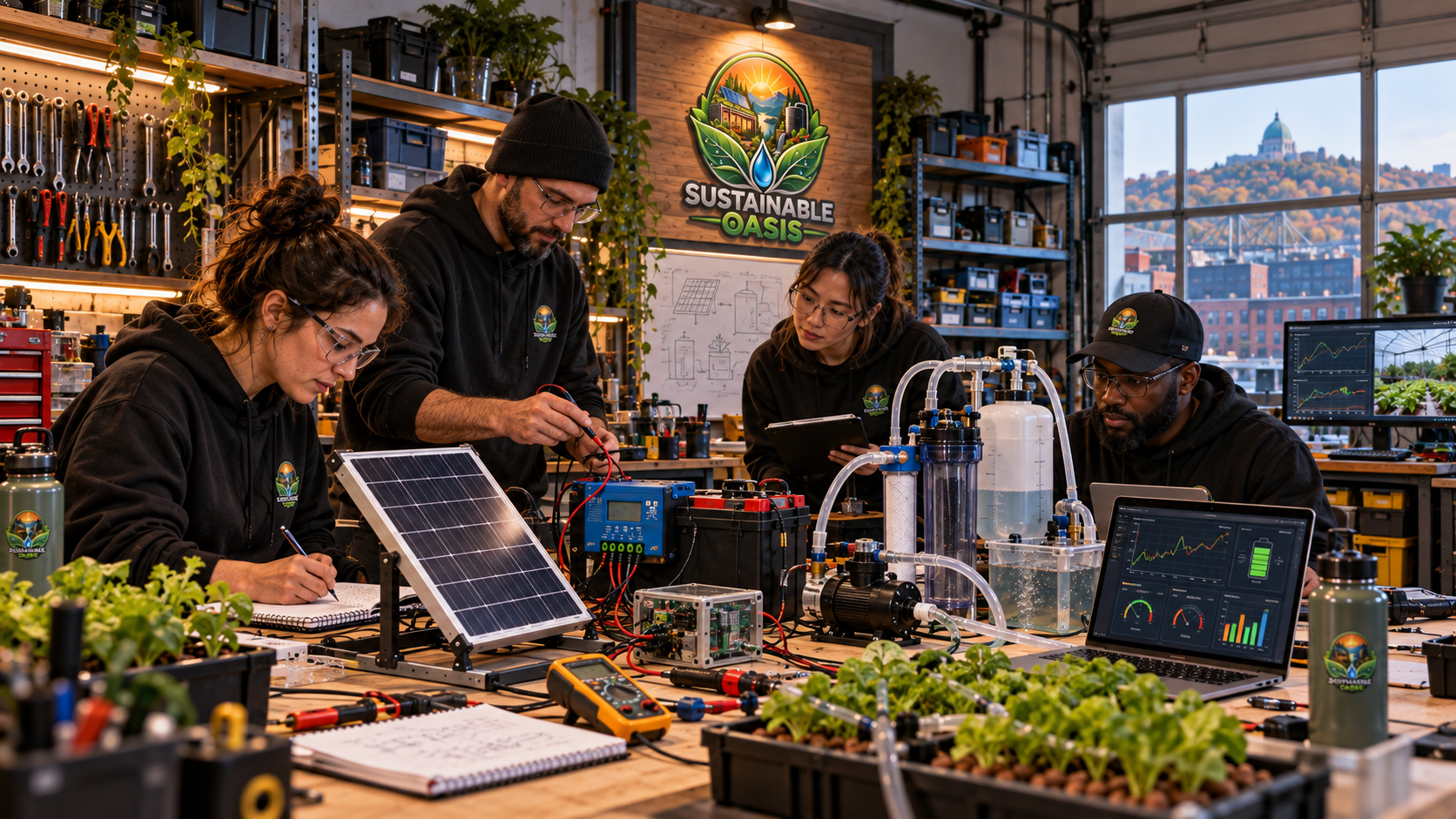
WATER LAB
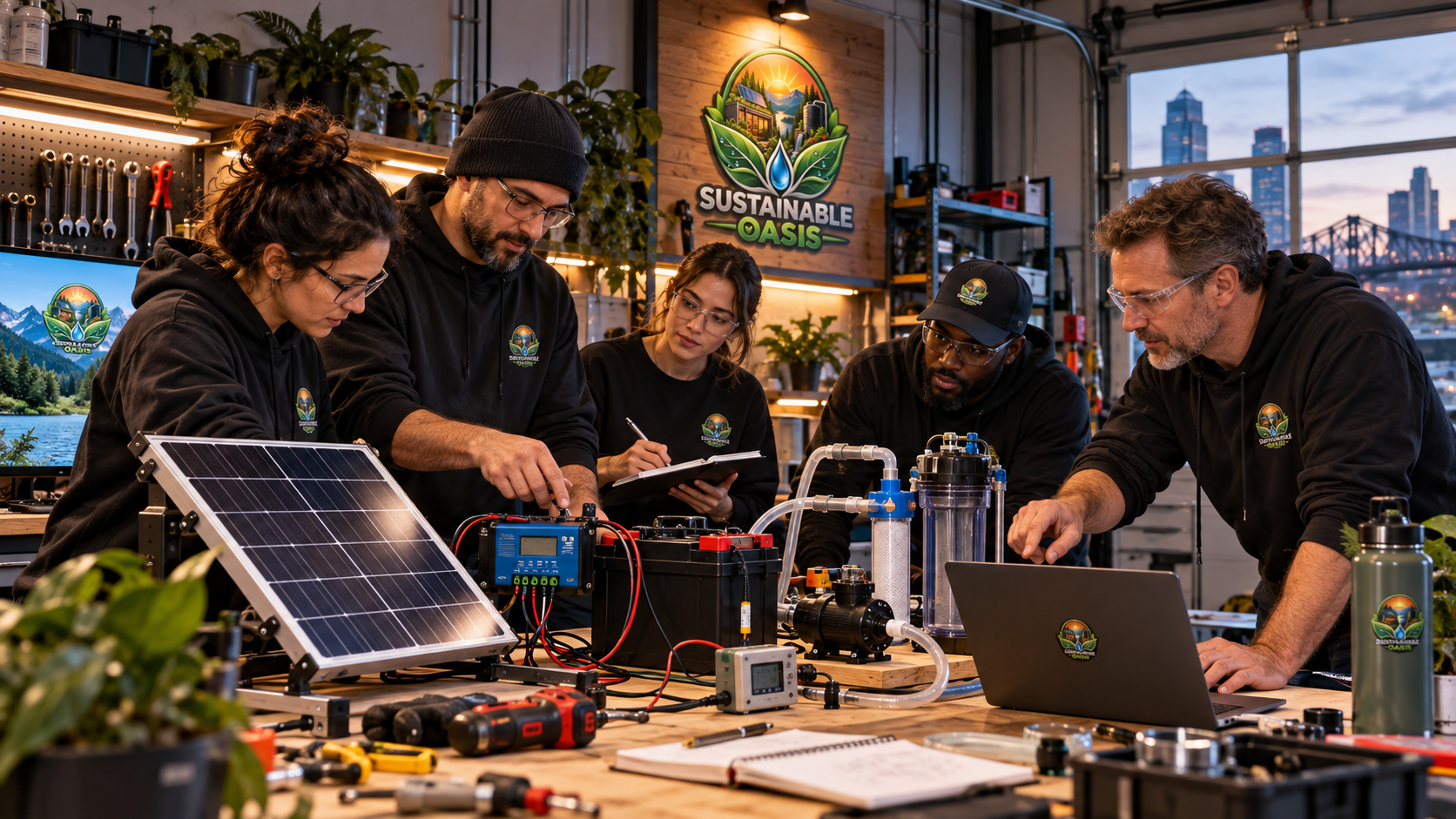
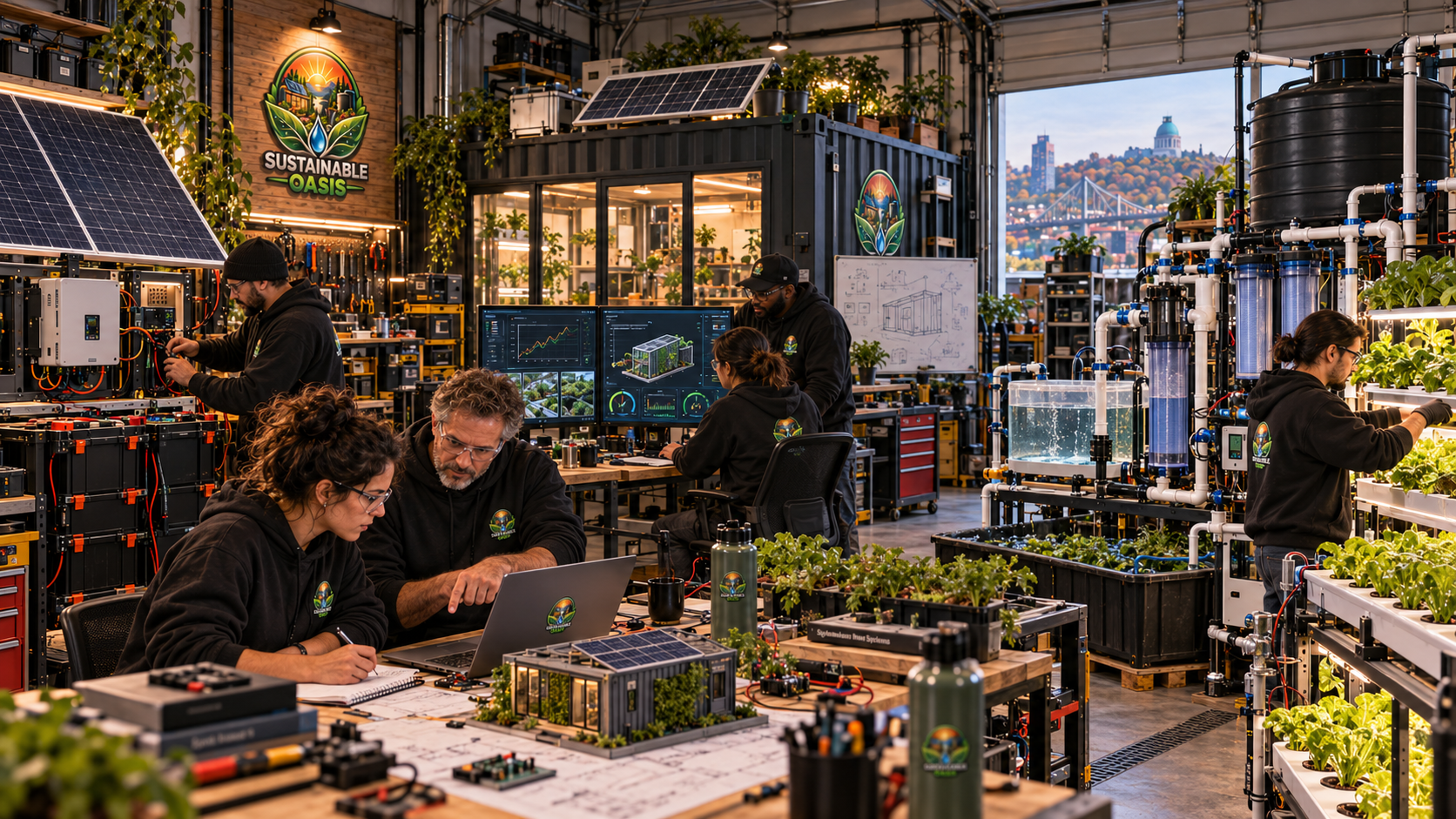
The Sustainable Oasis Water Lab provides a practical environment for testing storage, gravity, pumping, flow and recovery.
Small test benches allow variables to be changed without risking a complete field installation.
WATER + ENERGY RECOVERY
Where water already has useful head and flow, a turbine may recover part of that hydraulic energy.
If electricity was first used to pump the same water upward, that pumping energy must remain inside the system boundary.
The turbine can recover part of available energy; it cannot return more net energy than the complete system received without another external energy source.
MODULE 08 — WATER RESILIENCE
Reliability improves when supply, storage and distribution do not depend on one fragile component.
Use appropriate alternate supply paths where practical.
Maintain a reserve that reflects realistic demand.
Use passive distribution where terrain allows it.
Match water quality to the intended use.
Monitor storage and consumption so changing conditions become visible.
WATER + AUTOMATION
Water automation can eventually monitor tank levels, flow, pump operation and abnormal conditions.
Essential controls should remain understandable, include appropriate fail-safe behavior and preserve practical manual operation where needed.
WATER + CONTROL ROOM
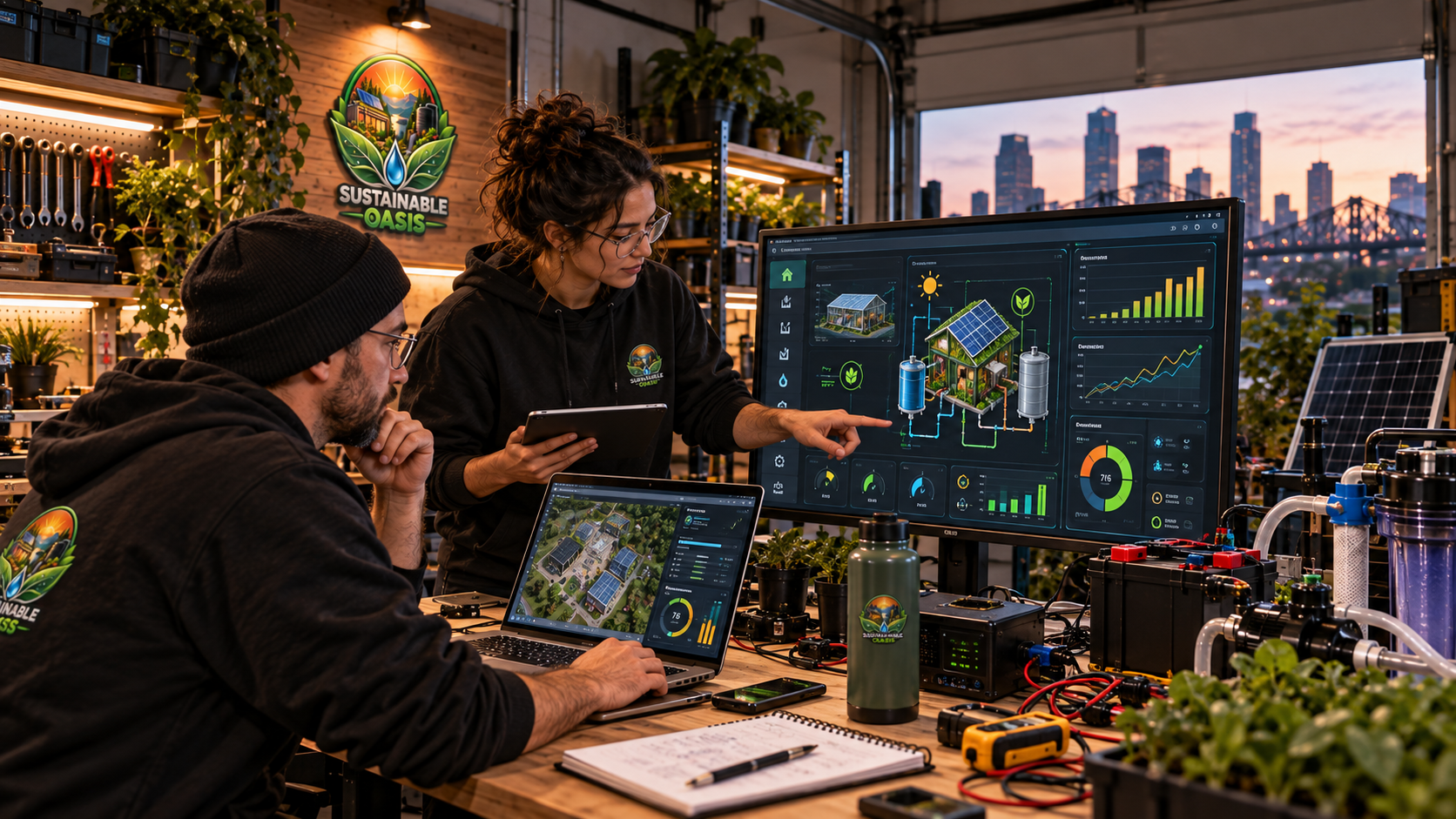
The Sustainable Oasis Control Room can organize collected, filtered, reused and stored water values.
This provides a foundation for comparing planning assumptions with physical measurements.
DATA LITERACY
Example values used for education or interface demonstration.
DEMOWater availability or demand calculated from assumptions.
ESTIMATEDActual volume or flow recorded from a physical system.
MEASUREDCalculated autonomy or efficiency based on documented source measurements.
DERIVEDPRACTICAL EXERCISE
A small test can reveal the relationships between storage, height and flow.
Begin with a known quantity of water.
Record the vertical difference between water level and outlet.
Use a known pipe and outlet configuration.
Record litres delivered over a measured period.
Change one variable and compare the result.
FROM LAB TO FIELD
Distance, elevation, rainfall, soil, source quality and seasonal conditions can all change system behavior.
Small-scale tests for storage, flow, pumping and gravity.
Water Lab →Practical water prototypes, instrumentation and automation.
Garage Lab →Terrain, elevation, storage and gravity-based field infrastructure.
Vietnam Oasis →Water operating alongside energy, food, shelter and automation.
Complete Oasis →WATER INSIDE THE COMPLETE OASIS
WATER + RESEARCH
Sustainable Oasis research can compare gravity, pumping, storage, flow and recovery.
Controlled experiments help determine whether apparent performance improvements survive complete system accounting.
LEARNING OUTCOMES
Identify source, storage, demand and discharge.
Create rainwater planning estimates from area and rainfall.
Compare usable storage with realistic demand.
Connect elevation with pressure and flow.
Include water movement inside the energy system.
Use source diversity, storage, treatment and measurement together.
WATER + KNOWLEDGE
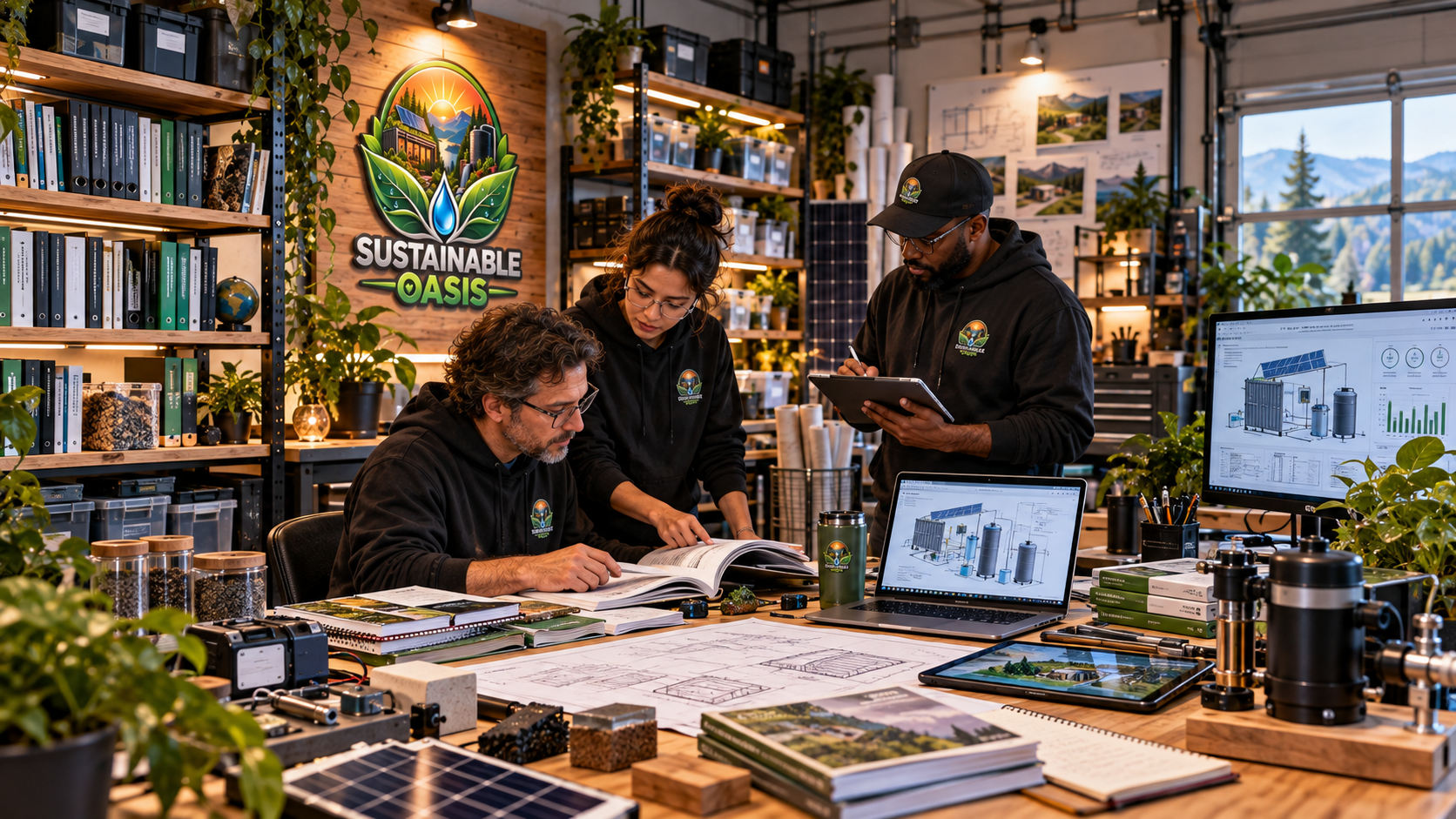
Flow tests, tank behavior, pump energy, filtration results and field observations can all become reusable knowledge.
Sustainable Oasis can transform those lessons into field notes, guides, case studies and blueprints.
WATER KNOWLEDGE PIPELINE
CONTINUE LEARNING
The next Academy learning path connects growing area, water consumption, energy, productivity and harvest.
SUSTAINABLE OASIS WATER