Resilience Fundamentals
Understand dependency, vulnerability, redundancy and recovery.
COURSE 04 — RESILIENCE
Resilience is not one battery, one water tank or one backup plan.
It emerges when energy, water, food, shelter, infrastructure and operating knowledge support one another.
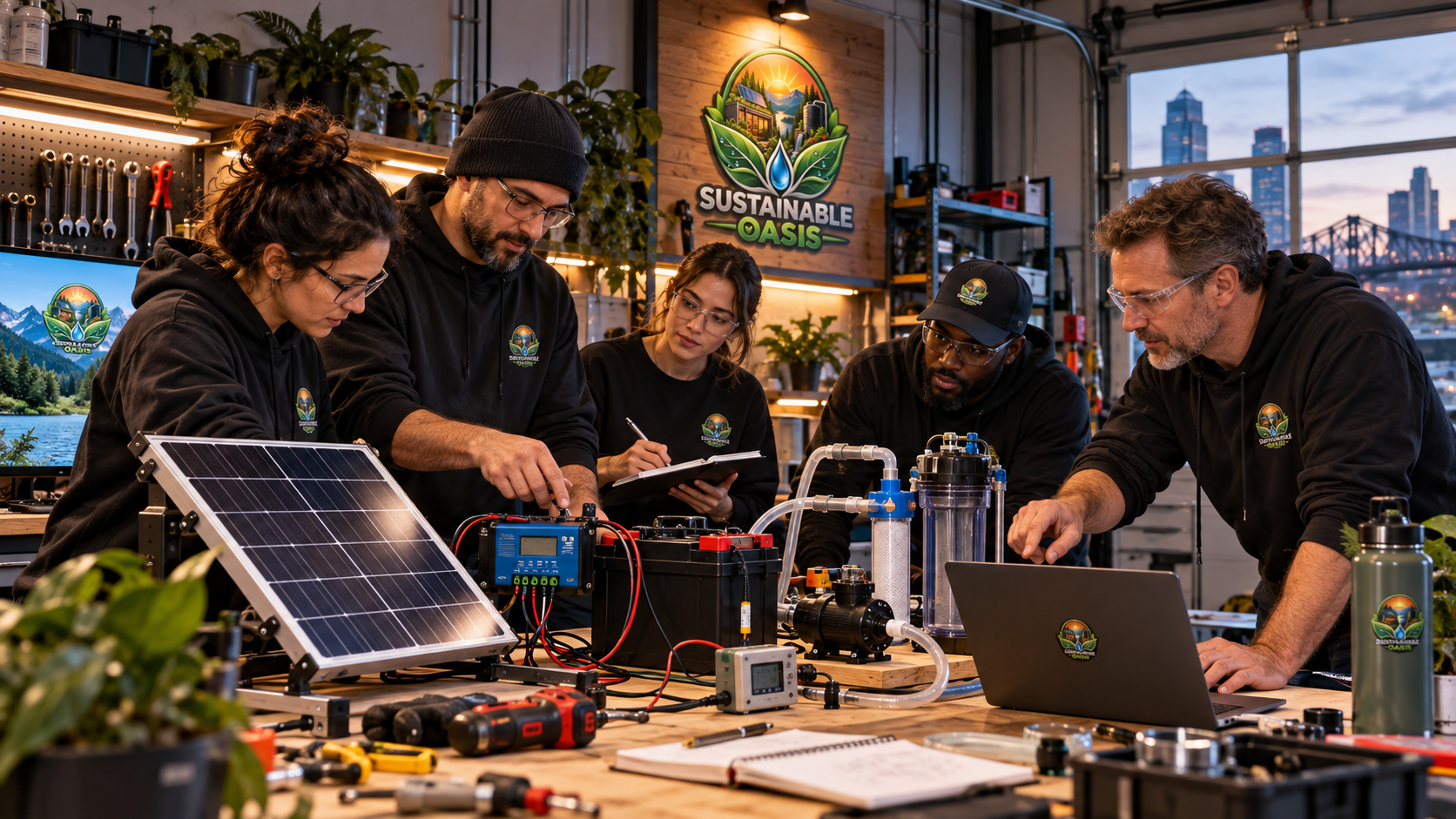
This Sustainable Oasis Academy course introduces practical system thinking for reducing vulnerability, protecting essential needs and recovering from disruption.
THE RESILIENCE CYCLE
COURSE MAP
Each module examines one part of the larger resilience system.
Understand dependency, vulnerability, redundancy and recovery.
Protect essential loads through generation, storage, efficiency and prioritization.
Combine water sources, storage, treatment and conservation.
Build productive capacity, knowledge, diversity and resource efficiency.
Reduce demand and protect essential equipment through good physical design.
Identify critical single points of failure and practical backup paths.
Detect changing conditions before they become larger failures.
Combine multiple resource systems into one measurable planning framework.
MODULE 01 — FUNDAMENTALS
Resilience begins with dependency mapping.
What must continue operating? What resources does it require? What happens when one component fails?
CORE PRINCIPLES
The easiest resource to protect is often the resource that does not need to be consumed.
Avoid unnecessary dependence on one source or one pathway.
Storage can bridge interruptions, but only when demand is understood.
Systems that cannot be maintained locally may create new vulnerabilities.
Visibility helps identify changing conditions before failure becomes critical.
MODULE 02 — ENERGY
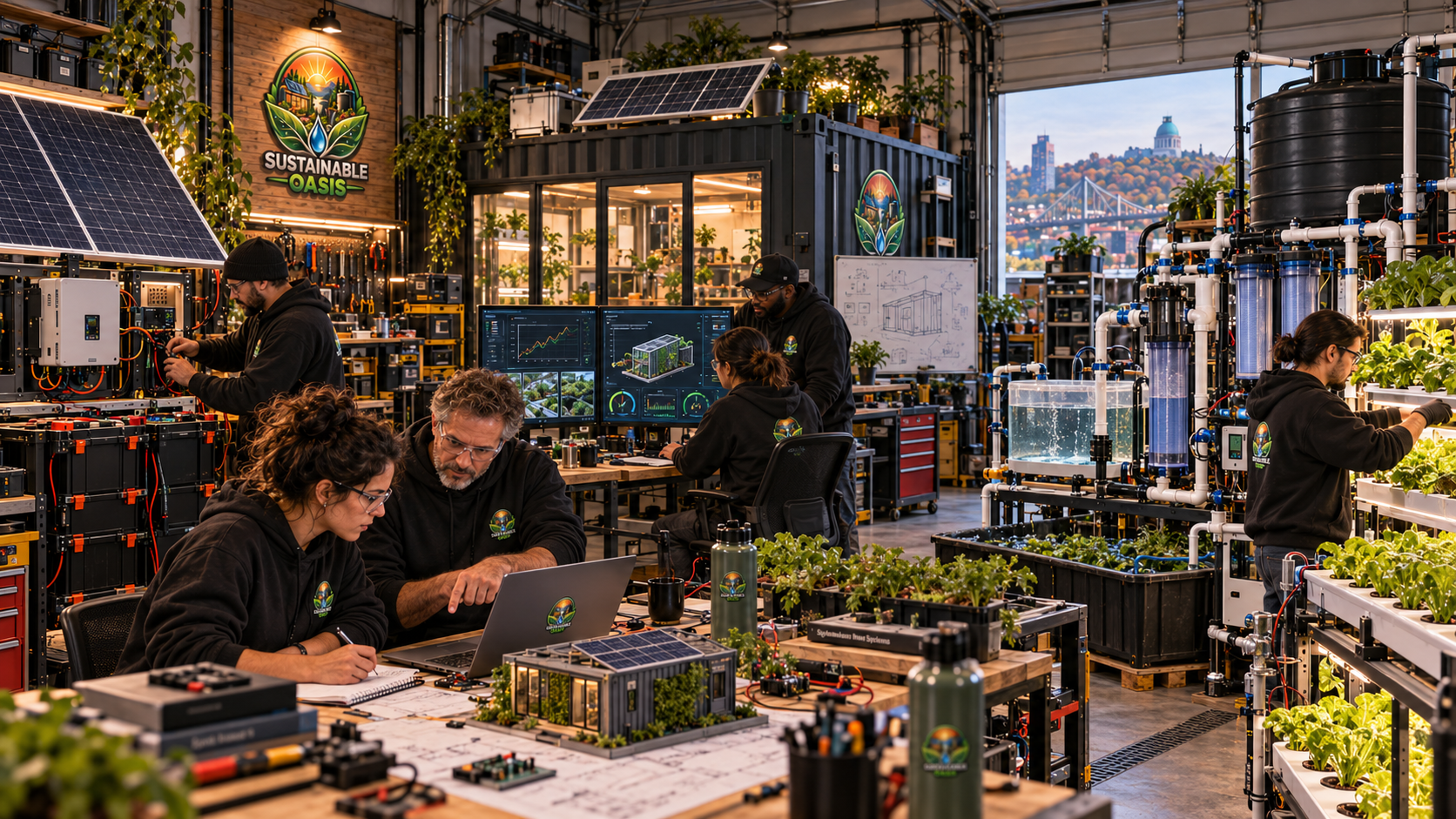
Energy resilience starts by separating critical loads from convenience loads.
Generation and storage should then be considered against those real priorities.
ENERGY AUTONOMY
Battery autonomy can be estimated by comparing usable stored energy with the expected load.
Actual runtime depends on equipment, temperature, battery condition, conversion efficiency and changing demand.
MODULE 03 — WATER
Strong water systems consider source, storage, treatment, distribution and demand together.
MODULE 04 — FOOD
Productive resilience grows when people understand how to produce, adapt and maintain food systems.
Maintain the ability to produce useful food.
Avoid dependence on one crop or one growing method.
Match growing systems to realistic water availability.
Skills remain useful even when equipment changes.
Production and storage strategies should complement one another.
Measure output against area, water, energy and time.
MODULE 05 — SHELTER + INFRASTRUCTURE
Better physical design can reduce heating, cooling, lighting and maintenance requirements.
Shelter is therefore part of the energy, water and resilience strategy.
MODULE 06 — FAILURE + REDUNDANCY
Some components create cascading failures because several other systems depend on them.
Identifying those dependencies helps prioritize backup strategies.
Find the components whose failure stops essential functions.
Prevent one failure from unnecessarily disabling unrelated systems.
Design practical alternate pathways where appropriate.
Keep critical systems understandable and serviceable.
Test backup systems before they are actually needed.
FAILURE RESPONSE
MODULE 07 — MONITORING + CONTROL
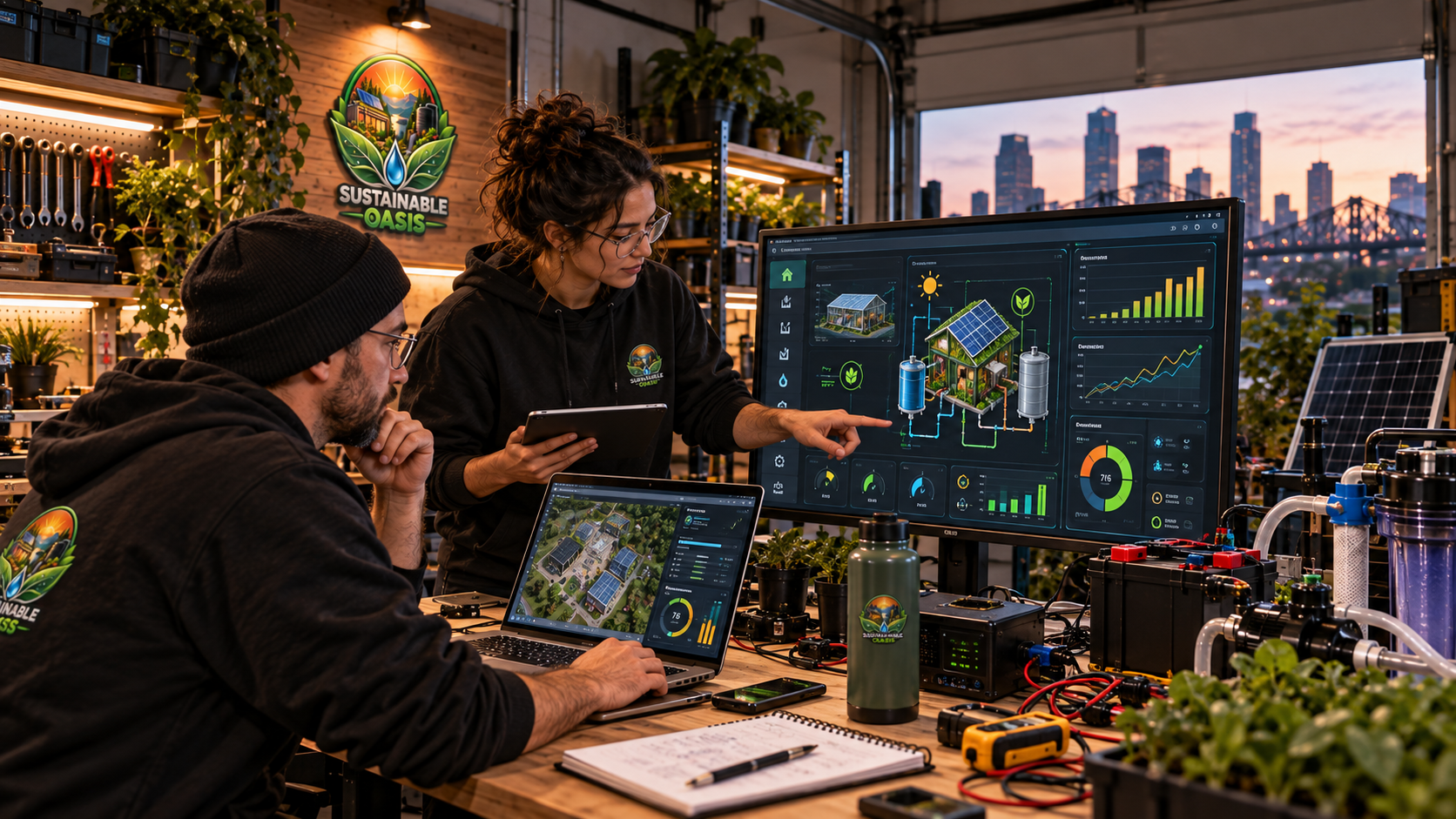
Sensors and automation can help detect low storage, unusual consumption, equipment failure or changing environmental conditions.
Essential automation should remain understandable, fail safely and preserve manual control where appropriate.
RESILIENCE + CONTROL ROOM
The Sustainable Oasis Control Room provides a common digital layer for organizing important resource information.
Energy, water, food and storage indicators can eventually be compared in one environment.
Enter Control RoomMODULE 08 — COMPLETE OASIS
The Complete Oasis approach examines how major resource systems interact.
COURSE TOOL
The Sustainable Oasis Resilience Score provides a simple planning framework for comparing major system categories.
The score is not a certification and does not guarantee real-world resilience.
Its purpose is to make weaknesses easier to see before larger investments are made.
Equal weighting is a planning model only, not a universal scientific resilience standard.
IMPORTANT DISTINCTION
A resilient system can remain connected to external infrastructure while preserving useful backup capacity and alternative pathways.
The goal is not necessarily to disconnect from everything.
The goal is to reduce critical dependency and improve the ability to continue operating, adapt and recover when conditions change.
MAINTENANCE IS RESILIENCE
Resilience depends on maintenance, testing and operational knowledge.
Periodically test backup equipment under realistic conditions.
Look for wear, leaks, corrosion, loose connections and damage.
Consider practical spare components for important repairable systems.
Preserve diagrams, procedures, settings and maintenance records.
PRACTICAL EXERCISE
Choose one essential function and map every component required to keep it operating.
Choose one essential function such as water pumping or refrigeration.
Identify energy, controls, equipment and resource dependencies.
Ask what happens if one dependency suddenly becomes unavailable.
Determine whether a safe and practical alternate pathway exists.
Reduce the most serious vulnerability first.
RESILIENCE IN REAL ENVIRONMENTS
Prototype testing, system monitoring and practical maintenance.
Garage Lab →Compact infrastructure, modular systems and maintainability.
Container Workshop →Terrain, water, distance, renewable energy and field conditions.
Vietnam Oasis →Future deployable infrastructure with additional mobility constraints.
Mobile Oasis →Long-term integration of multiple resilient resource systems.
Complete Oasis →DATA DISCIPLINE
Example information used to explain resilience concepts.
DEMOPlanning values based on assumptions or models.
ESTIMATEDValues observed from actual operating systems.
MEASUREDCalculated indicators based on documented source data.
DERIVED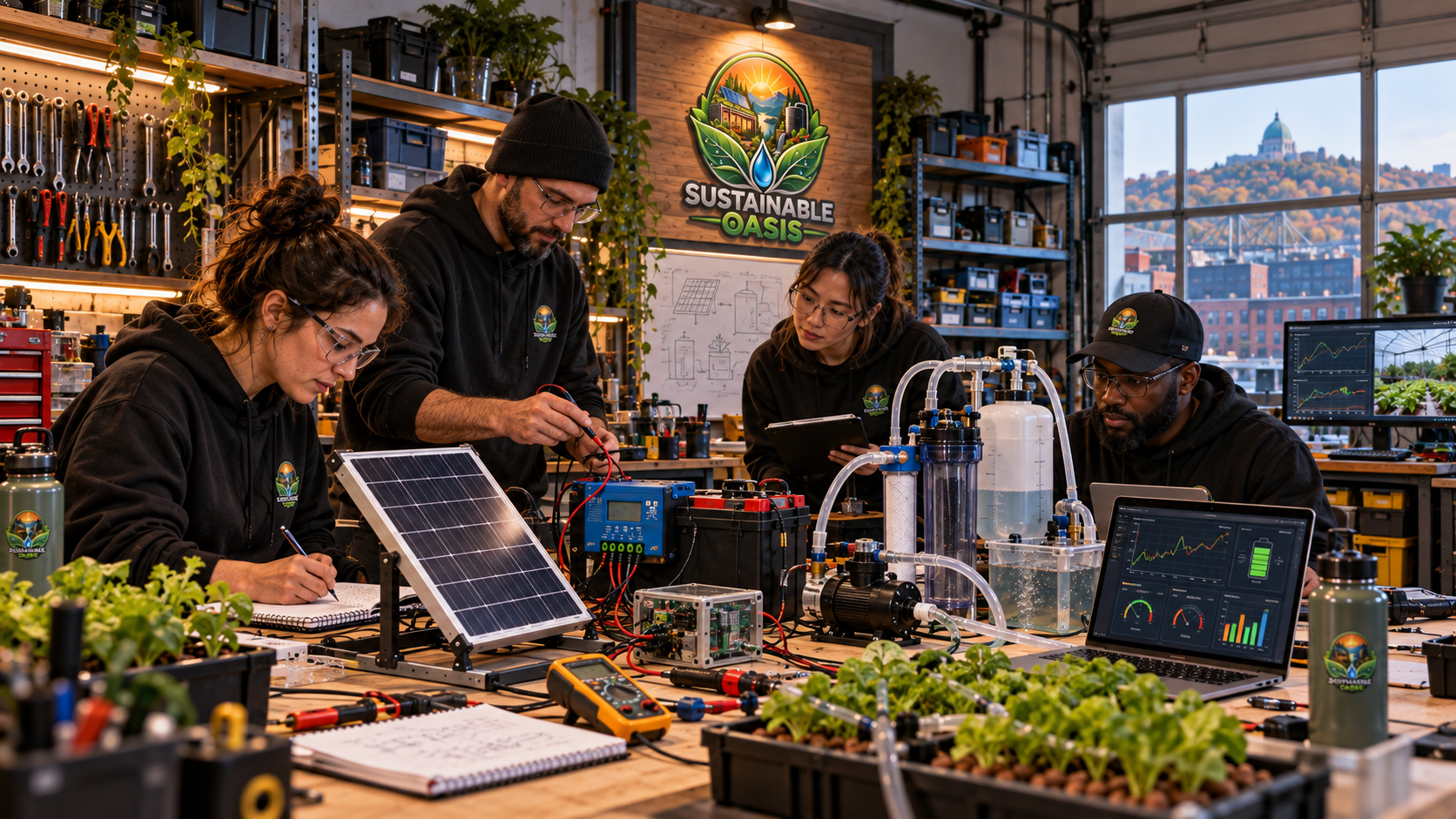
RESILIENCE + RESEARCH
Sustainable Oasis research can test autonomy, recovery time, storage behavior, system failure and backup pathways.
Controlled testing helps reveal whether the system performs as expected.
RESILIENCE + SAFETY
Batteries, generators, electrical transfer, fuel, water treatment, pressure systems and structural modifications can all create hazards.
Emergency configurations should be designed, protected and tested appropriately.
Regulated or high-risk work requires suitable professional expertise and local compliance.
LEARNING OUTCOMES
Identify what essential systems depend on.
Identify single points of failure and cascading dependencies.
Create realistic alternative pathways for essential needs.
Estimate and later measure how long stored resources can support demand.
Design systems that can be inspected, understood and repaired.
Use real performance and failure data to strengthen the next design.
RESILIENCE + KNOWLEDGE
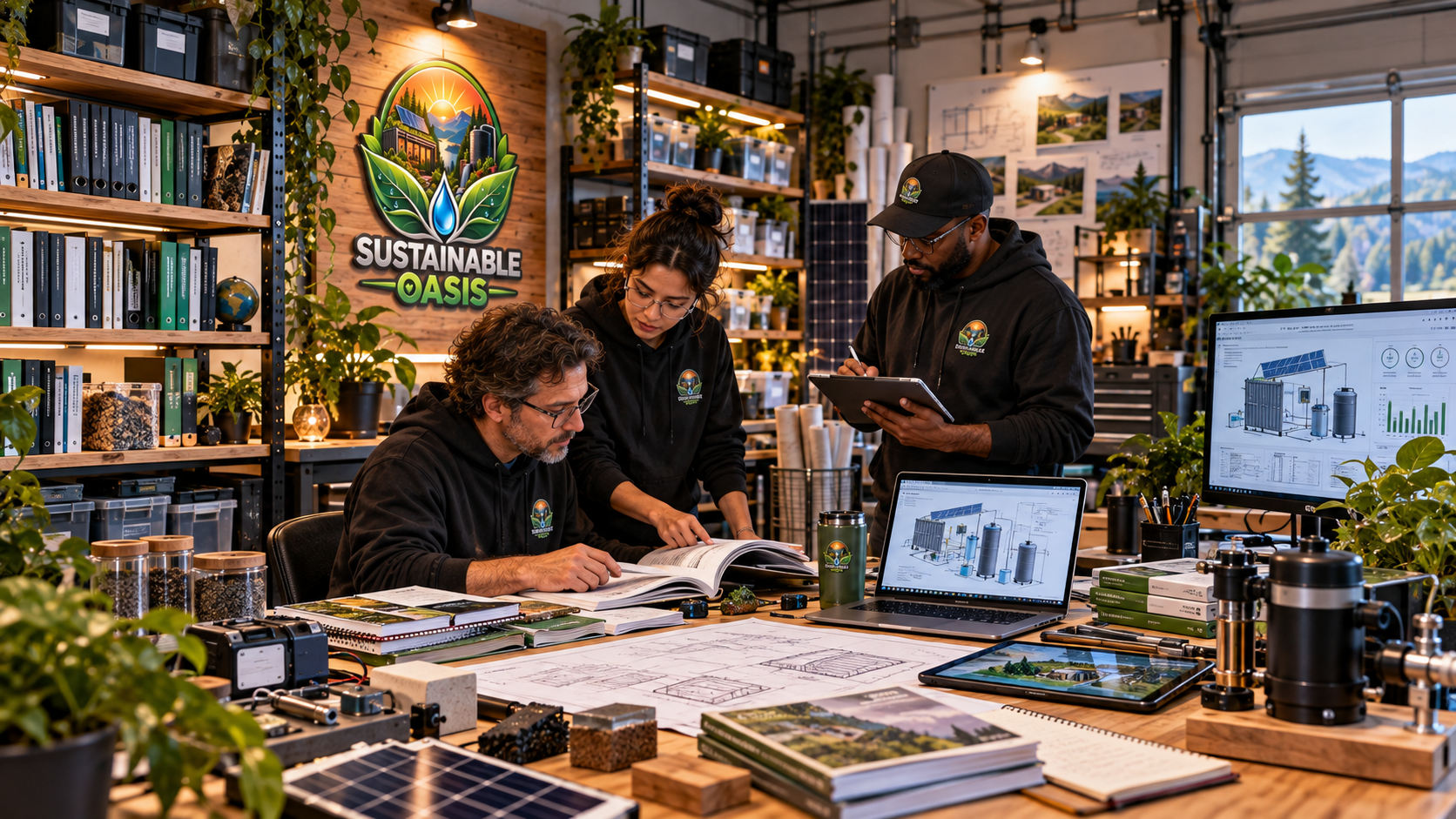
Field observations, maintenance records, failure reports and successful recovery procedures can all become reusable knowledge.
Sustainable Oasis can turn those lessons into guides, field notes, case studies and blueprints.
THE RESILIENCE LEARNING LOOP
CORE ACADEMY COMPLETE
These four learning paths form the first Sustainable Oasis Academy foundation.
From here, students can move deeper into Living Labs, research, measurement, knowledge and Complete Oasis design.
SUSTAINABLE OASIS RESILIENCE