PROJECT — CONTAINER WORKSHOP

Build a complete infrastructure laboratory inside a compact footprint.

The Sustainable Oasis Container Workshop explores how modular infrastructure can fit inside and around compact 20-foot container platforms.

The project is designed as both a physical demonstration environment and a practical research platform.

Energy, water, storage, automation, workshop functions, serviceability and future living systems can all be developed here at manageable scale.

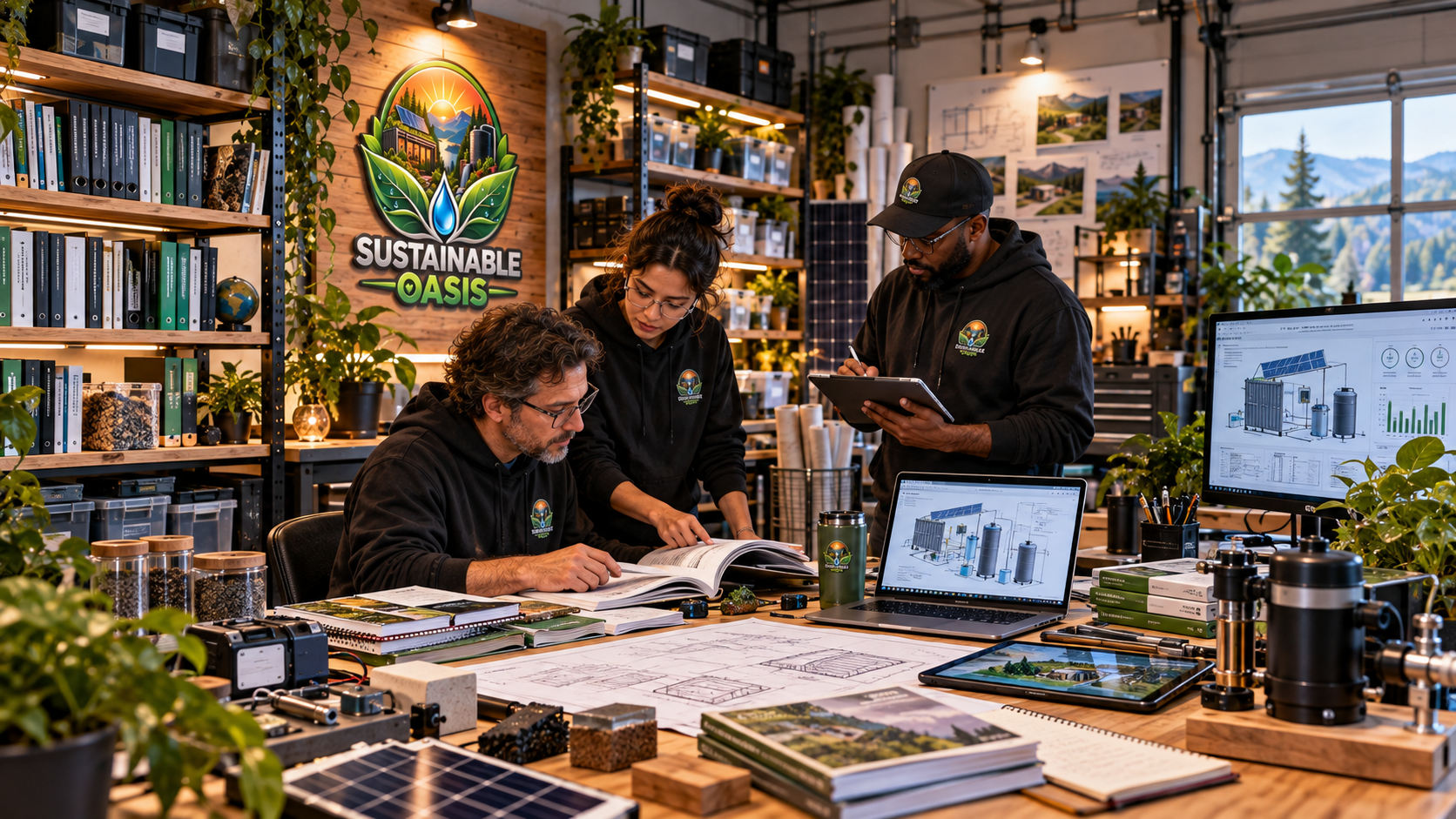
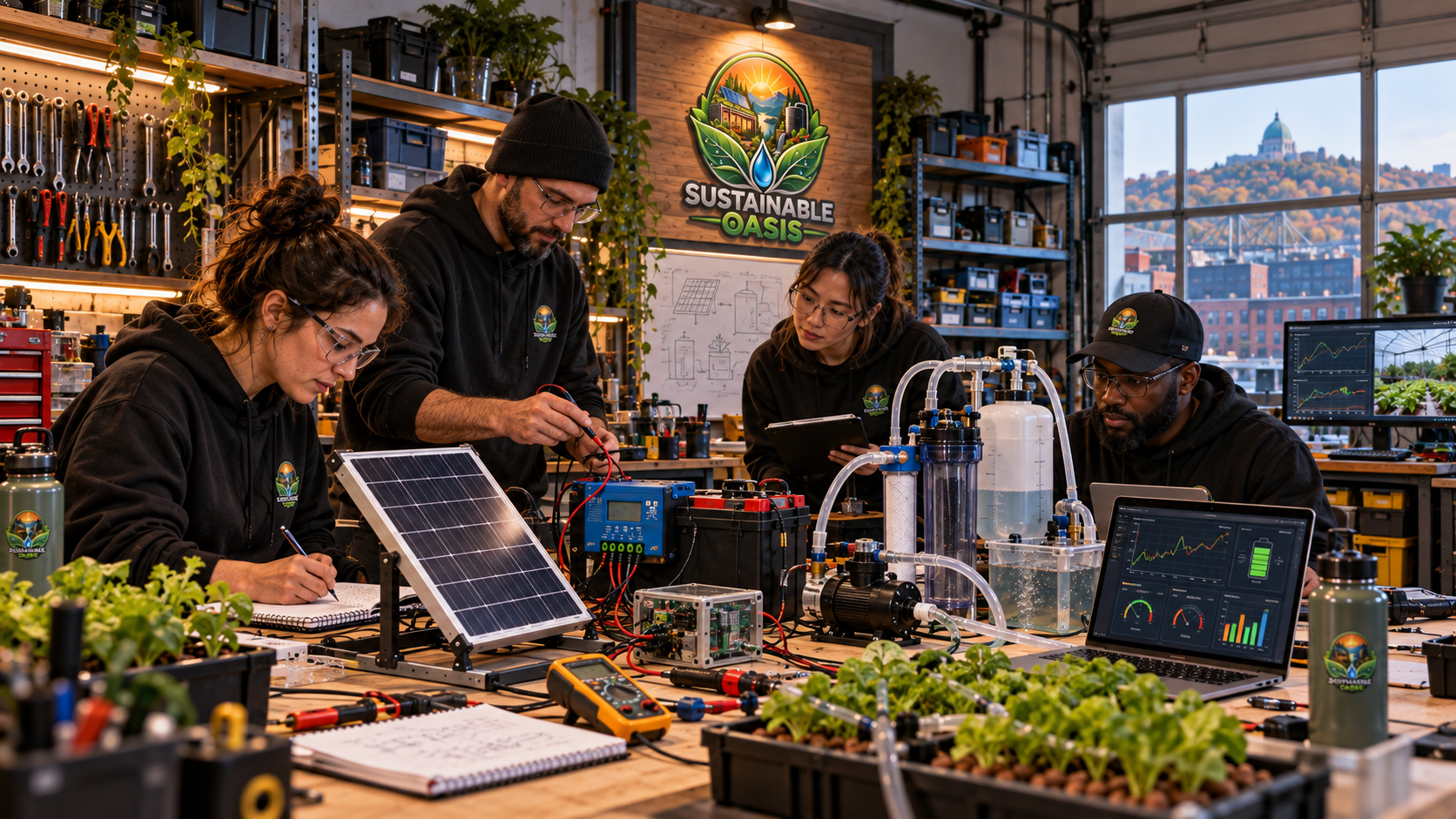
Sustainable Oasis modular container workshop infrastructure concept

PROJECT STATUS

Physical platform acquired. Infrastructure development underway.

The project is based around two 20-foot container platforms.

Their future configuration is intended to demonstrate different Sustainable Oasis infrastructure concepts while remaining modular, accessible and serviceable.

Individual systems remain in development and should be evaluated separately before being treated as validated designs.

DEVELOPMENT

TWO CONTAINERS — TWO FUNCTIONS

Demonstrate both productive infrastructure and compact living.

CONTAINER 01

Sustainable Systems Store + Demonstration

A compact demonstration environment for sustainable products, infrastructure components, research systems and educational displays.

The objective is to show physical examples rather than sustainability concepts that exist only online.
CONTAINER 02

Tiny-House Demonstration

A future compact living-system demonstration showing how shelter, utilities and resilient infrastructure can work together inside a constrained space.

The unit remains a development concept until its individual systems are designed and validated.

SITE FUNCTION FIRST

Infrastructure should improve the site without blocking how the site works.

Container placement must preserve practical vehicle access to the garage.

This is an important design constraint: infrastructure should adapt to existing movement, maintenance and operational needs.

A visually impressive layout is not useful if it prevents normal access to the site.

CONTAINER INFRASTRUCTURE

Build the platform as connected modules.

SHELTER ENERGY WATER STORAGE AUTOMATION MEASUREMENT MODULAR OASIS

DEVELOPMENT AREAS

One compact platform. Multiple research domains.

ENERGY

Electrical Infrastructure

Low-voltage distribution, future renewable integration, storage, lighting and monitoring.

Energy System →
WATER

Water Recovery

Roof collection, gutters, storage, distribution and future reuse.

Water System →
SHELTER

Compact Shelter

Interior layout, insulation, ventilation, service access and living functions.

Shelter System →
AUTOMATION

Smart Monitoring

Sensors, local controls, tank monitoring, energy monitoring and alerts.

Automation System →
WORKSHOP

Research + Fabrication

A physical environment for assembling, testing and improving Sustainable Oasis prototypes.

Research Center →
EDUCATION

Demonstration Platform

Help visitors understand how sustainable infrastructure works by seeing real systems.

Academy →

WATER INFRASTRUCTURE

Turn the roof into part of the water system.

Container roofs create a potential rainwater-catchment surface.

Future development can test gutters, downspouts, debris separation, storage tanks, level monitoring and controlled distribution.

Rainwater yield should be estimated first and measured later.

COLLECTION ≈ ROOF AREA × RAINFALL × COLLECTION EFFICIENCY

WATER SYSTEM Future Measurement
DEVELOPMENT
RAIN mm input
CAPTURE L collected
STORAGE L available
USE L demand
ENERGY SYSTEM Future Measurement
DEVELOPMENT
GENERATION Wh source
STORAGE Wh battery
LOAD W demand
ENERGY Wh consumed

ENERGY INFRASTRUCTURE

Build electrical systems that can be measured and serviced.

The Container Workshop can become a practical environment for testing lighting, battery storage, low-voltage loads, controls and future renewable generation.

All energy experiments should maintain complete input/output accounting.

ENERGY IN = USEFUL OUTPUT + STORAGE CHANGE + LOSSES

CONTAINER 01

A Sustainable Oasis storefront that demonstrates what it sells.

The first container can become more than retail space.

It can become a physical demonstration of Sustainable Oasis systems, products, research and infrastructure.

SHOP

Sustainable Products

Display useful products connected to real infrastructure.

DEMO

Working Systems

Demonstrate selected systems instead of relying only on promotional claims.

DATA

Live Information

Future displays can show measured system performance.

EDU

Education

Explain how energy, water and resilience systems actually work.

CONTAINER 02

A tiny-house laboratory for compact resilient living.

The second container can explore how shelter, energy, water and storage integrate inside a compact footprint.

The goal is not merely to create an attractive tiny house.

It is to understand how much infrastructure is truly needed, how much it consumes and how maintainable it remains.

TINY-HOUSE MODULE Future Integrated System
DEVELOPMENT
SHELTER SYS compact
ENERGY Wh demand
WATER L demand
STORAGE m³ space

DESIGN FOR MAINTENANCE

Compact should not mean impossible to repair.

01

Keep Systems Accessible

Pumps, batteries, valves, filters and controls need realistic service access.

02

Label Connections

Make electrical, water and control pathways understandable.

03

Isolate Modules

Allow one subsystem to be serviced without unnecessarily disabling everything.

04

Preserve Documentation

Record equipment, settings and modifications as the project evolves.

05

Keep Critical Spares

Identify small components whose failure could stop an essential system.

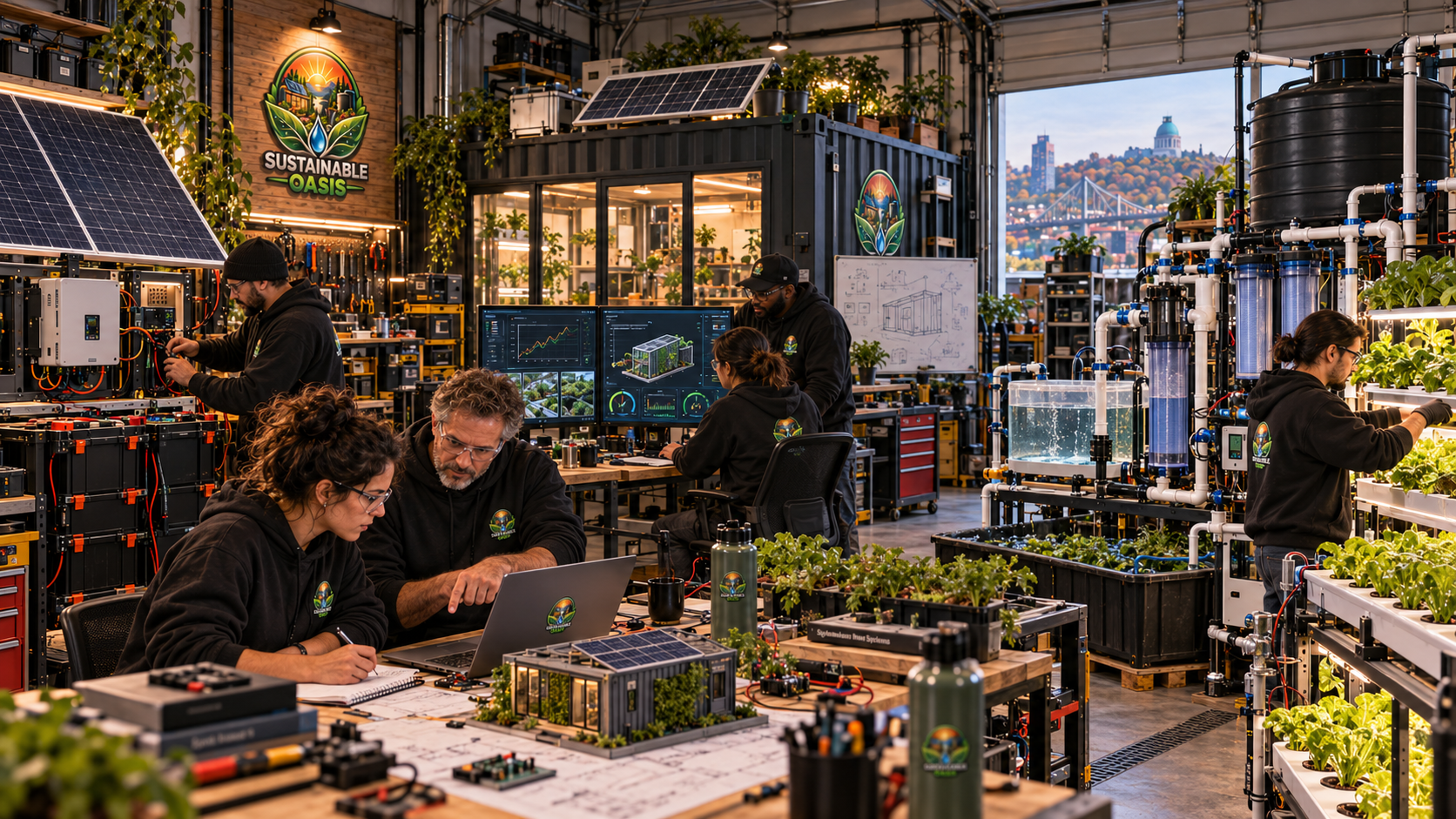
Sustainable Oasis container automation, sensors and monitoring

AUTOMATION

Make the container observable before making it autonomous.

Automation should begin with useful sensing.

Future measurements may include battery condition, electrical loads, water levels, flow, temperature and equipment status.

Critical systems should retain appropriate local operation and manual override.

SENSE MEASURE DECIDE ACT VERIFY

CONTAINER CONTROL ROOM

Turn the physical workshop into measurable infrastructure.

The Sustainable Oasis Control Room can eventually organize information collected from the Container Workshop.

Instead of simply saying that the container is efficient, we should be able to document how it actually performs.

CONTAINER DATA Future Dashboard
FUTURE DATA
ENERGY DATA electrical
WATER DATA resource
CONDITION DATA assets
COST DATA economics

DATA DISCIPLINE

Keep projections separate from measurements.

DEMO

Demonstration

Example values used for interface or educational purposes.

DEMO
EST

Estimated

Values based on assumptions or models.

ESTIMATED
DATA

Measured

Values recorded from the physical system.

MEASURED
CALC

Derived

Calculations based on documented source data.

DERIVED
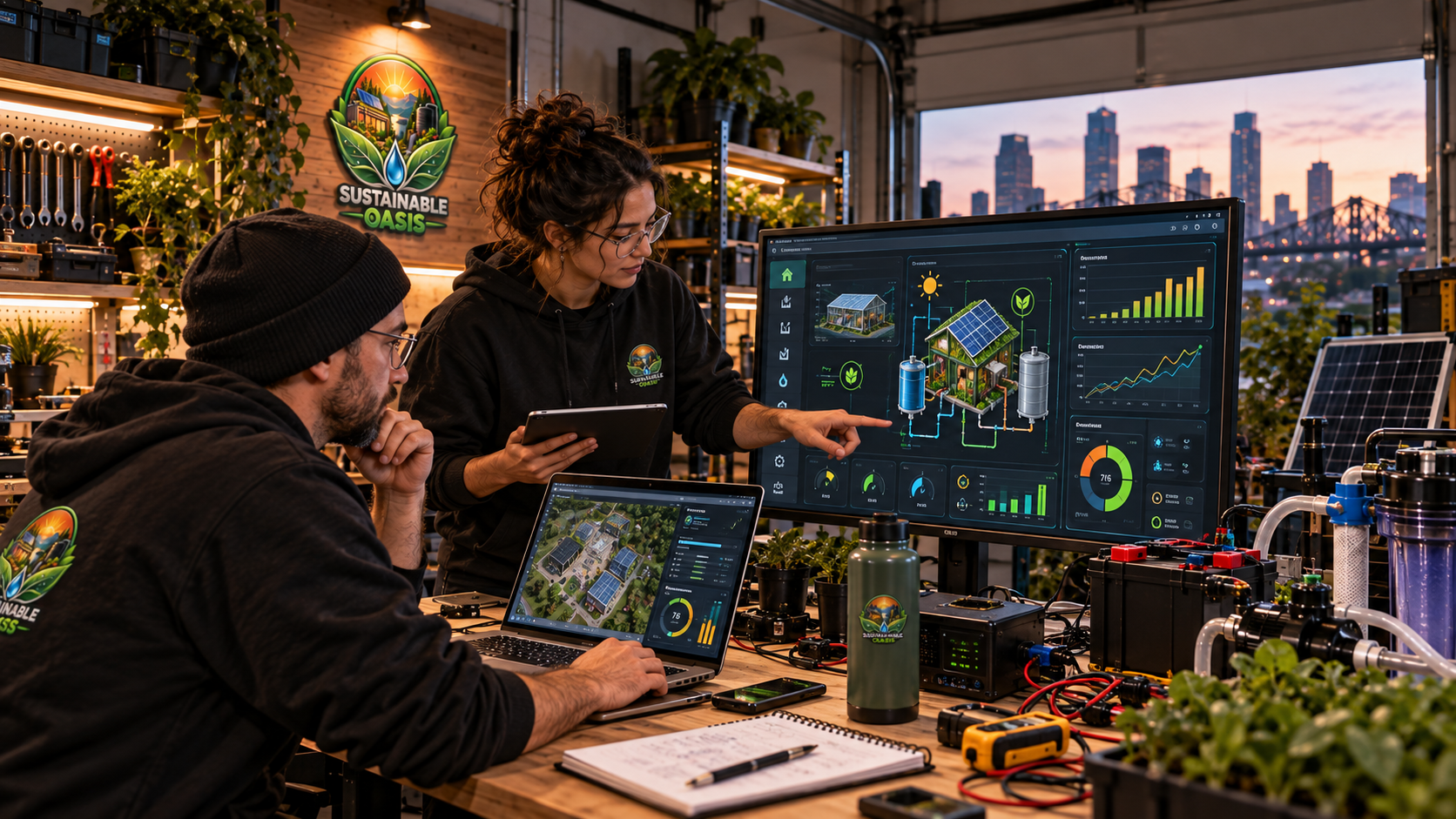
Sustainable Oasis Container Workshop research and prototype testing

CONTAINER WORKSHOP — RESEARCH

Every installation can become an experiment.

The Container Workshop creates a real physical environment where Sustainable Oasis systems can be tested under practical constraints.

Space, temperature, accessibility, wiring routes, plumbing routes and maintenance all affect real-world performance.

DEVELOPMENT LOOP

Build it. Measure it. Improve it.

DESIGN BUILD INSTRUMENT MEASURE IMPROVE DOCUMENT

SAFETY

Compact infrastructure concentrates both capability and risk.

Electrical equipment, batteries, plumbing, structural modifications, ventilation, fire protection and pressure systems require appropriate design and safety controls.

Batteries can deliver very high fault current even when operating at relatively low voltage.

Mains electrical work, structural work and regulated installations may require qualified professionals, permits and inspection.

CONTAINER WORKSHOP — KNOWLEDGE

The container is valuable twice: once as infrastructure and again as documented knowledge.

Every successful installation can eventually create guides, plans, datasets, worksheets and reports.

Failures are useful too when they prevent the same mistake from being repeated elsewhere.

Sustainable Oasis Container Workshop documentation and knowledge library

DOCUMENTATION PIPELINE

Turn every installation into reusable infrastructure knowledge.

BUILD MEASURE FIELD NOTE REPORT GUIDE BLUEPRINT REPLICATION

CONTAINER → COMPLETE OASIS

Compact modules can become building blocks for larger Oasis sites.

The Container Workshop helps Sustainable Oasis test systems before committing to larger permanent infrastructure.

Proven lessons involving energy, water, shelter, automation and serviceability can later feed directly into the Complete Oasis model.

FUTURE DOCUMENTATION

The workshop can eventually produce a complete replication package.

PLAN

Layout Plans

Interior, exterior and utility layouts.

FUTURE
BOM

Bill of Materials

Components, quantities and specifications.

FUTURE
DATA

Performance Data

Energy, water and operating measurements.

FUTURE
GUIDE

Build Guide

Lessons learned from physical construction.

FUTURE
CHECK

Maintenance Checklist

Inspection, servicing and system-readiness records.

FUTURE
RPT

Project Report

Costs, results, failures and future recommendations.

FUTURE

CONTAINER WORKSHOP PRINCIPLES

Compact. Modular. Measurable. Repairable.

01

Use Space Intelligently

Every component should justify the space it consumes.

02

Protect Access

Infrastructure should not prevent normal site operation.

03

Build Modularly

Allow individual systems to be replaced and improved.

04

Measure Performance

Replace assumptions with physical data whenever practical.

05

Document Everything Useful

Convert physical work into reusable knowledge.

OUR NORTH STAR

The containers are not the destination. They are laboratories for the infrastructure that comes next.

Every system we test here can help Sustainable Oasis understand what deserves to be replicated.

IN THE FUTURE, SUCCESS WILL NOT BE MEASURED BY WHAT WE HAVE, BUT BY WHAT WE PROTECT.

SUSTAINABLE OASIS PROJECTS

Continue through the project network.

ACTIVE R&D

Garage Lab

Small-scale experimentation and measurement.

Garage Lab →

CONTAINER WORKSHOP

Build compact. Measure everything important. Keep it repairable. Then turn the lessons into infrastructure we can replicate.