
Energy
Generation, storage, loads, recovery and energy balance.
Energy Control →CONTROL ROOM — ENERGY
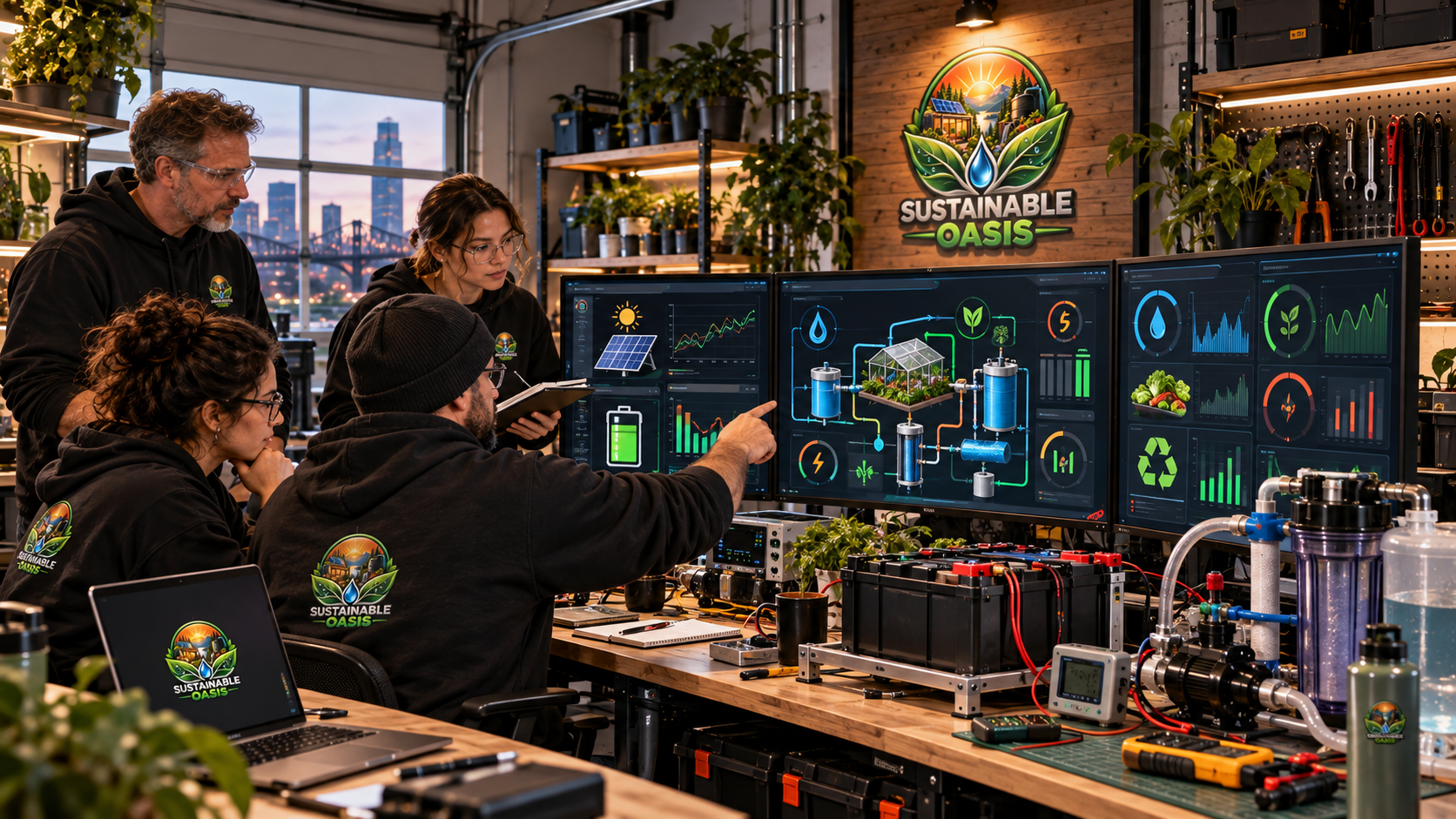
The Energy Control Room organizes generation, consumption, storage, recovery and system balance into one understandable digital view.
Its purpose is not simply to display numbers. It is to help us understand where energy came from, where it went, what was stored, what was recovered and what was lost.
Planning estimates remain clearly separated from physical measurements.
CONTROL ROOM DOMAINS
Generation, storage, loads, recovery and energy balance.
Energy Control →Collection, storage, filtration, use and recovery.
Water Control →Production, growing area, resource use and productivity.
Food Control →Shelter, systems, equipment and operational condition.
Infrastructure Control →Resource performance, recovery and sustainability indicators.
Impact Control →Future connection between operational systems and sustainable economic performance.
Revenue Control →ENERGY FLOW
Sustainable Oasis treats energy as a measurable flow instead of a collection of isolated devices.
ENERGY DASHBOARD
The values below are demonstration data used to illustrate how the Control Room organizes information.
Demonstration values only. They are not presented as measurements from a physical Sustainable Oasis installation.
DATA CLASSIFICATION
Example data used to explain how the interface works.
DEMOValues generated from assumptions, models or planning calculators.
ESTIMATEDValues recorded from physical equipment using documented instrumentation.
MEASUREDValues calculated from documented source measurements.
DERIVEDENERGY ACCOUNTING
Sustainable Oasis evaluates energy systems using a complete accounting boundary.
ENERGY IN = USEFUL OUTPUT + STORAGE CHANGE + LOSSES
Energy cannot be counted twice simply because it passes through multiple parts of the system.
GENERATION
Renewable generation can vary throughout the day and across seasons.
The Control Room should ultimately distinguish between expected production and energy actually measured.
ENERGY STORAGE
A system may appear to provide more useful output than the visible input if stored energy is quietly being depleted.
For meaningful energy accounting, changes in stored energy must remain visible.
CONSUMPTION
Reducing unnecessary demand can sometimes improve resilience more efficiently than adding generation.
Equipment that should receive priority during limited-energy conditions.
Small loads operating for many hours can create significant daily consumption.
Short-duration equipment may strongly influence inverter and battery requirements.
Some equipment can operate when renewable production is abundant.
LOAD ANALYSIS
ENERGY RECOVERY
Regenerative braking, pressure recovery, thermal recovery and other techniques may reduce system waste.
Recovery should always be measured relative to the full system boundary.
Recovery reduces waste. It does not create energy.
NO DOUBLE COUNTING
If energy first enters the system, performs useful work and a portion is later recovered, that recovered portion should not be counted as a completely independent new source.
EFFICIENCY
A valid efficiency calculation compares useful output with the energy actually entering the defined system.
EFFICIENCY = USEFUL ENERGY OUT ÷ MEASURED ENERGY IN × 100
Pumps, chargers, converters, motors, controllers and auxiliary loads must be included when they belong inside the tested boundary.
SO-EMS
The Sustainable Oasis Energy Management System provides the R&D architecture for measuring energy entering, leaving, being stored and recovered.
SO-EMS connects the physical experiment with the digital intelligence layer.
SO-EMS M01 — ENERGY METER
M01 is the measurement foundation of the Sustainable Oasis Energy Management System.
Its purpose is to establish consistent voltage, current, power and watt-hour measurements before more complex energy-routing experiments are introduced.
PHYSICAL → DIGITAL
The digital layer organizes data. Physical instrumentation creates the evidence.
MEASUREMENT PRINCIPLES
Identify whether energy is entering or leaving the measurement boundary.
Preserve volts, amps, watts, watt-hours and time.
Do not replace original measurements with derived summaries.
Compare beginning and ending stored energy when storage is part of the test.
One unusual result should not automatically become a general conclusion.
ENERGY TOOLS
Sustainable Oasis tools establish planning baselines that can later be compared with measured data.
Estimate daily solar generation.
Solar Calculator →Compare generation, consumption and recovery.
Energy Calculator →Estimate battery autonomy for a defined load.
Battery Runtime →Integrate energy with the wider Oasis resource model.
Oasis Planner →ESTIMATE FIRST. MEASURE NEXT.
Planning tools provide expected performance.
SO-EMS and other instrumentation provide physical measurements.
The Control Room helps compare the two so future designs can become more accurate.
ENERGY + RESEARCH
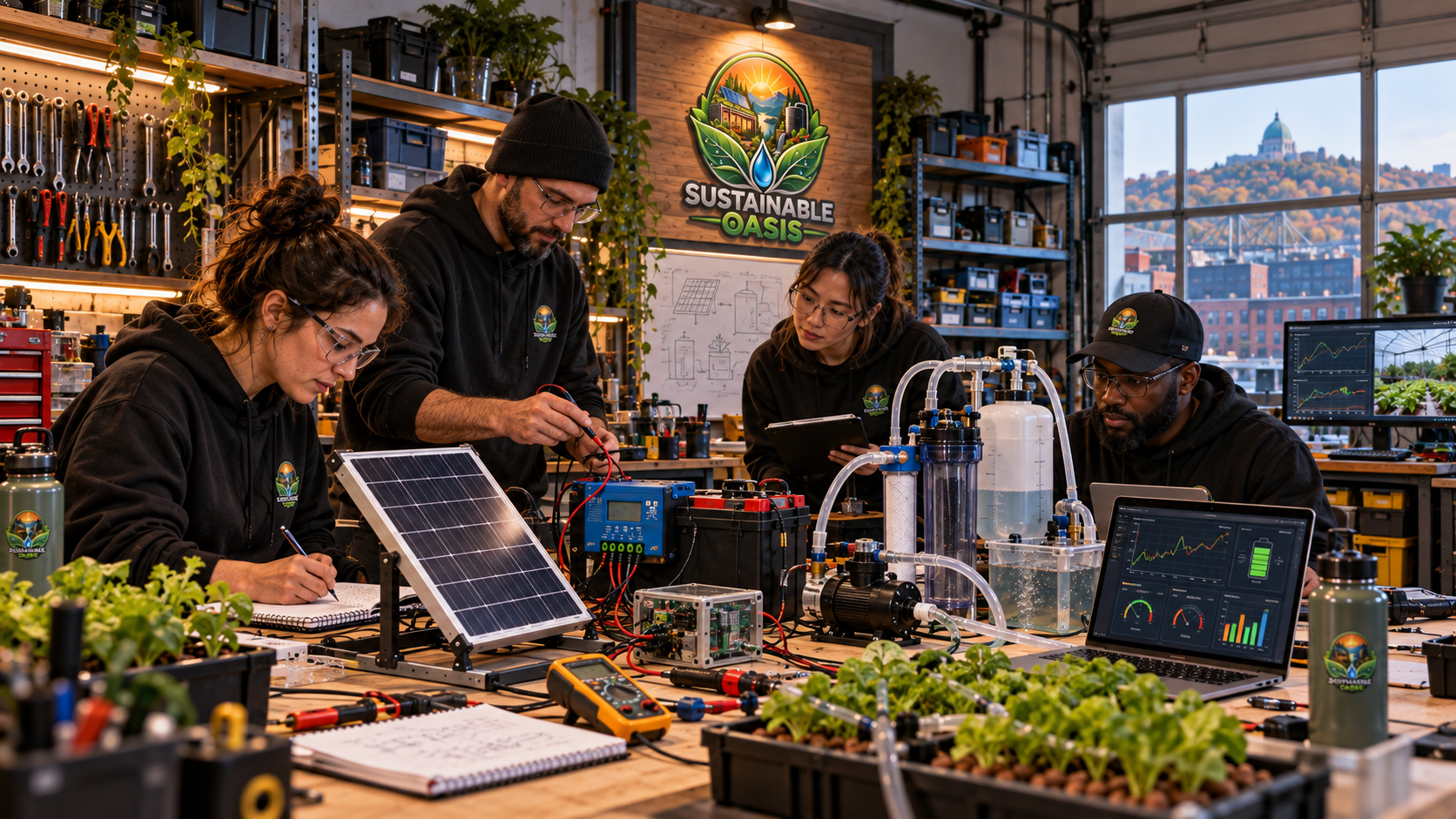
Sustainable Oasis energy experiments should document the question, hypothesis, system boundary, instrumentation, procedure, raw data and conclusion.
Results can be supported, unsupported, inconclusive or in need of replication.
ENERGY SAFETY
Low voltage reduces some risks but batteries can still produce very high fault current.
Appropriate fusing, wiring, isolation, connectors and protective procedures remain important.
Mains voltage and high-energy systems require appropriate qualified expertise.
ENERGY + KNOWLEDGE
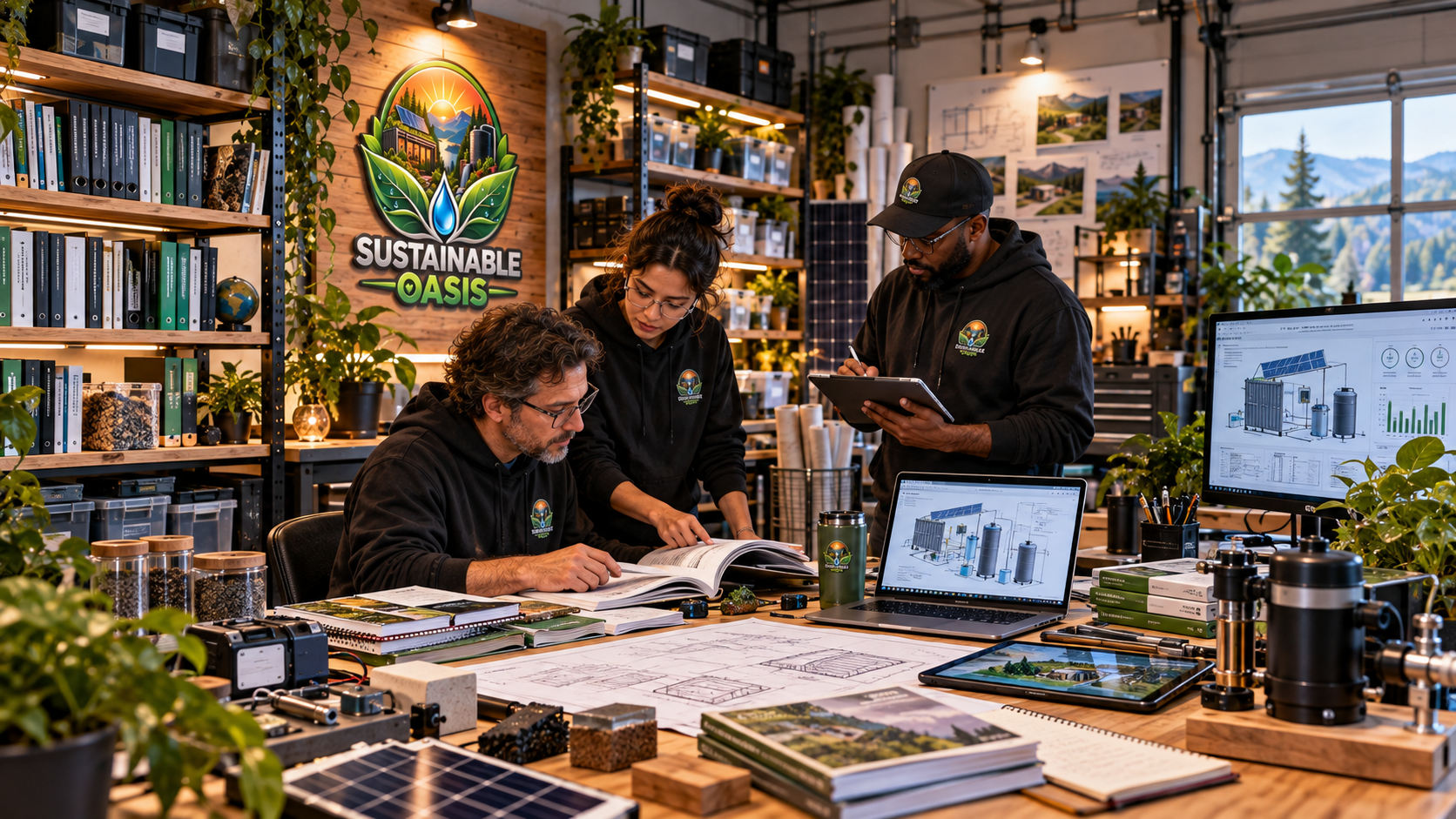
Repeated measurements can become reports, field notes, guides, case studies and blueprints.
The objective is not simply to collect data. It is to convert useful evidence into reusable knowledge.
ENERGY INSIDE THE COMPLETE OASIS
Pumps, filtration, food production, automation, communications and shelter systems can all depend on electrical energy.
ENERGY INTELLIGENCE PIPELINE
ENERGY CONTROL ROOM