
Experiment ID
Give each experiment a unique identifier that follows it through datasets and reports.
REPORTS — EXPERIMENTS
Sustainable Oasis experiment reports are designed to preserve the complete path from research question to conclusion.
A report should explain what was tested, how it was tested, what was measured, what limitations existed and what the evidence supports.
Successful experiments matter. Failed and inconclusive experiments matter too.
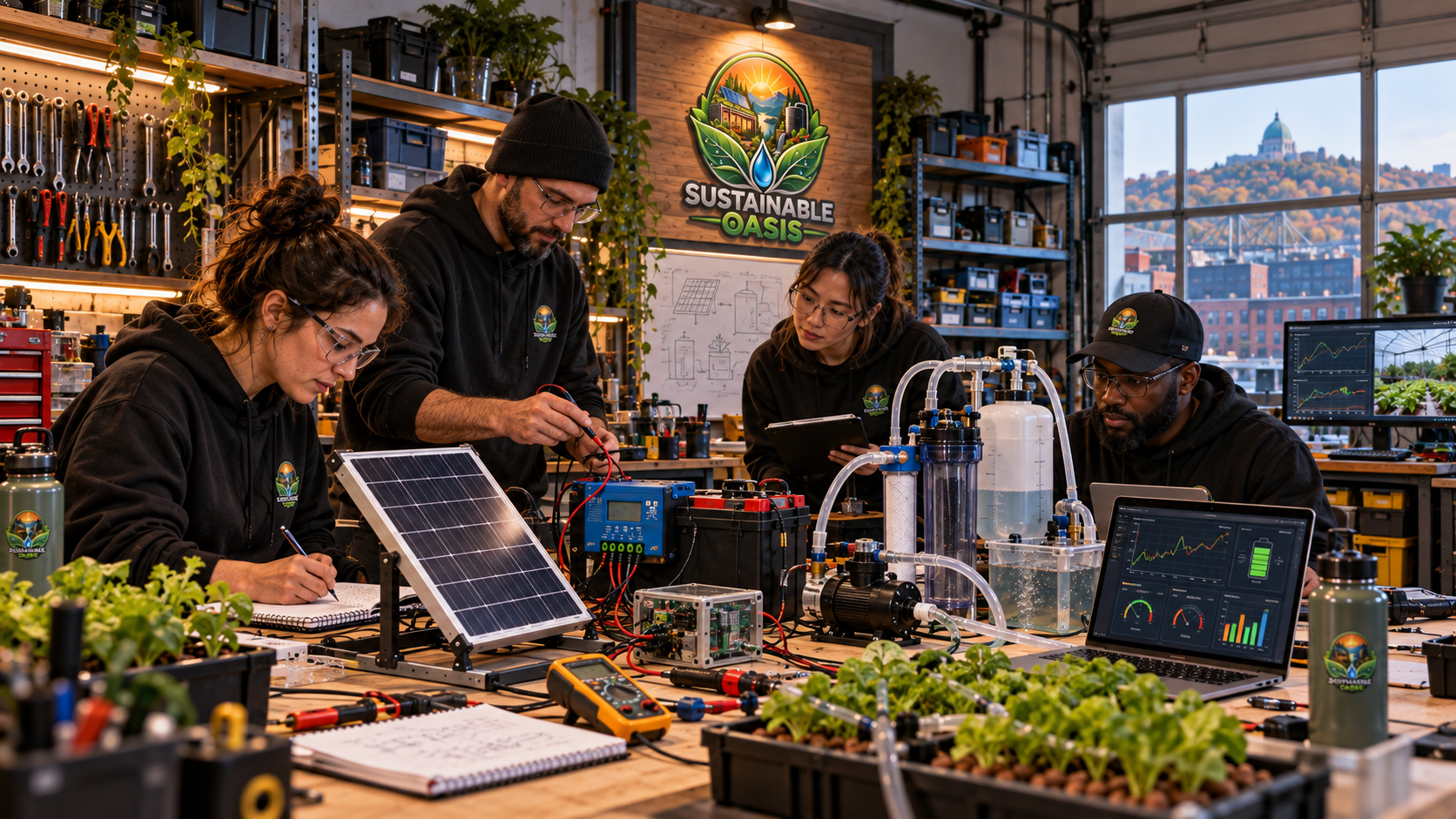
REPORT THE RESULT — NOT THE HOPE
Sustainable Oasis research should begin with a question, not a predetermined conclusion.
If the evidence does not support the original hypothesis, the report should say so.
If the experiment cannot answer the question reliably, the correct result may be inconclusive or needs replication.
EXPERIMENT REPORTING FLOW
EXPERIMENT REPORT STANDARD
Give each experiment a unique identifier that follows it through datasets and reports.
Define exactly what the experiment is intended to investigate.
State the expected result before the test when appropriate.
Define what is inside and outside the measurement boundary.
Identify inputs, outputs, controls and changing conditions.
Record the meters, sensors, calibration information and measurement methods.
Document the sequence of actions used to perform the experiment.
Preserve original observations before calculations or interpretation.
Explain calculations, comparisons and uncertainty.
State only what the available evidence supports.
Preserve weaknesses, missing measurements and known sources of uncertainty.
Identify what should be changed or repeated next.
RESULT CLASSIFICATION
Evidence within the defined test boundary supports the hypothesis.
SUPPORTEDAvailable evidence does not support the hypothesis.
NOT SUPPORTEDThe experiment did not produce enough reliable evidence.
INCONCLUSIVEThe result should be repeated before stronger conclusions are made.
REPLICATEENERGY EXPERIMENT REGISTRY
These experiment IDs provide a consistent reference across research, datasets, reports and future field work.
Develop a reliable low-voltage DC measurement bench for tracking energy input, output, storage, recovery and losses.
M01 Energy Meter →Investigate whether energy normally dissipated during operation can be recovered and reused elsewhere.
Research Registry →Examine rotational-energy storage while measuring charge input, usable output and mechanical losses.
Research Registry →Compare electrical or mechanical compression input with useful energy recovered during expansion.
Research Registry →Test rotor behavior without assuming self-sustaining operation, while accounting for every external input and storage change.
Research Registry →Investigate alternating energy-storage use and charging while measuring the complete system balance.
Research Registry →Investigate energy recovery from airflow around a moving vehicle while including aerodynamic drag in the system boundary.
Research Registry →Combine propulsion, storage, solar, recovery and auxiliary loads inside one common accounting model.
Research Registry →EXP-E001 — SO-EMS
The Sustainable Oasis Energy Management System begins with M01: the Energy Meter.
Reliable voltage, current, power and energy measurements create the foundation for later energy experiments.
The objective is not to make the numbers support the experiment.
The objective is to build a measurement boundary strong enough to reveal what the experiment actually does.
COMPLETE ENERGY ACCOUNTING
Chargers, converters, motors, pumps, controllers, compressors and auxiliary systems can all influence the final result.
Storage depletion must not be mistaken for newly generated energy.
ENERGY IN = USEFUL OUTPUT + STORAGE CHANGE + LOSSES
Energy recovery can improve efficiency by reducing losses.
It does not create energy outside the defined boundary.
EFFICIENCY REPORTING
Sustainable Oasis experiment reports should state which energy input and useful output are being compared.
EFFICIENCY = USEFUL ENERGY OUTPUT ÷ MEASURED ENERGY INPUT × 100
Different boundaries can produce different efficiency values.
The report should make that boundary explicit.
WATER EXPERIMENT REPORTS
Sustainable Oasis water experiments can investigate gravity distribution, pumping, tank storage, circulation and micro-hydro recovery.
Useful experiment records can include elevation difference, tank level, pipe diameter, flow rate, pressure, pumping energy and turbine output.
MICRO-HYDRO EXPERIMENTS
Water moving downhill contains gravitational potential energy that can potentially be partially recovered.
A useful micro-hydro report should document head, flow, turbine output, conversion efficiency and any upstream pumping energy.
If water was previously pumped upward, that pumping energy remains part of the larger system boundary.
FOOD EXPERIMENT REPORTS
Food experiments can compare crops, growing methods, irrigation strategies and aquaponic systems.
Useful records include growing area, duration, water use, energy use and final harvest.
PRODUCTIVITY = HARVEST ÷ GROWING AREA
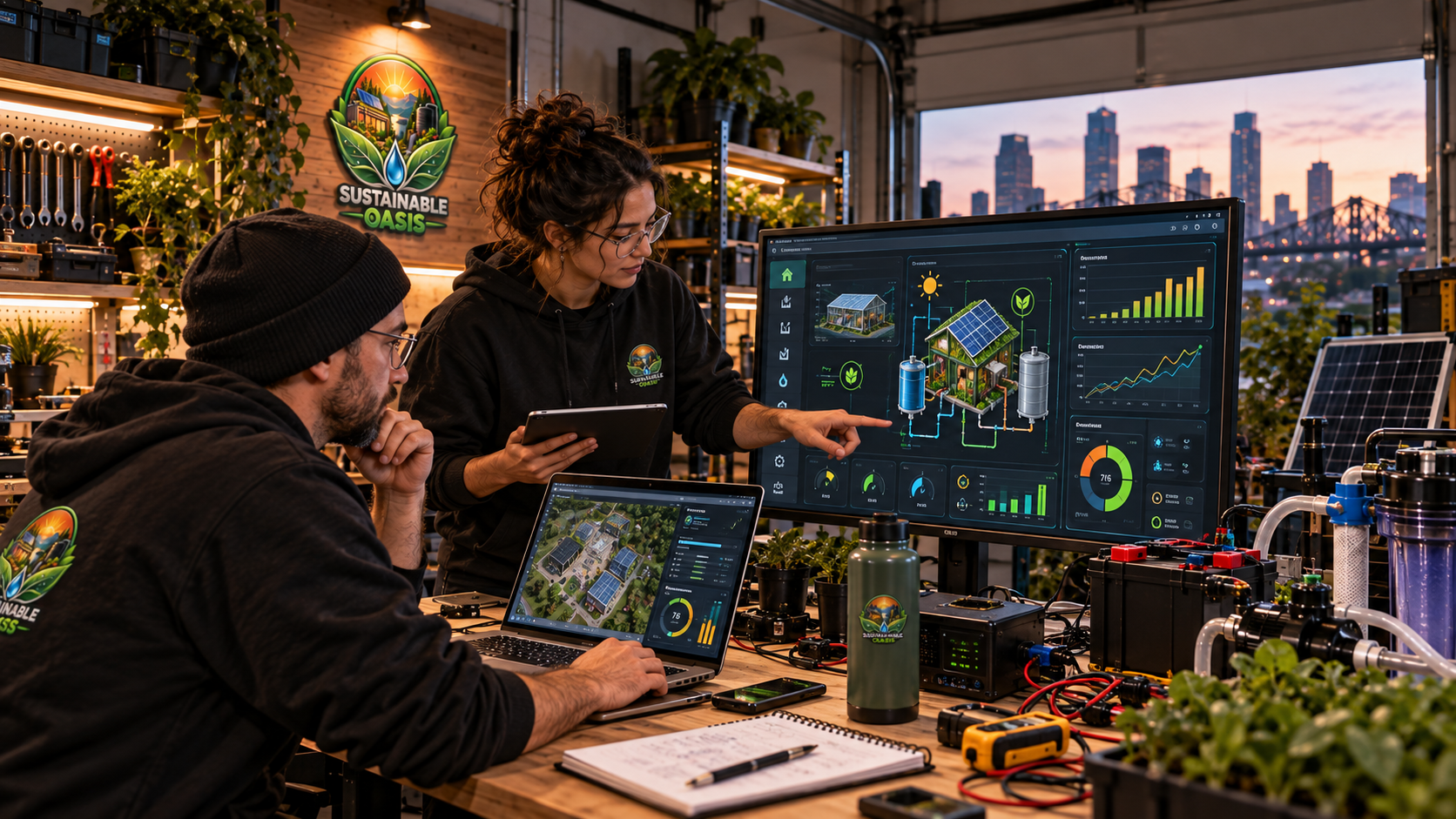
AUTOMATION EXPERIMENTS
Automation experiments can test sensors, thresholds, relays, valves, pumps, alerts and fail-safe behavior.
The measurement loop should continue after the actuator moves.
THERMAL EXPERIMENTS
Ground, water and thermal-storage experiments can investigate how heat moves through real materials and environments.
Record the initial thermal condition.
Measure the receiving environment.
Preserve the gradient driving heat transfer.
Thermal systems must be measured over time.
MATERIAL + GROUND EXPERIMENTS
Ground-electrode experiments may measure electrical potential between different materials or soil locations.
A voltage reading alone does not establish useful continuous power.
Reports should also measure current under controlled load, energy over time, electrode behavior and environmental conditions.
PRESERVE RAW DATA
Record when each measurement occurred.
Preserve the measurement before transformation.
Every number should carry its physical unit.
Identify which sensor or meter produced the value.
Record relevant environmental or operating conditions.
Preserve unexpected events and observations.
DATA CLASSIFICATION
Example information used for interfaces or education.
DEMOValues based on assumptions or models.
ESTIMATEDValues collected from physical experiments.
MEASUREDCalculations produced from documented source information.
DERIVEDUNCERTAINTY
Sustainable Oasis experiment reports should preserve known measurement uncertainty, sensor resolution, calibration limitations, environmental variation and uncontrolled variables.
Reporting uncertainty does not weaken the experiment.
It makes the conclusion more honest.
CONTROL TESTS
Record the system before the change.
Preserve an unchanged comparison when practical.
Change one factor at a time where possible.
Run multiple trials to observe consistency.
Evaluate results against the defined baseline.
REPLICATION
LAB → FIELD
Controlled laboratory experiments help isolate variables.
Field environments introduce temperature, weather, terrain, maintenance, biological conditions and real operational behavior.
Sustainable Oasis should therefore distinguish laboratory evidence from field evidence.
EXPERIMENT ENVIRONMENTS
Controlled experimentation, instrumentation and prototype development.
Garage Lab →Test compact infrastructure under real spatial and serviceability constraints.
Container Workshop →Test systems against terrain, water, climate and field conditions.
Vietnam Oasis →Future mobility, energy and deployment research.
Mobile Oasis →Evaluate interaction between mature subsystems.
Complete Oasis →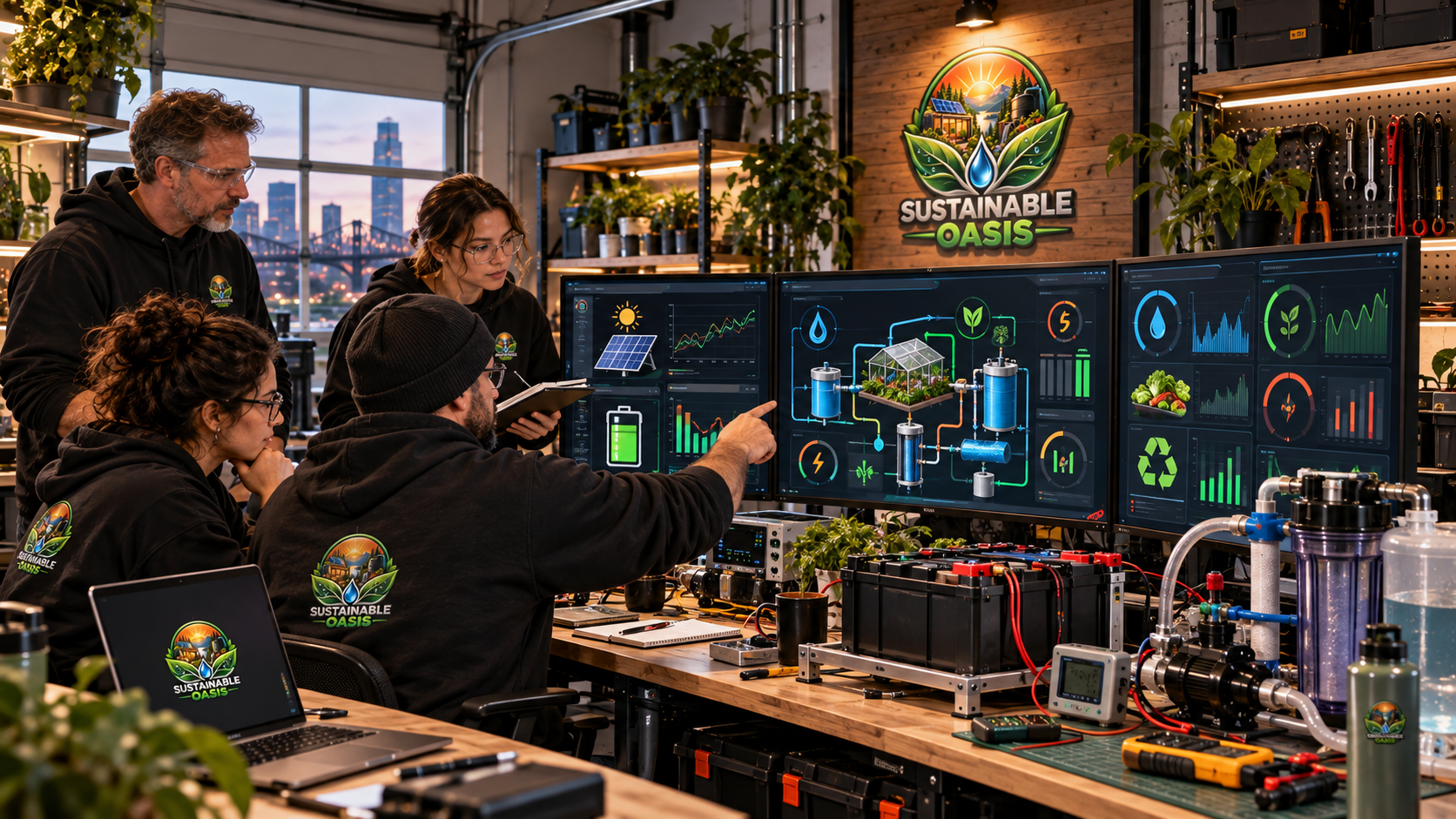
EXPERIMENTS + CONTROL ROOM
The Sustainable Oasis Control Room can help organize measured values, system state, experiment context and operational records.
The Control Room does not replace the experiment report.
It helps preserve and organize information that can later support reporting.
DATA PIPELINE
FAILURE IS EVIDENCE
A failed design can reveal a bad assumption, a measurement problem, a material limitation, an overlooked loss or an unsafe condition.
Preserving that result helps prevent future Sustainable Oasis projects from repeating the same mistake.
A report does not need a positive result to create value.
EXPERIMENT SAFETY
Batteries, rotating machinery, compressed air, pressure systems, electrical equipment, water, pumps, thermal systems and moving platforms can create significant hazards.
Batteries can deliver very high fault current even at relatively low voltage.
Mains electrical work and other regulated work may require qualified professionals.
Experiment reports should preserve relevant safety controls and abnormal events when they affect the interpretation or repeatability of the test.
REPORT → KNOWLEDGE
Strong experiment reports can become the source for Sustainable Oasis guides, blueprints, field notes, case studies and educational material.
The report preserves the evidence.
The Knowledge Base converts that evidence into something easier to reuse.
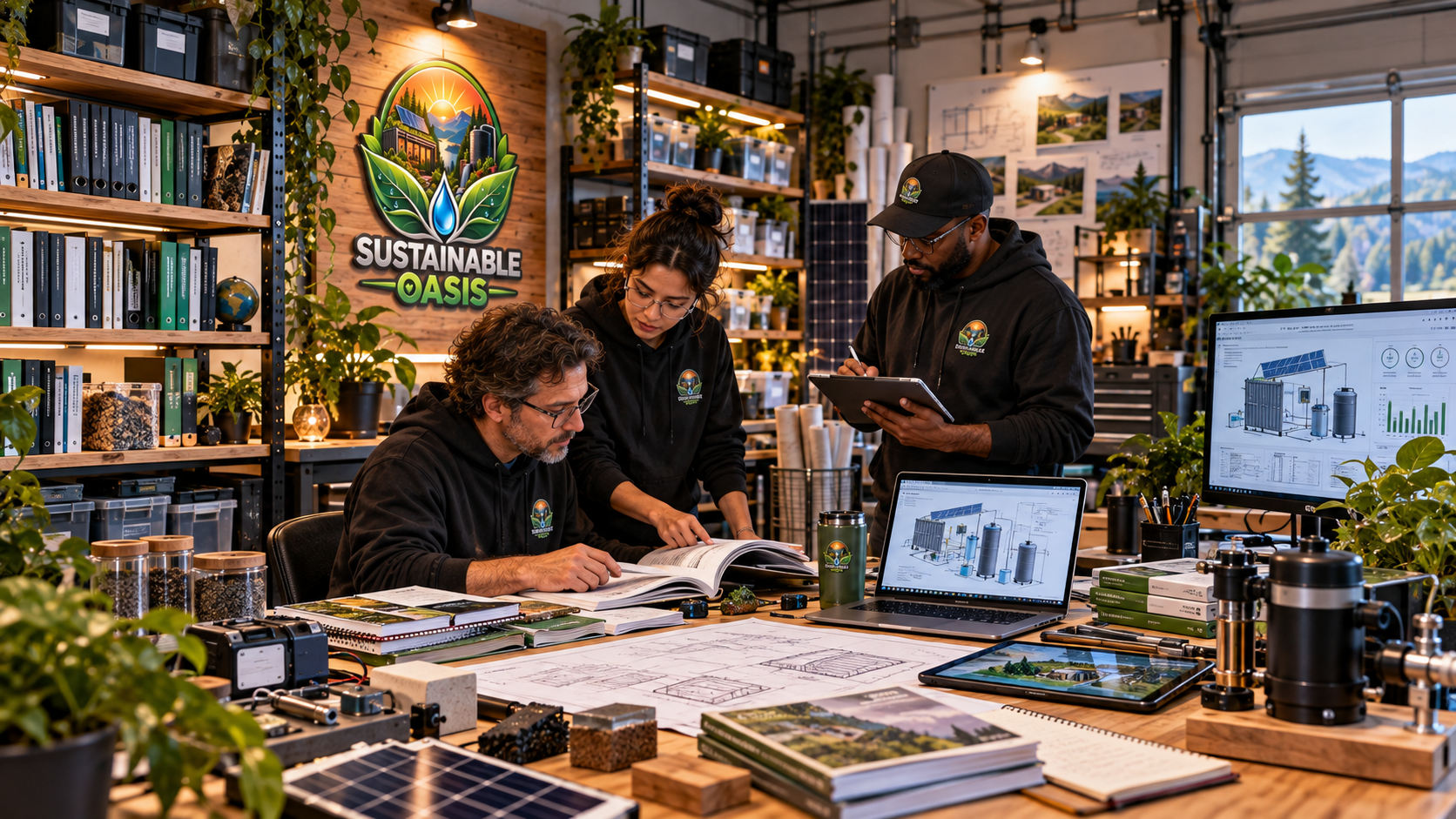
EXPERIMENT KNOWLEDGE PIPELINE
FUTURE EXPERIMENT PACKAGES
Method, analysis, result and limitations.
FUTUREOriginal structured measurement records.
FUTUREUnits, instruments, conditions and experiment identity.
FUTURESetup photos, diagrams and measurement context.
FUTUREReusable form for future replication.
FUTUREREPORT VERSIONING
Permanent reference for the experiment.
Identify revisions to the publication.
Preserve when the report changed.
Connect conclusions to underlying evidence.
Preserve older reports without confusing them with current conclusions.
EXPERIMENT REPORT PRINCIPLES
Know what belongs inside the experiment.
Keep original observations before interpretation.
State what remains unknown or imperfectly measured.
Preserve results that prevent repeated mistakes.
Stronger infrastructure should follow stronger evidence.
OUR NORTH STAR
Sustainable Oasis experiments are not intended to create impressive claims.
They are intended to reduce uncertainty, improve infrastructure and preserve lessons for future projects.
IN THE FUTURE, SUCCESS WILL NOT BE MEASURED BY WHAT WE HAVE, BUT BY WHAT WE PROTECT.
SUSTAINABLE OASIS REPORTS
Questions, methods, evidence, results and replication.
Experiment Reports →Inputs, outputs, efficiency and system behavior.
Performance Reports →Resource protection, recovery, waste reduction and resilience.
Sustainability Reports →A yearly view across projects, research, impact and economics.
Annual Report →EXPERIMENT LEARNING LOOP
EXPERIMENT REPORTS