SUSTAINABLE OASIS ACADEMY

Learn by building. Understand by measuring.

Sustainable Oasis Academy transforms practical research, experiments, field experience and resilient-system development into structured learning.

Instead of separating education from real projects, the Academy connects lessons directly to the systems, calculators, Living Labs, measurements and knowledge being developed across Sustainable Oasis.

The objective is simple: help people understand how resilient systems actually work so that useful knowledge can be applied, tested and improved.

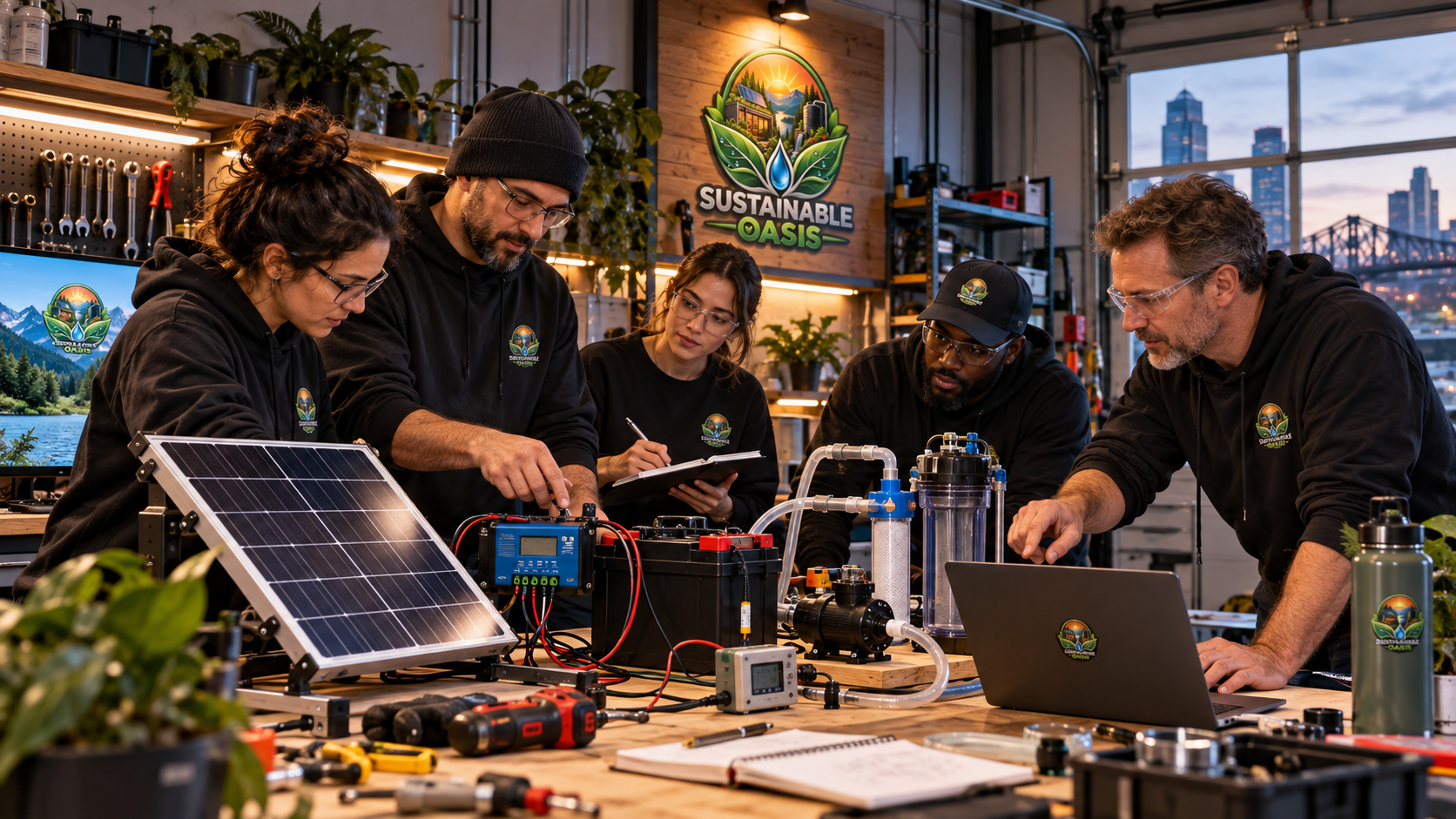
Sustainable Oasis Academy practical learning and technical research environment

THE ACADEMY MODEL

Education should connect directly to reality.

Sustainable Oasis Academy follows the same cycle used throughout the broader ecosystem.

LEARN DESIGN BUILD MEASURE UNDERSTAND IMPROVE

CORE LEARNING PATHS

Begin with the systems that support everyday resilience.

The first Academy learning paths focus on energy, water, food and resilience.

COURSE 01

Energy Systems

Understand voltage, current, power, energy, generation, storage, loads, losses, recovery and measurement.

Follow energy from the source to useful work and learn how to account for every meaningful watt-hour.

DEVELOPMENT

Explore Energy →
COURSE 02

Water Systems

Learn how water can be captured, stored, filtered, distributed, measured and reused.

Explore gravity, pumping, tank autonomy, rainwater and efficient water management.

DEVELOPMENT

Explore Water →
COURSE 03

Food Systems

Connect harvest with growing area, water use, energy, time and system design.

Learn how productive growing systems can become more measurable, efficient and resilient.

DEVELOPMENT

Explore Food →
COURSE 04

Resilience

Bring energy, water, food, shelter and operating strategies into one practical framework.

Learn how redundancy, efficiency, maintainability and preparedness work together.

DEVELOPMENT

Explore Resilience →
LEARNING ARCHITECTURE

Every course connects theory with a practical pathway.

01

Understand

Learn the basic principles, terminology and system boundaries.

02

Estimate

Use calculations to create a preliminary expectation before building.

03

Build

Create small, understandable prototypes before increasing complexity.

04

Measure

Observe the physical system using documented methods and units.

05

Improve

Compare the original expectation with reality and refine the system.

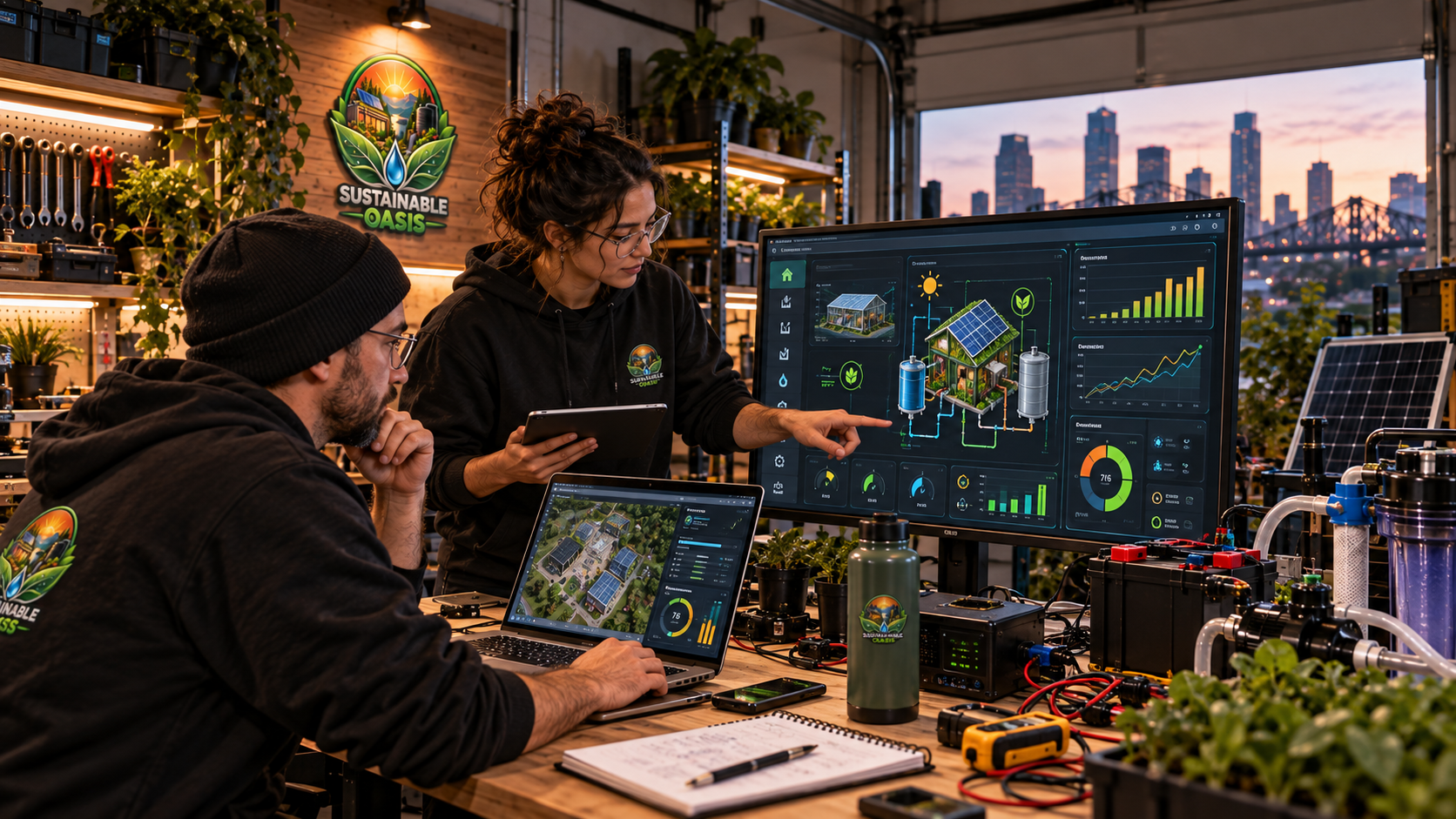
Sustainable Oasis Academy digital planning and calculation tools

ACADEMY + TOOLS

Calculate before you build.

Sustainable Oasis planning tools help students create estimates before physical experiments begin.

Solar production, battery runtime, rainwater, water autonomy, food productivity and resilience can all be explored numerically.

Those estimates become more valuable when they are later compared with measured results.

LEARNING TOOLS

Use calculations to ask better questions.

COMPLETE OASIS

Oasis Planner

Bring multiple system assumptions together into one preliminary model.

Open Oasis Planner →

ACADEMY + LIVING LABS

Education continues at the workbench.

Sustainable Oasis Living Labs provide the bridge between learning and practical experimentation.

Small-scale systems can be built, instrumented, tested and improved before being applied to larger environments.

PRACTICAL LEARNING Lab Cycle
TEST + LEARN
IDEA 01 question
BUILD 02 prototype
MEASURE 03 data
IMPROVE 04 iteration

LIVING LABS

Learn through systems that can actually be tested.

ENERGY

Energy Lab

Generation, storage, loads, recovery and energy measurement.

Energy Lab →
WATER

Water Lab

Flow, pressure, gravity, storage, pumping and water recovery.

Water Lab →
FOOD

Food Lab

Growing trials, water use, harvest and productivity.

Food Lab →
SO-EMS

Energy Management Lab

Precise energy-flow measurement and experiment accounting.

Explore SO-EMS →
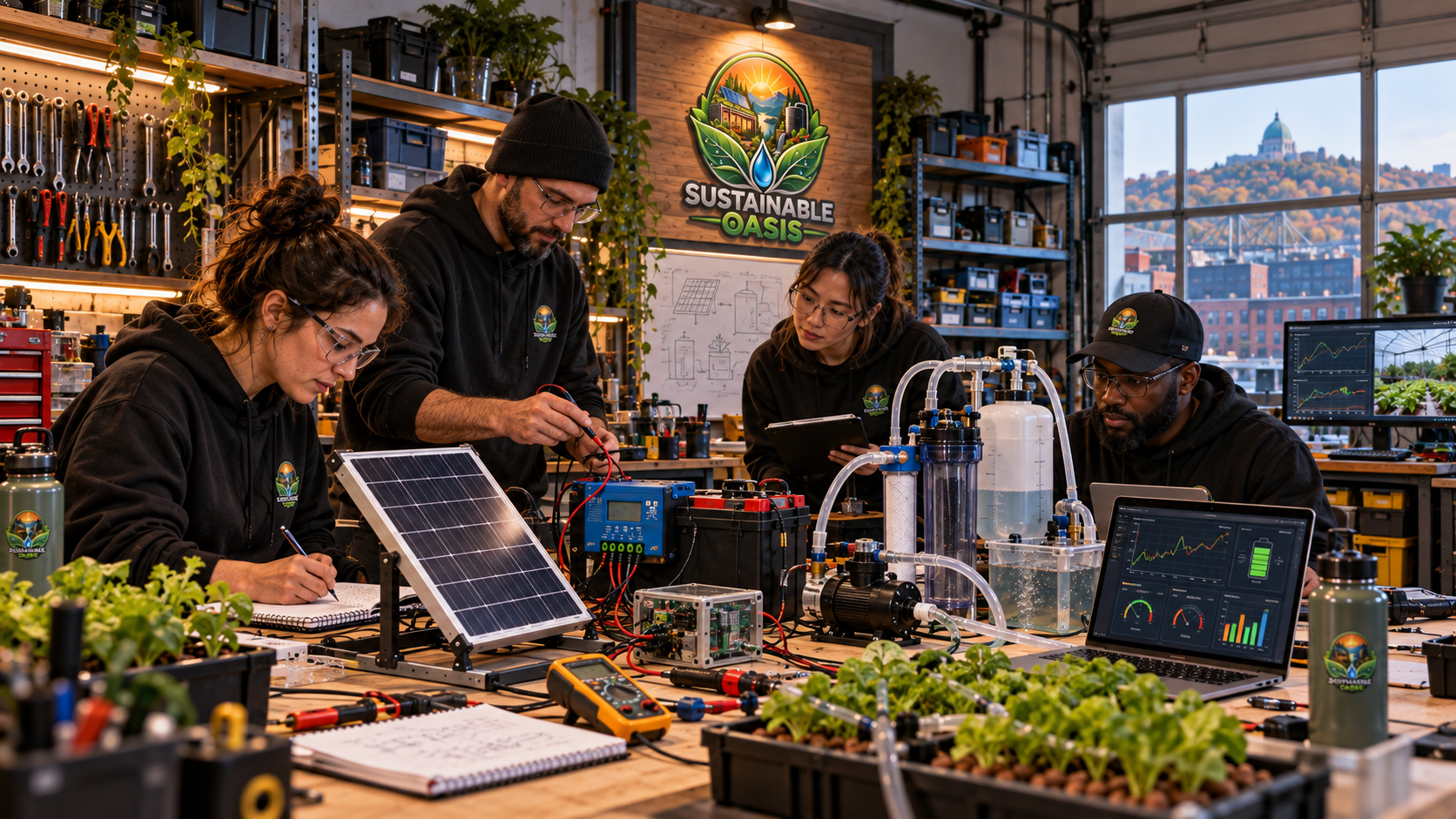
Sustainable Oasis research and experimental learning laboratory

ACADEMY + RESEARCH

Learn how evidence is created.

The Academy does not only teach results. It also teaches how conclusions should be reached.

Questions become hypotheses. Hypotheses become experiments. Experiments create data. Data supports — or fails to support — conclusions.

SCIENTIFIC LEARNING

Good education includes uncertainty.

Sustainable Oasis students should learn to distinguish observation from interpretation.

QUESTION

Ask Clearly

Define what the experiment is actually trying to determine.

CONTROL

Control Variables

Reduce unnecessary changes between comparison tests.

DATA

Record Evidence

Preserve raw observations before interpretation.

RESULT

Accept the Outcome

Supported, unsupported and inconclusive results can all teach something.

DATA LITERACY

Every student should know what a number represents.

DEMO

Demonstration

Example information used to explain a system, calculation or interface.

DEMO
EST

Estimated

Values produced from assumptions or planning models.

ESTIMATED
DATA

Measured

Physical values recorded using documented instruments or observations.

MEASURED
CALC

Derived

Values calculated from documented source information.

DERIVED

ACADEMY + KNOWLEDGE

The Academy should teach what the Oasis has actually learned.

Sustainable Oasis research can become field notes, reports, case studies, guides and blueprints.

Once knowledge becomes organized and reliable enough, it can become educational material for the Academy.

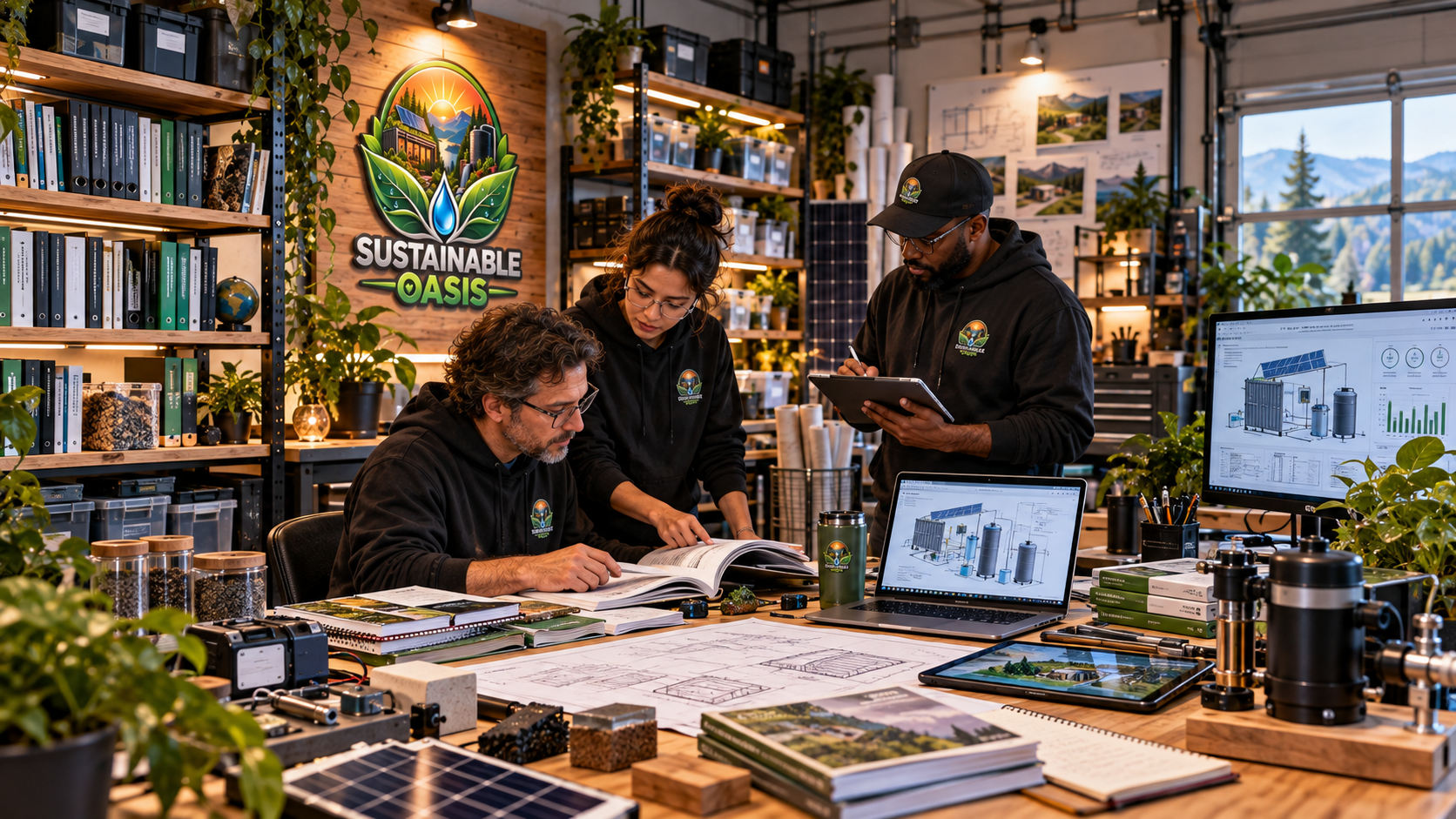
Sustainable Oasis technical knowledge and education library

FROM EXPERIENCE TO EDUCATION

Real projects can become reusable knowledge.

PROJECT EXPERIMENT DATA RESULT KNOWLEDGE COURSE

REAL-WORLD LEARNING

Different environments create different lessons.

MONTREAL

Garage Lab

Practical experimentation, fabrication and measurement.

Garage Lab →
FIELD

Vietnam Oasis

Terrain, water, agriculture and renewable systems under field conditions.

Vietnam Oasis →

ACADEMY + CONTROL ROOM

Teach students how to read a system, not just build one.

The Sustainable Oasis Control Room provides a common digital framework for organizing resource data.

Energy, water, food, storage and recovery can be viewed together while preserving their evidence classification.

Enter Control Room
LEARNING DASHBOARD Estimate → Measure
COMPARE
PLAN EST model
TEST LAB experiment
MEASURE DATA reality
LEARN Δ difference

PRACTICAL SAFETY

Learn at the lowest practical risk.

Sustainable Oasis educational experiments should begin with small, understandable systems whenever possible.

Low voltage reduces some electrical hazards, but batteries can still deliver very high fault current.

Water, pressure, rotating equipment, construction and higher-energy systems introduce additional hazards that require appropriate procedures.

Mains electrical work and other regulated or high-risk activities require suitable expertise.

FUTURE LEARNING PATHS

The Academy grows only when the knowledge underneath it grows.

Future learning paths can be developed as Sustainable Oasis research and practical experience become strong enough to support them.

AUTO

Automation

Sensors, controls, actuators, alarms and verification.

FUTURE
SO-EMS

Energy Measurement

Advanced energy accounting and storage analysis.

FUTURE
BUILD

Modular Infrastructure

Containers, compact spaces, efficiency and maintainability.

FUTURE
OASIS

Complete Oasis Design

Integrating multiple validated systems into one practical environment.

FUTURE

ACADEMY PRINCIPLES

Teach what can be understood, tested and improved.

01

Practical

Learning should connect to real systems and useful decisions.

02

Measurable

Students should understand how performance can be observed and compared.

03

Transparent

Assumptions, estimates and limitations should remain visible.

04

Repeatable

Good learning creates processes that another person can follow.

05

Evolving

Courses should improve as stronger evidence becomes available.

THE COMPLETE EDUCATION PIPELINE

Sustainable Oasis can turn every useful lesson into something that helps the next builder.

PROJECT EXPERIMENT MEASUREMENT KNOWLEDGE COURSE NEXT BUILDER

SUSTAINABLE OASIS ACADEMY

Learn the system. Build the experiment. Measure the result. Then teach what reality taught us.