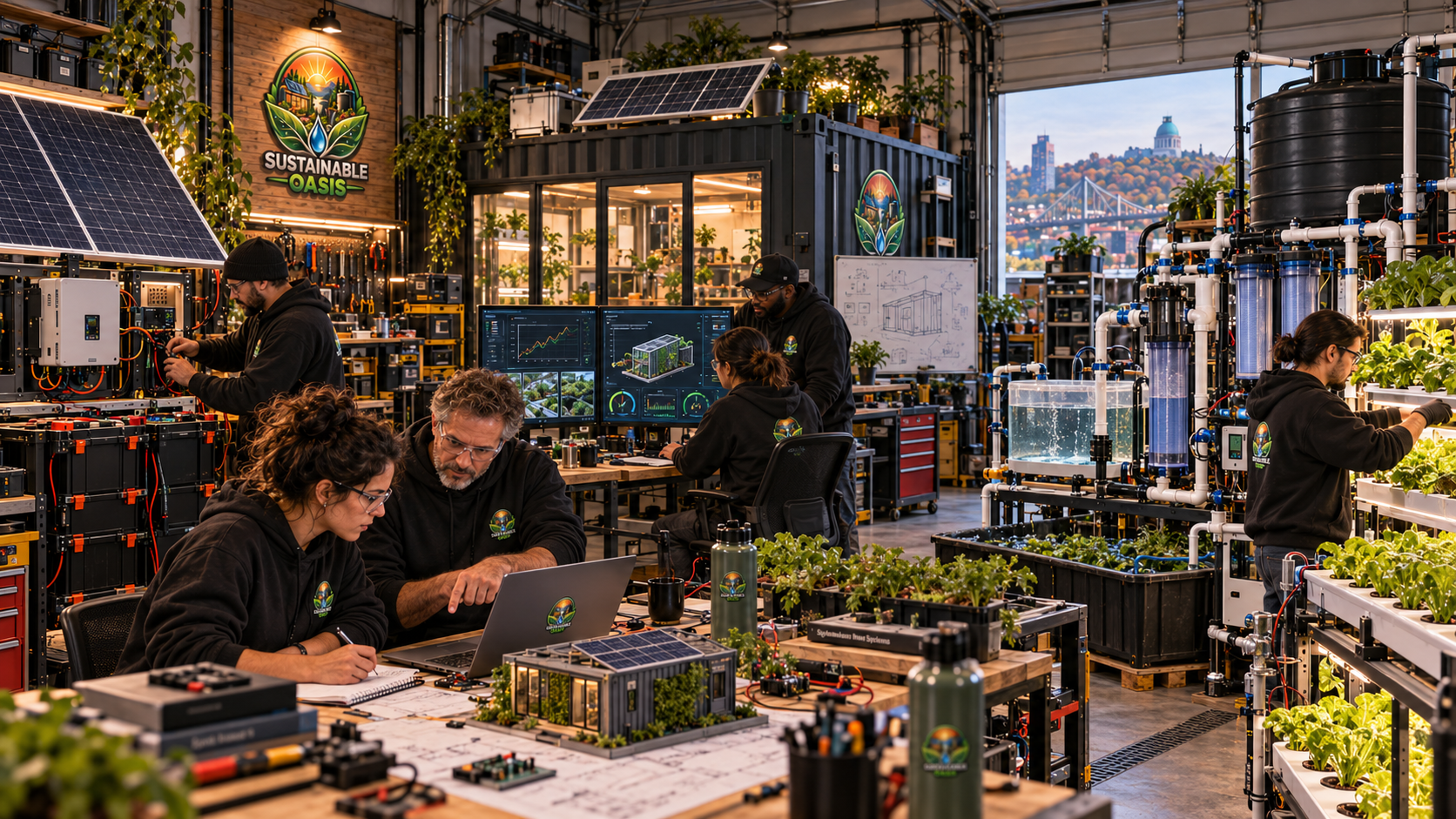
Garage Lab
Small-scale research, instrumentation, energy experiments, water systems, food systems and automation.
The goal is to identify problems before they become expensive infrastructure.
Explore Garage Lab →SUSTAINABLE OASIS PROJECTS
Sustainable Oasis projects are where research becomes physical infrastructure.
Each project operates at a different scale and under different conditions, but they share one purpose: learn how resilient systems actually perform.
Garage Lab begins with controlled experiments. The Container Workshop tests modular infrastructure. Vietnam Oasis provides real field conditions. Mobile Oasis explores future mobility. Complete Oasis brings proven lessons together.
PROJECT PHILOSOPHY
Sustainable Oasis projects are designed to progressively reduce uncertainty before larger commitments are made.
PROJECT NETWORK
Each project contributes a different type of evidence to Sustainable Oasis.
Small-scale research, instrumentation, energy experiments, water systems, food systems and automation.
The goal is to identify problems before they become expensive infrastructure.
Explore Garage Lab →Compact modular infrastructure designed around physical demonstration, serviceability and future replication.
The project explores how much useful infrastructure can fit inside a constrained footprint.
Explore Container Workshop →A real field environment where terrain, water, gravity, growing conditions and renewable systems interact.
The site provides lessons that controlled laboratory conditions cannot.
Explore Vietnam Oasis →A future concept exploring compact, deployable and mobile Sustainable Oasis infrastructure.
Its constraints can help improve modularity, energy management, weight and serviceability.
Explore Mobile Oasis →The future integration model connecting validated energy, water, food, shelter, automation and measurement systems.
Complete Oasis is built from modules that have earned their place.
Explore Complete Oasis →DEVELOPMENT SCALE
PROJECT 01 — GARAGE LAB
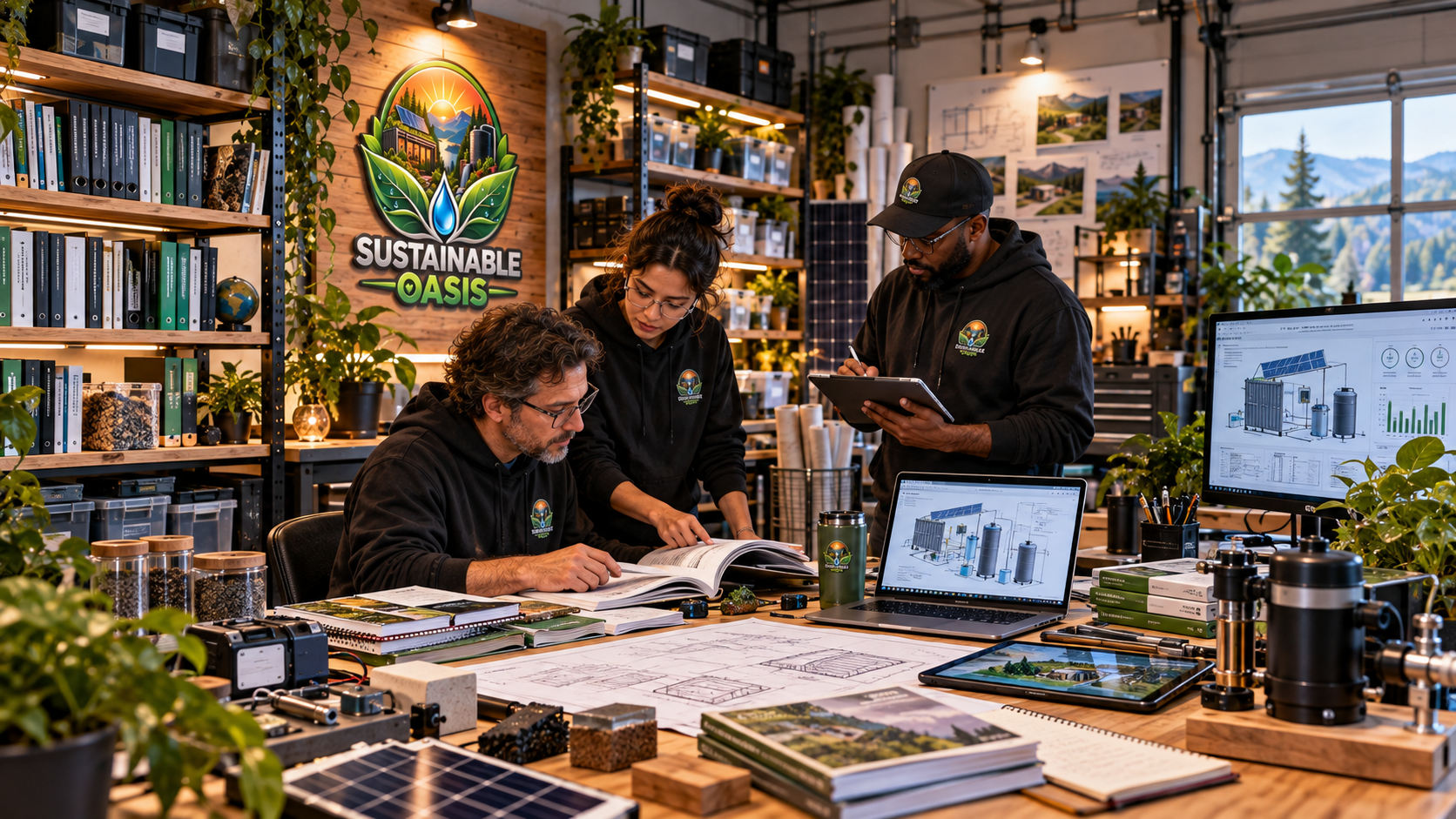
Garage Lab is the active Sustainable Oasis R&D environment for controlled, small-scale experimentation.
Measurement benches can be assembled, changed and rebuilt rapidly while energy, water, food and automation concepts are investigated.
The laboratory is intentionally flexible. It is designed to evolve as the research evolves.
PROJECT 02 — CONTAINER WORKSHOP
The Container Workshop moves research from the laboratory bench into a real compact infrastructure platform.
Energy, water, shelter, storage, automation and maintenance must coexist within physical constraints.
Those constraints make the project valuable as a development environment for future replicable systems.
PROJECT 03 — VIETNAM OASIS
Vietnam Oasis represents a field environment where site conditions directly shape infrastructure design.
Elevation, water, growing conditions, terraces and gravity all become part of the engineering problem.
The project can help Sustainable Oasis understand how laboratory ideas behave under real-world conditions.
PROJECT 04 — MOBILE OASIS
Mobile Oasis is a future platform concept exploring whether selected Sustainable Oasis systems can operate inside a deployable structure.
Mobility introduces additional constraints: weight, vibration, energy demand, compactness, balance, durability and serviceability.
Those constraints may ultimately improve stationary infrastructure too.
PROJECT 05 — COMPLETE OASIS
Complete Oasis is the future Sustainable Oasis integration model.
Instead of beginning with one enormous theoretical master system, Complete Oasis grows from modules tested through our other projects.
Energy, water, food, shelter, automation, measurement, resilience and economics can gradually become one measurable whole.
SHARED SYSTEMS
Generation, storage, distribution, use, recovery and losses.
Energy System →Capture, storage, treatment, distribution, use and appropriate reuse.
Water System →Harvest, growing area, water demand, energy and productivity.
Food System →Physical infrastructure, access, durability, ventilation and maintenance.
Shelter System →Sensors, decisions, actuators, verification, alarms and manual override.
Automation System →PROJECT MEASUREMENT
Sustainable Oasis projects become more useful when important resource flows are documented rather than assumed.
Depending on the project, useful measurements can include energy, water, food, system condition, maintenance, costs and environmental conditions.
DATA DISCIPLINE
Example information used for interfaces or educational purposes.
DEMOValues produced from assumptions or planning models.
ESTIMATEDValues recorded from physical systems or field observations.
MEASUREDCalculations produced from documented source data.
DERIVED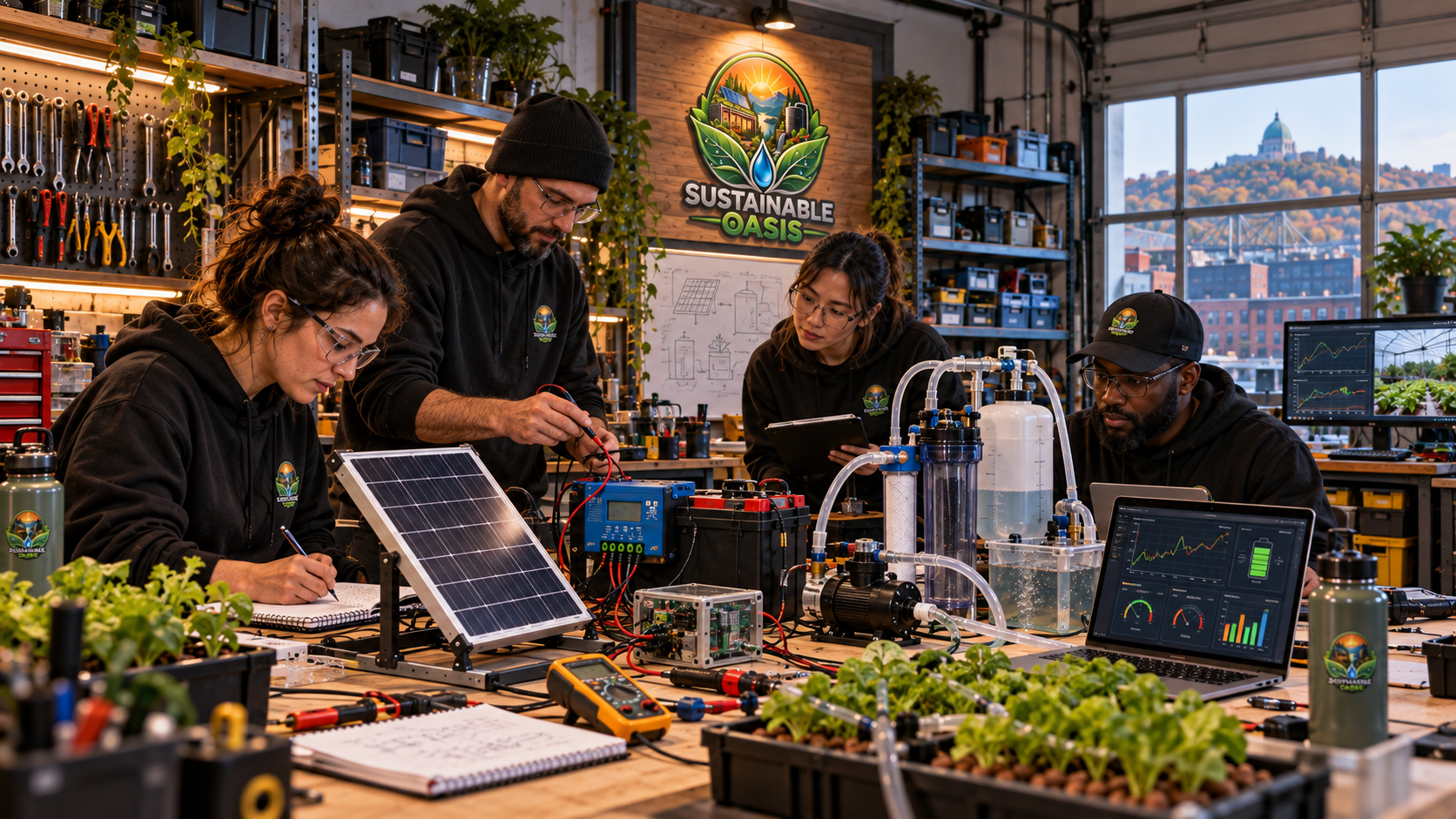
PROJECTS + RESEARCH
Projects create the conditions where Sustainable Oasis hypotheses can meet physical reality.
Controlled experiments can begin in Garage Lab, move into modular infrastructure, and later be tested under field conditions.
The result should feed back into the next design.
RESEARCH LOOP
PROJECTS + CONTROL ROOM
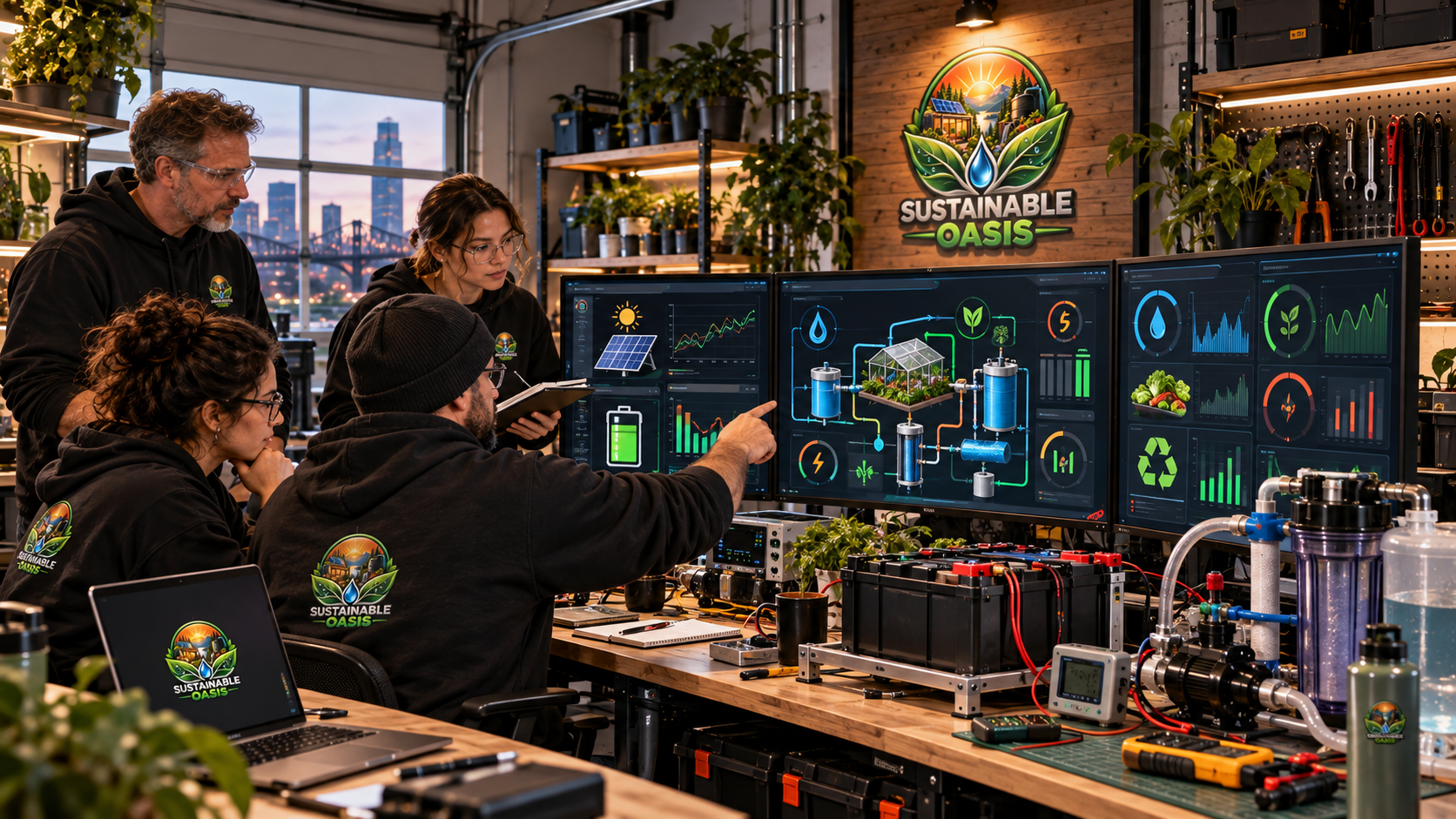
Sustainable Oasis Online provides the digital intelligence layer connecting projects with measurement, analysis and documentation.
The Control Room can eventually organize resource flows, system condition, impact and economic information from different project environments.
PROJECT DOCUMENTATION
PROJECTS + KNOWLEDGE
A successful project can produce much more than a finished installation.
It can create measurements, field notes, datasets, case studies, guides, plans and educational material.
Even failed approaches can create value if the lesson is preserved.
PROJECT ECONOMICS
Sustainable Oasis projects require capital, time, materials and operating resources.
Larger permanent infrastructure should therefore follow demonstrated economic progress rather than consume the project’s resources before sustainable revenue exists.
The goal is to let successful knowledge, products, services and systems help finance the infrastructure that follows.
PROJECT PRINCIPLES
Reduce risk before increasing scale.
Separate real measurements from models and projections.
Prevent future projects from repeating avoidable mistakes.
Keep important systems understandable and serviceable.
Convert experience into reusable knowledge.
WHAT SUCCESS LOOKS LIKE
How much energy does it consume? How much does it generate? How much water does it capture? How much food does it produce?
What does it cost? What requires maintenance? What failed? What worked? What should the next project change?
When those questions can be answered with evidence, Sustainable Oasis becomes more than a collection of projects.
It becomes a reproducible system for learning how to protect resources better.
OUR NORTH STAR
Every Sustainable Oasis project should ultimately help us understand how people, technology and natural systems can work together with greater resilience and less waste.
IN THE FUTURE, SUCCESS WILL NOT BE MEASURED BY WHAT WE HAVE, BUT BY WHAT WE PROTECT.
THE SUSTAINABLE OASIS PROJECT LOOP
PROJECT DIRECTORY
Controlled experimentation, instrumentation and prototype development.
Garage Lab →Compact modular infrastructure and real-world integration.
Container Workshop →Terrain, water, food and field-system learning.
Vietnam Oasis →Future mobile and deployable integrated infrastructure.
Mobile Oasis →The integrated architecture connecting validated systems.
Complete Oasis →SUSTAINABLE OASIS PROJECTS